
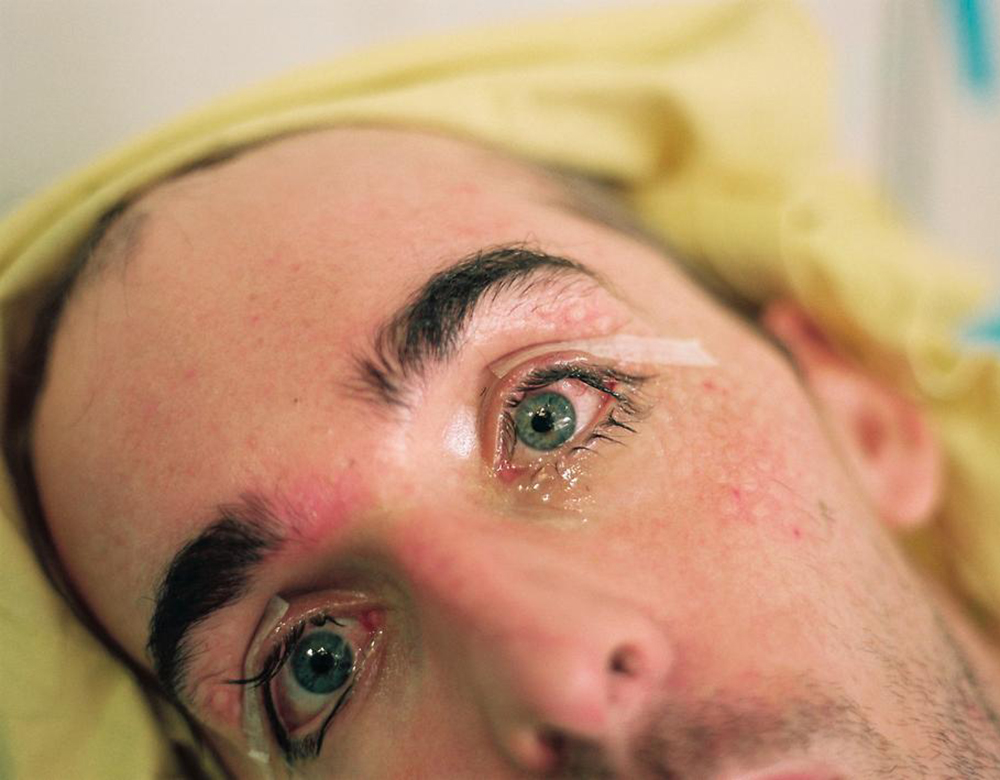
Your project Tant que je ne suis pas mort (As Long As I Am Not Dead) is deeply intimate and personal. How did you decide that photography could become a way to accompany and document this experience?
Photography had already been an important part of my life, a way of looking at and understanding the world. When I went through this period, it felt natural to create this project and bear witness to what we were experiencing. It was also a way of staying connected to that experience, accompanying it day by day and giving it a space to exist.
As Long As I Am Not Dead was born from a need to give shape to something that was difficult to express otherwise. Photography allowed me to transform a deeply intimate experience into a space for reflection and sharing. Through images, I could capture fragments of reality, emotions, and moments of vulnerability or resilience that often escaped words. The project gradually became both a personal testimony and a way of opening a broader conversation about vulnerability, illness, and our relationship with life itself.
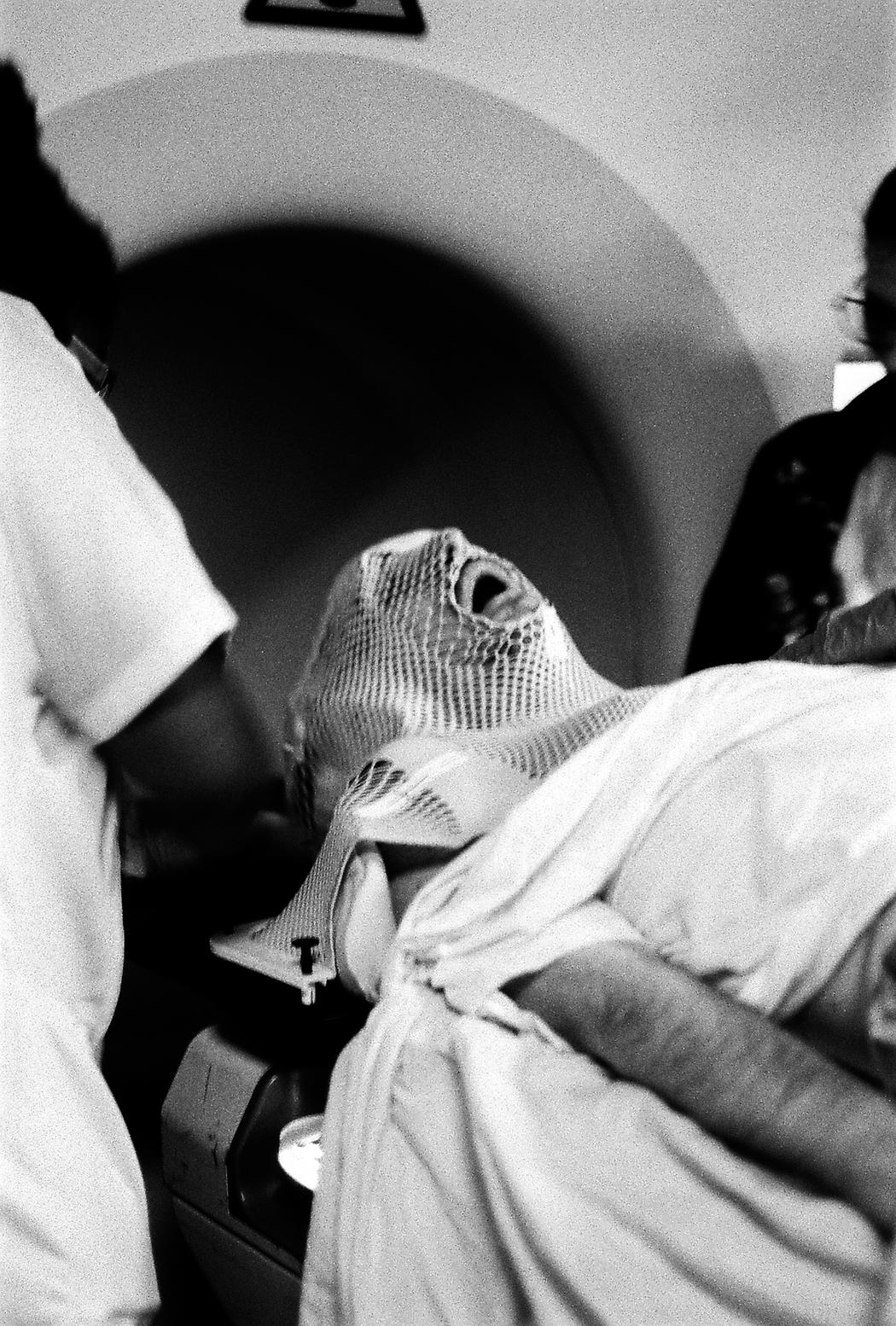 Ludivine Martinez | Tant Que Je Ne Suis Pas Mort (As Long As I Am Not Dead) | 2024
The title of the series carries a strong emotional and existential weight. What does this phrase mean to you within the context of the project?
The title As Long As I Am Not Dead comes directly from something my partner said after his very first surgery, during which part of the tumor was removed. At that time, he was still able to speak. Despite the physical consequences of the operation, he said that he would rather be in that condition than be dead. Those are literally his words.
I was immediately struck by the strength and sincerity of that sentence. In just a few words, it expressed both the brutal reality of his situation and his profound attachment to life.
It therefore felt obvious to use it as the title of the project. The phrase encapsulates something essential to this work: the coexistence of fragility and resilience, of fear and hope. More than a title, it is also a way of keeping his voice at the heart of the project and preserving the trace of his words.
Beyond its origin, the phrase became a kind of guiding thread. It reflects the mindset with which we lived through those years: taking life one day at a time, learning to live with uncertainty, yet continuing to move forward despite everything. It carries both an awareness of the illness and a refusal to be defined solely by it.
It is also a way of letting his own words guide the narrative. This project tells our story, but the title serves as a reminder that it is first and foremost rooted in his experience, his voice, and his way of facing what was happening to him.
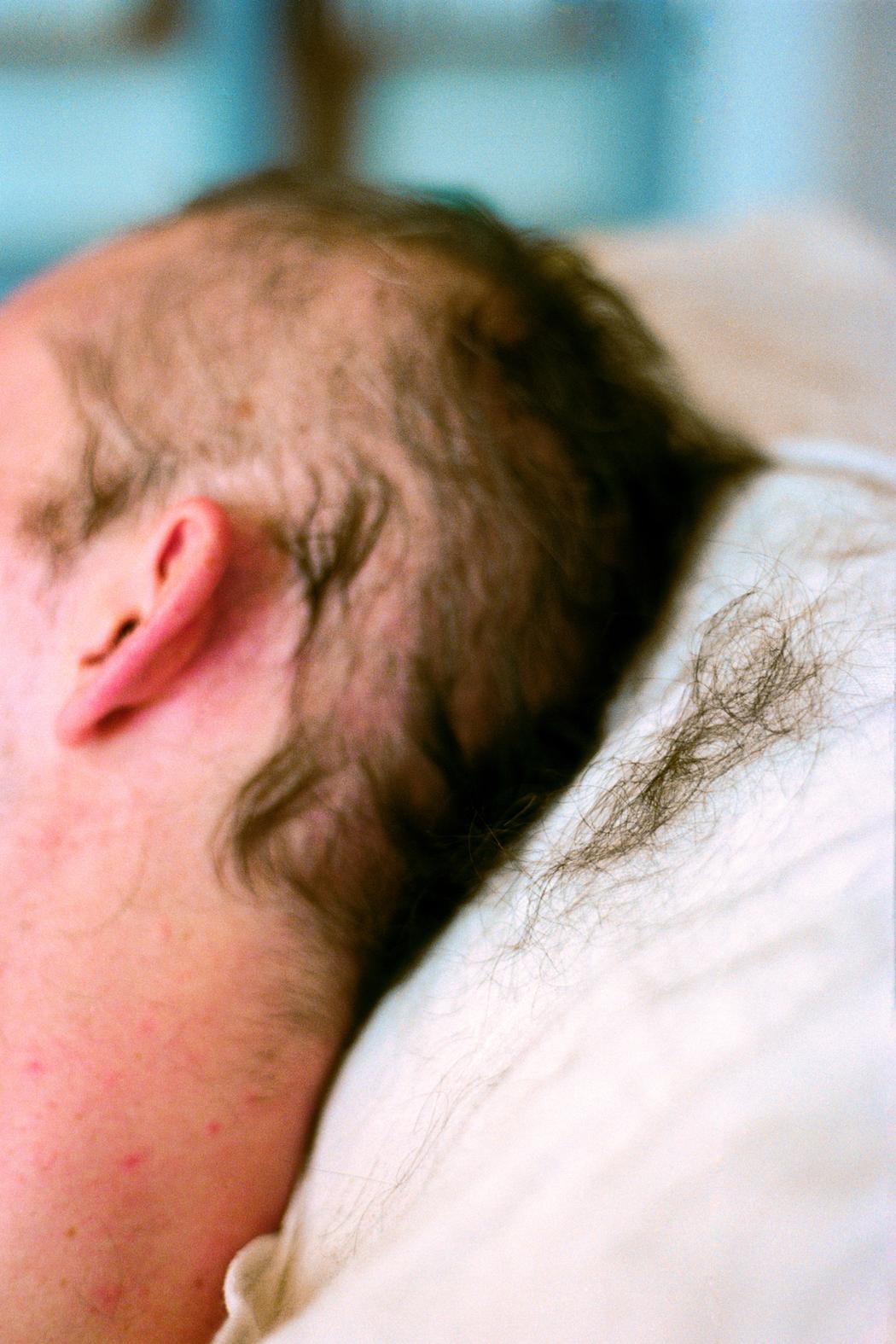 Ludivine Martinez | Tant Que Je Ne Suis Pas Mort (As Long As I Am Not Dead) | 2024
How do you navigate the boundary between documenting illness and preserving the dignity, privacy, and identity of the person you photograph?
The question of dignity and respect was present from the very beginning. We were engaged in this process together, and he was fully aware of the project, its intentions, and every image that was made.
The trust he placed in me was essential. It allowed me to photograph moments of great vulnerability, but it also came with a responsibility. I never felt the need to photograph everything. Some moments belonged to our intimacy, and it felt important to preserve them, both out of respect for him and for ethical reasons. The fact that a situation could be photographed did not necessarily mean that it should be.
I sought to document his experience of illness. What interested me was bearing witness to what we were going through together, while continuing to show the person he was beyond his condition. Illness occupied an important place in our lives, but it did not define who he was.
This boundary between documentation and intimacy was shaped throughout the project through listening, dialogue, and mutual trust. For me, preserving his dignity meant, above all, respecting his wishes, his perspective on the images, and the way he wanted to be represented.
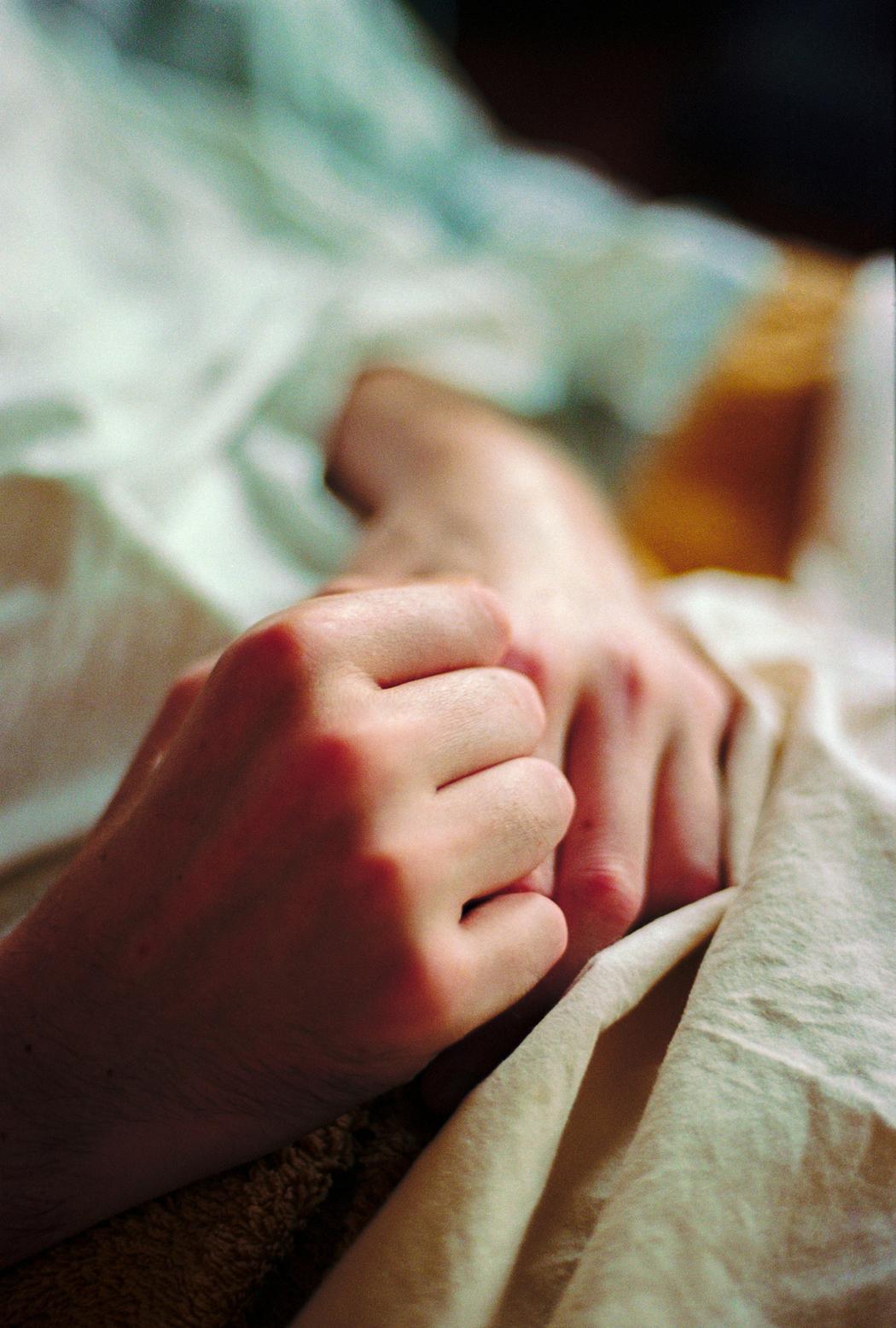 Ludivine Martinez | Tant Que Je Ne Suis Pas Mort (As Long As I Am Not Dead) | 2024
Many of the images focus on fragments of the body – hands, skin, hair, medical traces. What draws you to this fragmented visual language?
I don’t think I consciously set out to fragment the body at first. It was rather a way of photographing that emerged naturally throughout the project.
These fragments of the body revealed a great deal about what we were going through. The scars, medical marks, hair loss, and everyday gestures bore witness to the effects of the illness, but also to the body’s capacity to endure, adapt, and continue despite everything.
I was also interested in the physical and sensory dimension of these details. Photographed up close, they can give the viewer the feeling of almost being able to touch the skin, the hair, or the traces left on the body. This sense of proximity creates a form of intimacy and empathy that felt important to me.
However, these fragments are never intended as isolated images. They are part of a larger body of work, a narrative built through the accumulation of images, gestures, and moments. Each detail acts as a clue, contributing to a broader experience without ever claiming to represent it in its entirety.
Your photographs often feel quiet and tactile, almost as if the viewer can feel the skin, fabric, or hospital environment. How important is this sensory dimension in your work?
The sensory dimension is very important in my work. Photography is often perceived as a primarily visual medium, but I am interested in its ability to evoke other sensations and to engage the body’s memory.
In this project, I was trying to create a sense of proximity to what we were experiencing. The textures of skin, fabrics, everyday objects, and the hospital environment were all integral parts of that experience. Photographing them with attention allowed me to make visible sensations that are often difficult to put into words.
I like the idea that an image can trigger a physical memory or sensation in the viewer. That one might almost feel the softness of a fabric, the fragility of skin, or the particular atmosphere of a hospital room. This sensory dimension, in my view, allows the viewer to enter the image in a more intimate and embodied way.
Beyond documentation, what I am ultimately trying to convey is a lived experience. The sensory dimension is one of the ways I create that connection.
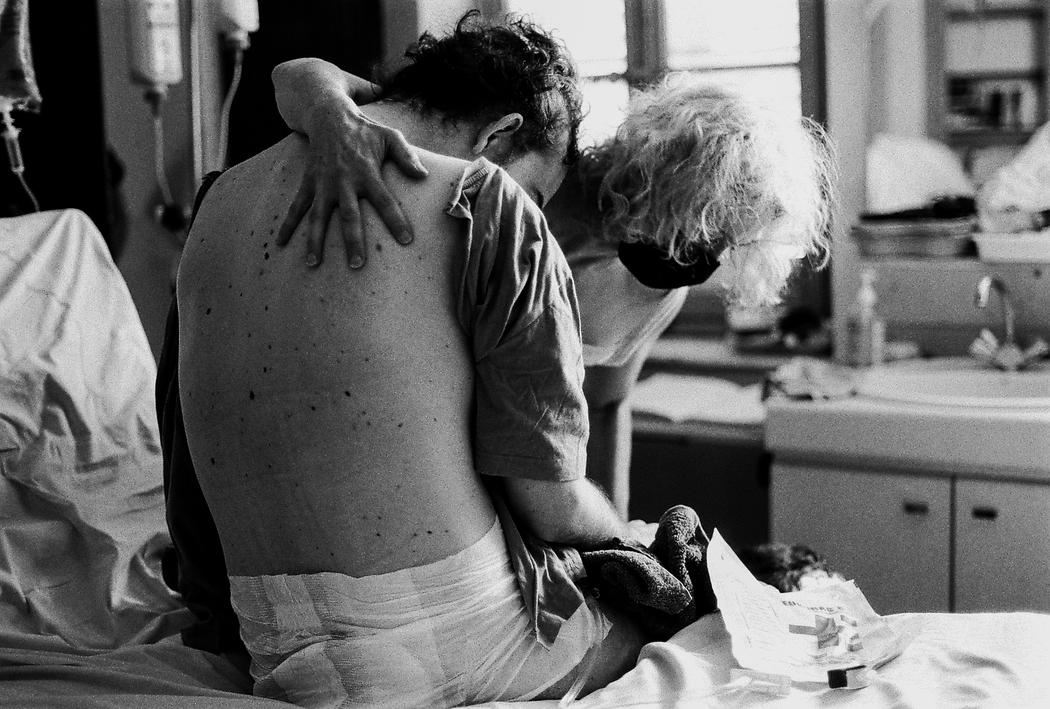 Ludivine Martinez | Tant Que Je Ne Suis Pas Mort (As Long As I Am Not Dead) | 2024
When working so closely with someone you love, how does the act of photographing change the relationship between presence, care, and memory?
I do not think that photographing fundamentally changed our relationship. I was first and foremost his partner, and photography had already been an important part of my life long before this project. It therefore felt natural to continue photographing what we were going through together.
At the same time, I felt a need to preserve a trace of our experience. We were living through an intense period marked by change, uncertainty, and precious moments. Photography allowed me to hold on to fragments of that reality and to preserve moments that might otherwise have faded with time.
The images gradually became a form of memory—not only of the illness, but also of our relationship, our daily life, and everything that continued to exist despite the upheavals we were facing. Today, they stand as a record of that shared experience and of the way we lived through it together.
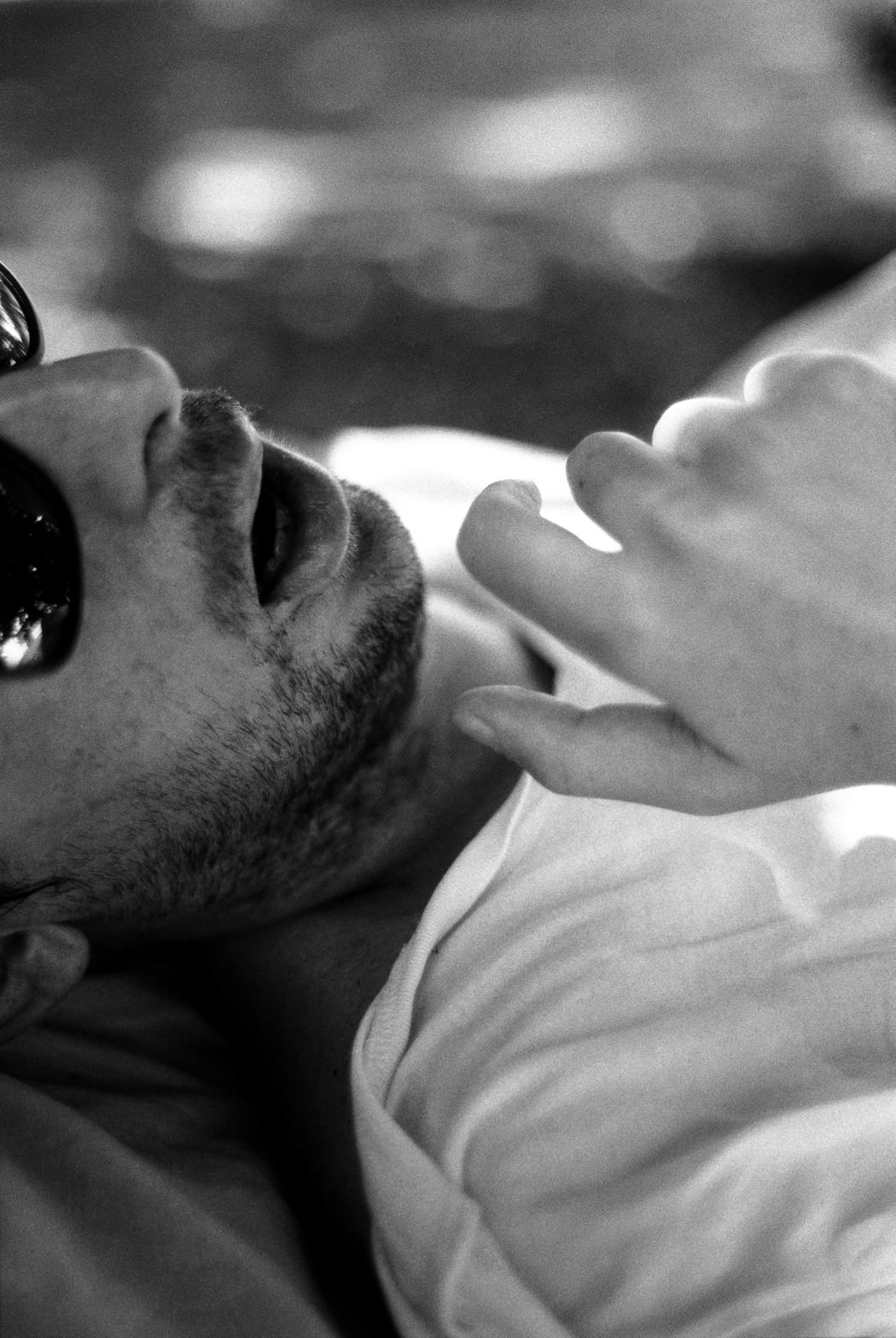 Ludivine Martinez | Tant Que Je Ne Suis Pas Mort (As Long As I Am Not Dead) | 2024
What do you hope viewers will carry with them after encountering As Long As I Am Not Dead?
I hope that people who have experienced illness, either personally or through a loved one, will recognize something of their own experience in the work. Although the project is rooted in a very personal story, it addresses a reality shared by many people and one that is still not talked about enough: cancer and its impact on everyday life.
Through these images, I wanted to make visible an experience that is often lived in private. Not to seek sympathy, but to create a space for recognition and connection. I wanted to show not only the illness itself, but also everything that surrounds it: love, care, uncertainty, intimacy, and the transformations that become part of daily life.
If the work can help open conversations around cancer, or make someone feel seen and less alone in their experience, then I feel it has achieved something meaningful.
0 comments on “Ludivine Martinez”