
Curatorial Review
by Anna Gvozdeva
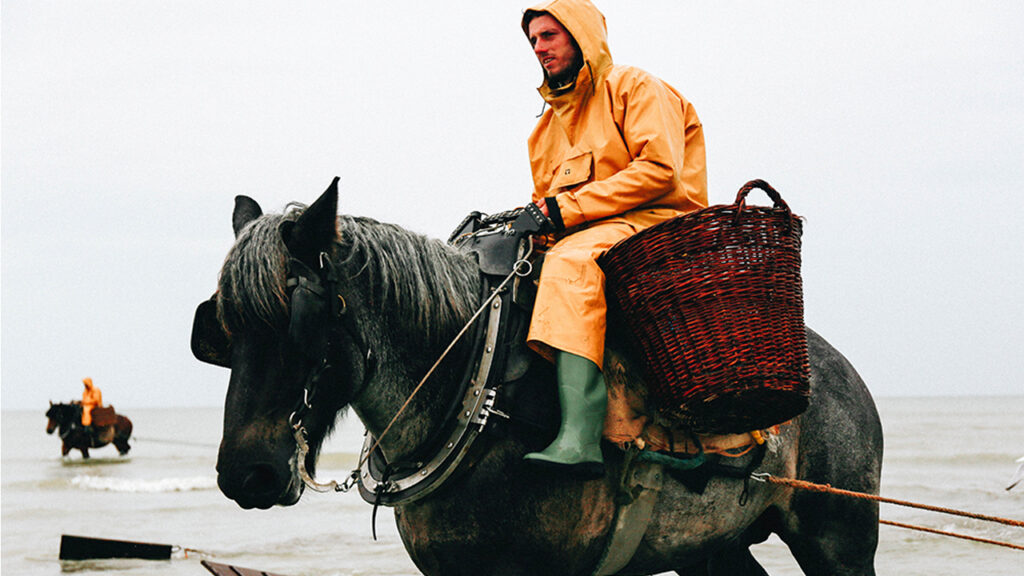
Photographing a tradition already recognized as endangered, listed as a cultural heritage site, and thus implicitly transformed into a spectacle even before the advent of the camera, presents a particular challenge. Natalia Maiboroda’s work, “Vanishing Craft”, masterfully tackles this challenge, and the images presented here demonstrate why her work is featured in National Geographic and The Guardian, rather than simply relegated to documentary archives.
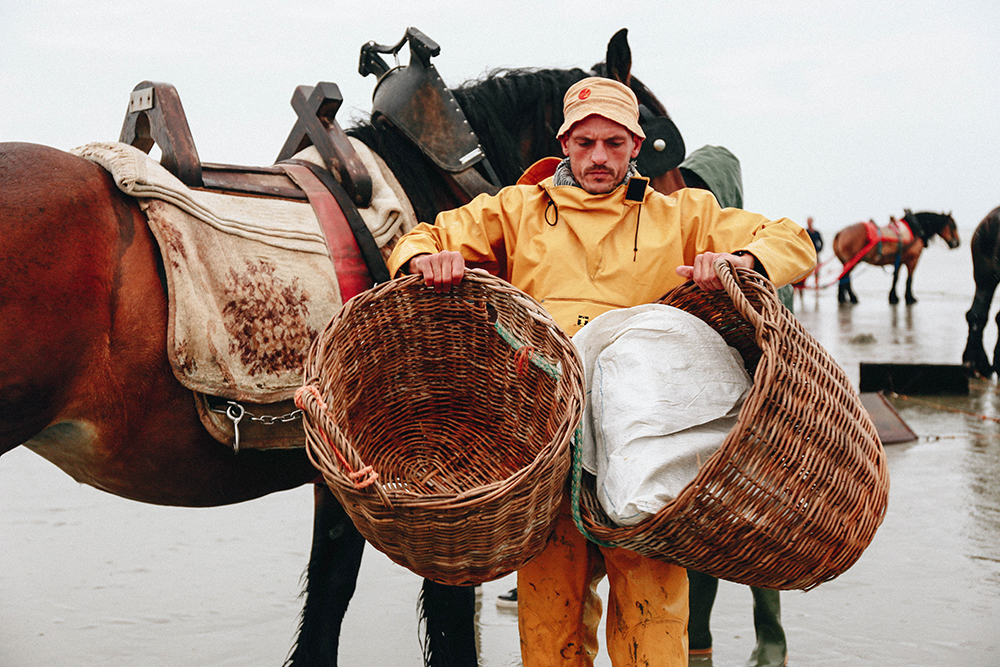
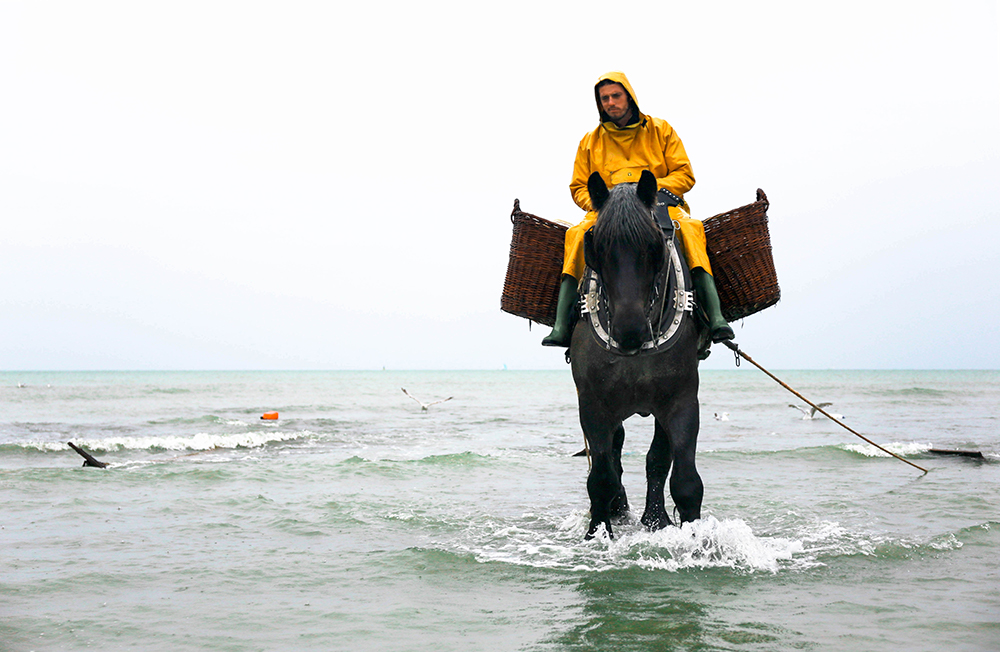 The visual core of the series is color: the stark amber-yellow of the fishermen’s rainsuits against the almost uniform gray of the sky and sea. Maiboroda uses this chromatic contrast with discipline rather than mere convenience. In the frontal shot of a dark gray horse and rider walking directly toward the camera—surrounded by wicker baskets, like a heraldic symbol—the yellow figure above the horse’s dark head creates something approaching the iconic. This is the kind of image the project deserves, not plans: a moment of harmony between subject, light, and compositional instinct that, for someone who’s never heard of the Oostduinkerke, might represent horseback fishing.
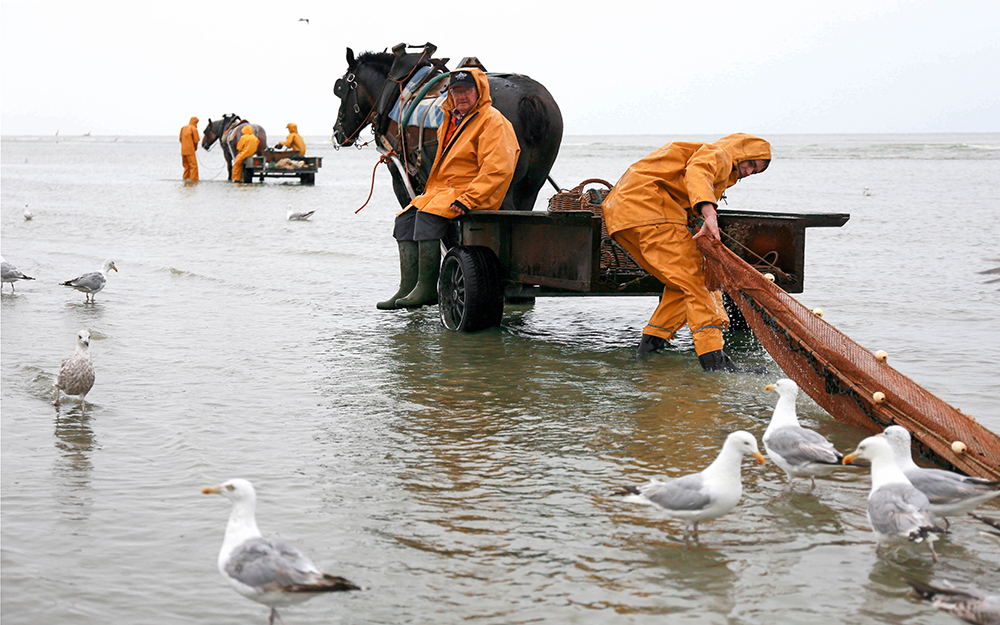
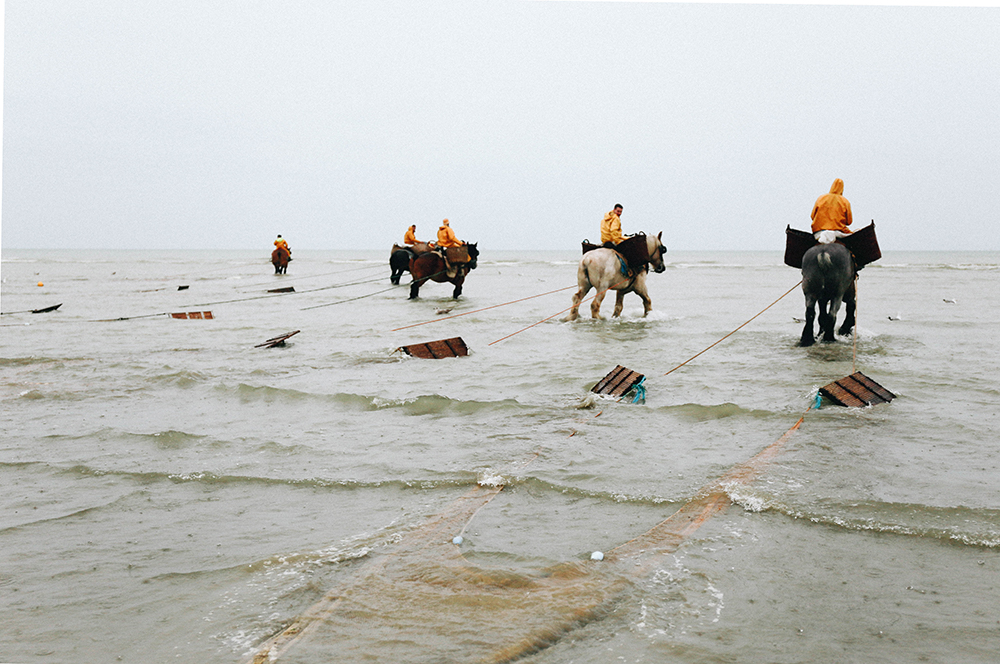 The series is constructed with a thoughtful editorial approach. It begins with the work itself—riders in the water, nets hanging, seagulls swooping in for prey—and unfolds in both directions: back to the stable interior, where worn leather saddles frame two horses at the feed trough, a figure quietly passing between them; and forward to the social setting after the shoot, where empty coffee cups and used glasses are cleared from a tray by a hand still clad in a red fisherman’s jacket.
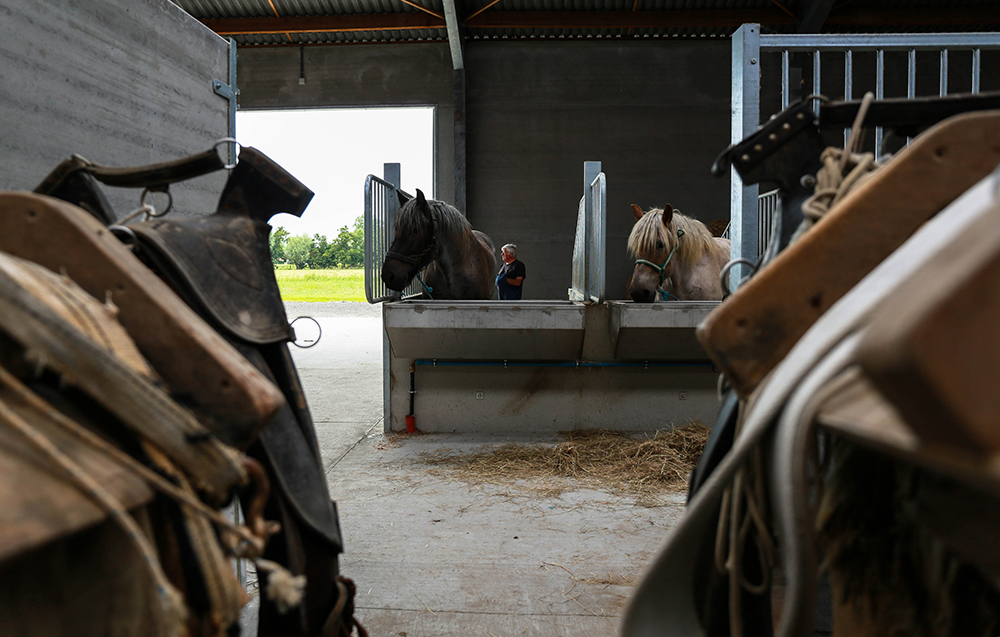 This movement from the sea to the stable to the café gives the project a breath of fresh air that is often lacking in purely documentary sequences.
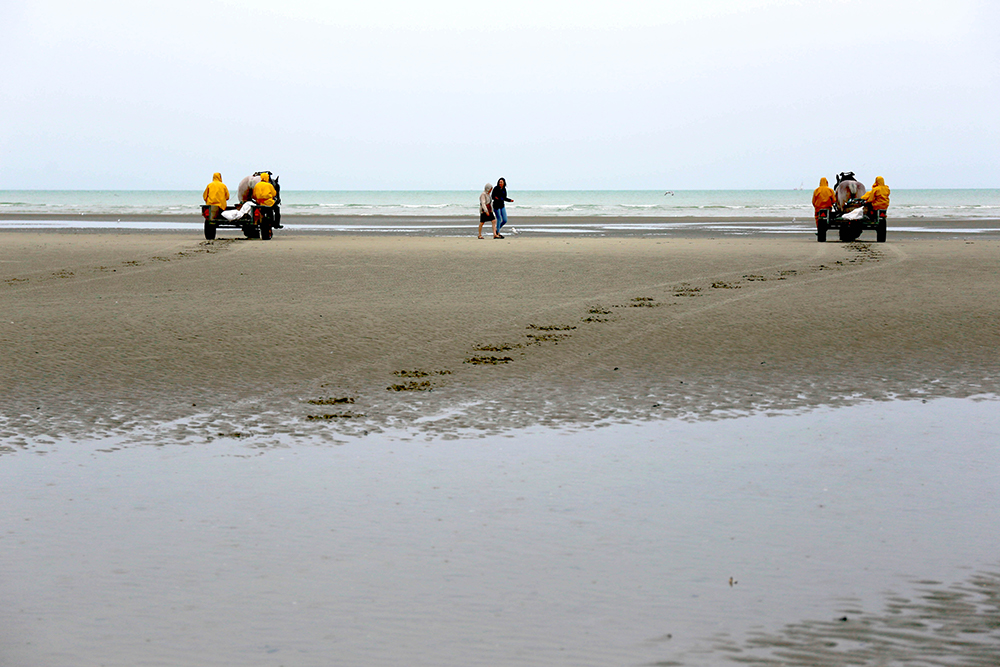
 A sweeping beach landscape is Maiboroda’s most formally composed work: two groups of fishermen in yellow clothing at the far edges of the frame, a vast expanse of wet sand with hoofprints in the foreground, and two civilians in the center. The image subtly asks what it means to witness a vanishing practice: the fishermen work, indifferent to observation; visitors record their surroundings. The hoofprints, arcing from one group to the next and then diverging, carry rhetorical weight without being intrusive.
 One image holds tight on a horse’s foreleg breaking the surf, the rider cropped away entirely; another frames a rider so frontally, basket-laden on either flank, that he becomes an extension of the animal’s silhouette rather than its master.
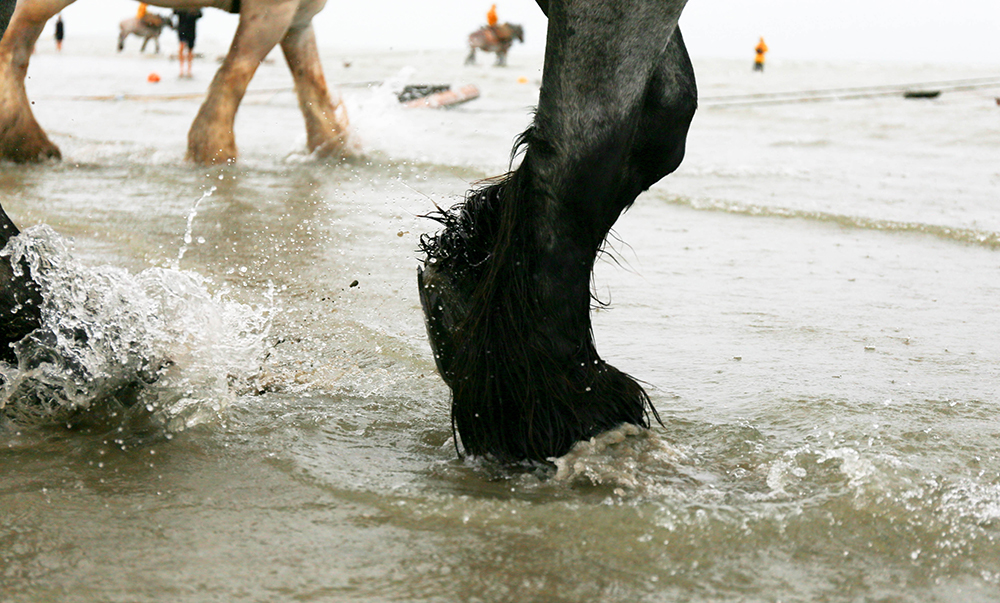 This is the series’ central argument made through composition alone: that the relationship between fisher and horse is one of partnership worn into muscle memory over centuries, not domination performed for a camera.
 Maiboroda’s perspective is confident that access to the subject is clearly earned over time, and her best images work precisely because they resist the picturesque nostalgia that the subject could easily evoke.
 In Vanishing Crafts, it is understood that traditions are preserved not as monuments, but as labor – wet, cold, unglamorous, and passed down from generation to generation by certain people on a certain shore.
0 comments on “Nataliia Maiboroda”