
Curatorial Review
by Anna Gvozdeva
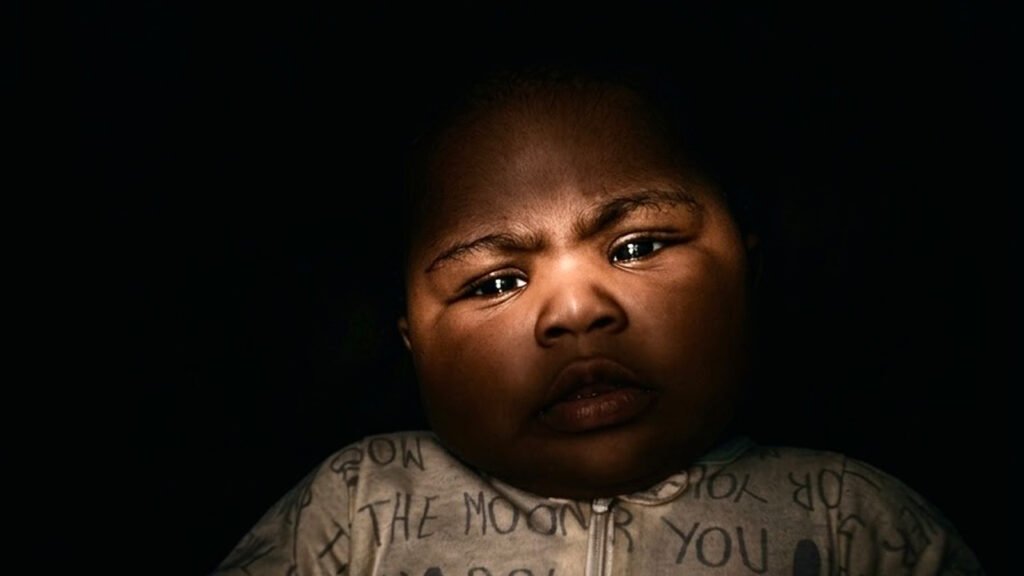
Over the Moon: The Unguarded Face
In her statement, Ugochi Ezeilo describes portrait photography as a search for the emotions behind a person’s eyes. In this series she turns that ambition towards the subject least able to hide anything: an infant. Five portraits of the same child, dressed in a sleeper printed with the repeated phrase “over the moon for you,” emerge from total darkness under a single directional light. The face becomes the entire drama, and every shift of brow, lip and gaze carries the weight that gesture or setting would carry in a conventional portrait.
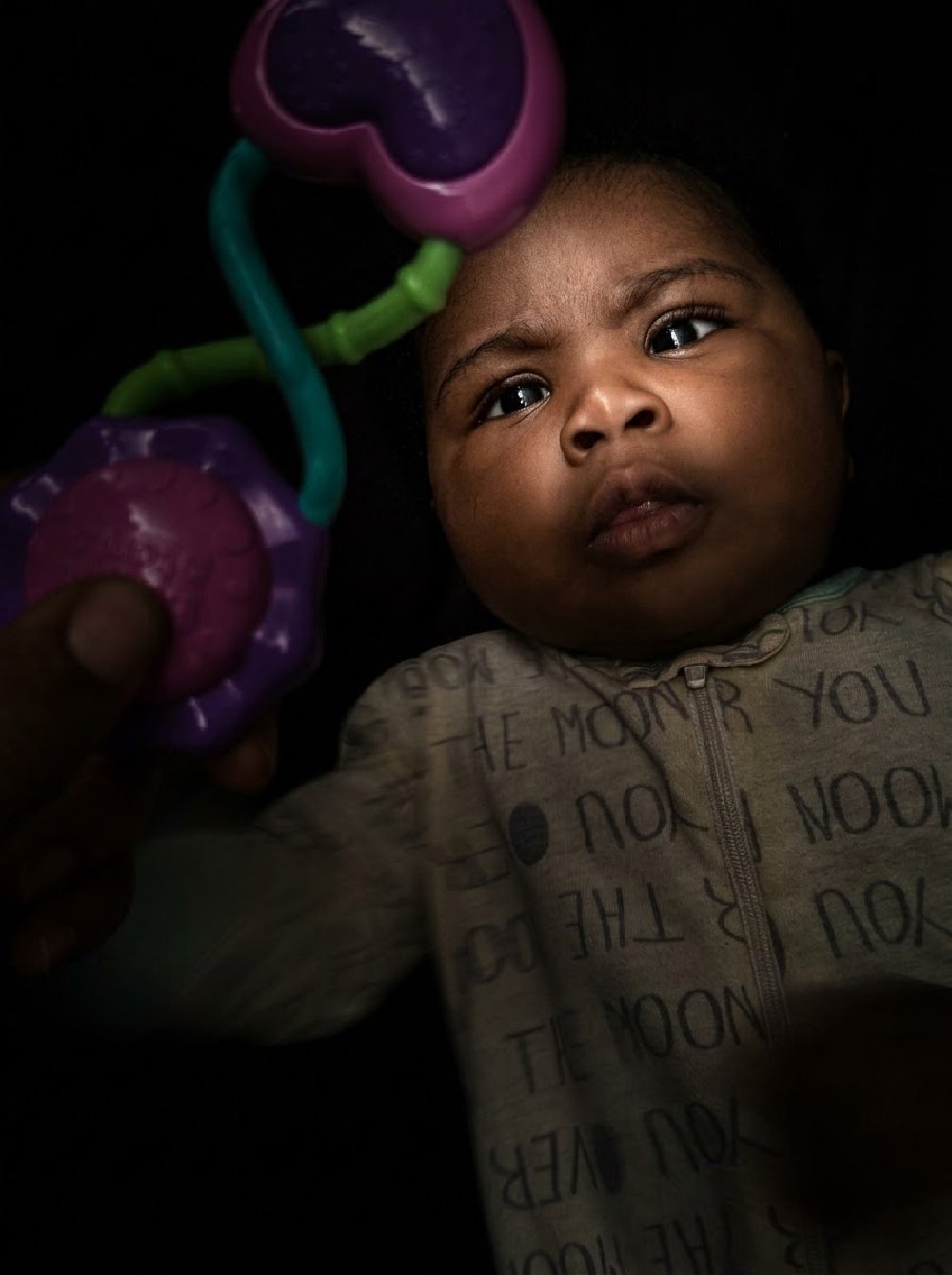 Ugochi Ezeilo | Curious | 2026
Ezeilo’s chiaroscuro owes an evident debt to Baroque painting, and to Rembrandt in particular, where light models volume and darkness frees the sitter from time and place. It also recalls Roy DeCarava’s conviction that dark skin, rendered in deep and generous tonalities, is revealed rather than concealed by shadow. In the strongest image, the calm frontal portrait, warm light falls across forehead and cheek, catchlights sharpen the eyes, and the child meets the lens with a gravity that seems far older than its months. It is a picture of attention itself, and it most fully realises the artist’s wish to look beyond the surface.
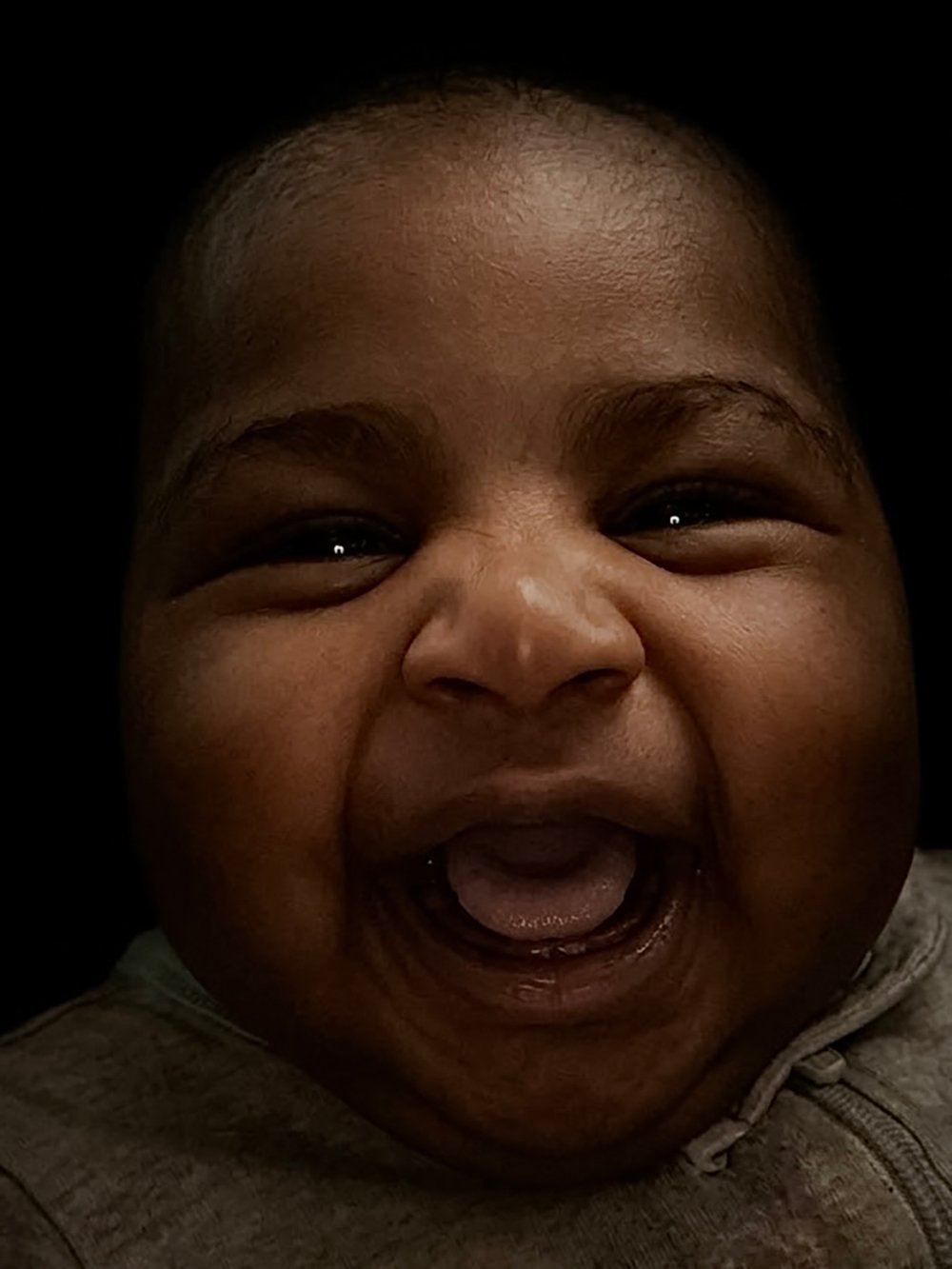 Ugochi Ezeilo | Joy | 2026
Across the series the expressions form an almost complete emotional vocabulary: suspicion, curiosity directed at a rattle held by an adult hand entering the frame, open-mouthed laughter, and a crumpled cry. Infants have no social mask, and Ezeilo’s insight is to make this absence her subject. The vulnerability, strength and authenticity named in her statement are not traits coaxed out of a sitter here, but the raw condition of early life. The laughing close-up, cropped so tightly that the face becomes a landscape of cheeks and crescent eyes, is the boldest formal decision in the group.
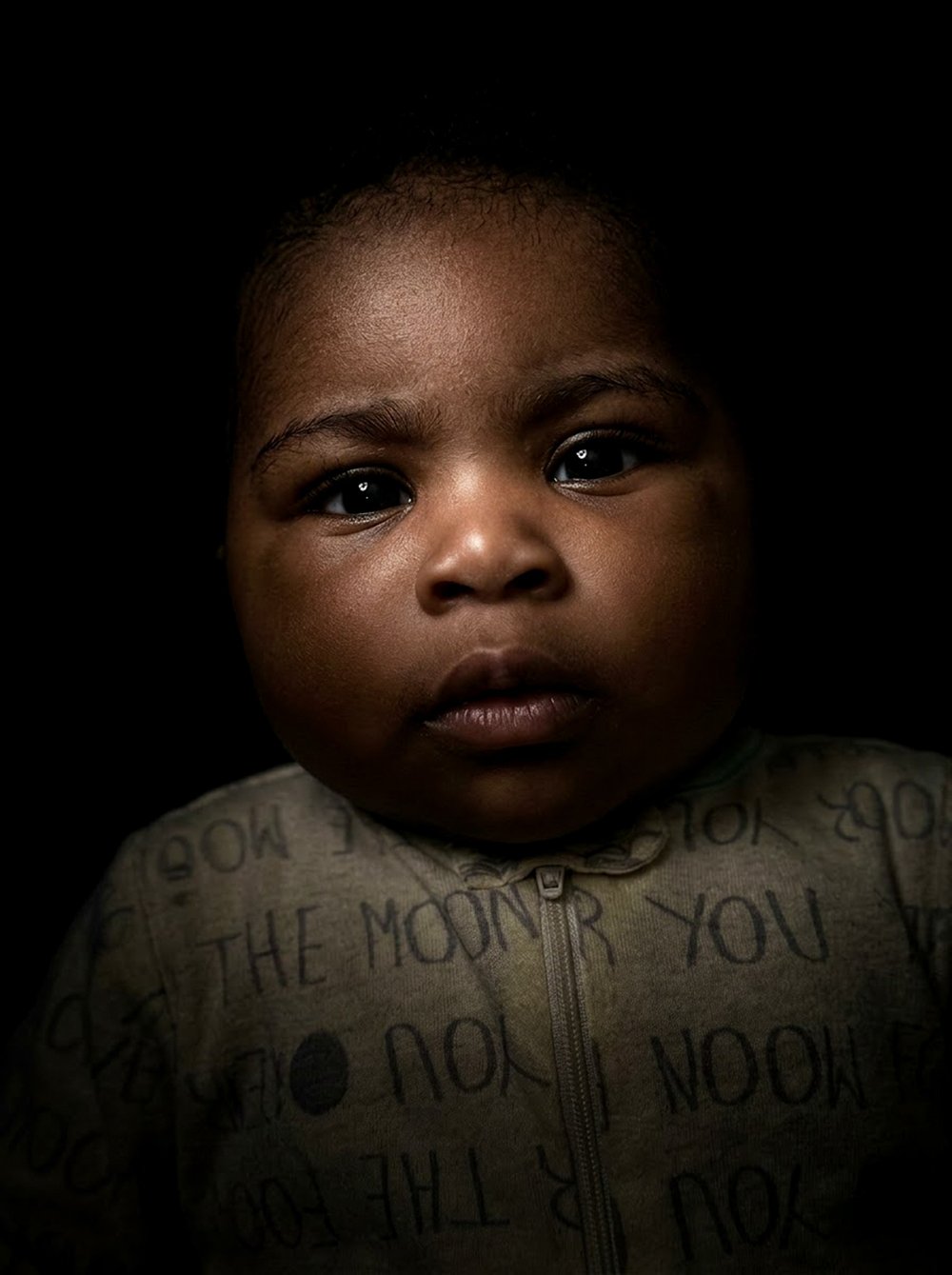 Ugochi Ezeilo | Wonder | 2026
The garment acts as a quiet second protagonist. Its letters, printed both forwards and mirrored, break and reassemble across folds and the zip, so that “the moon” and “you” drift as fragments of visual text. Set against the frowns and tears, the phrase turns gently ironic; set against the laughter, it reads as a caption. Either way it introduces the voice of the parent, the one who is “over the moon”, into images that otherwise show only the child, and the hand holding the rattle briefly makes that unseen presence visible.The series would gain from greater technical consistency. The crying portrait and the arms-outstretched image render the fabric flatter and brighter, with a more digital edge in the shadows, while the laughing close-up is processed with a heavy clarity that hardens the softness of infant skin. A unified tonal treatment, and a deliberate sequence moving from distress towards stillness, would turn five strong moments into a coherent body of work. The motion blur in the outstretched hands is effective and could be developed further as a counterpoint to the sharply resolved faces.
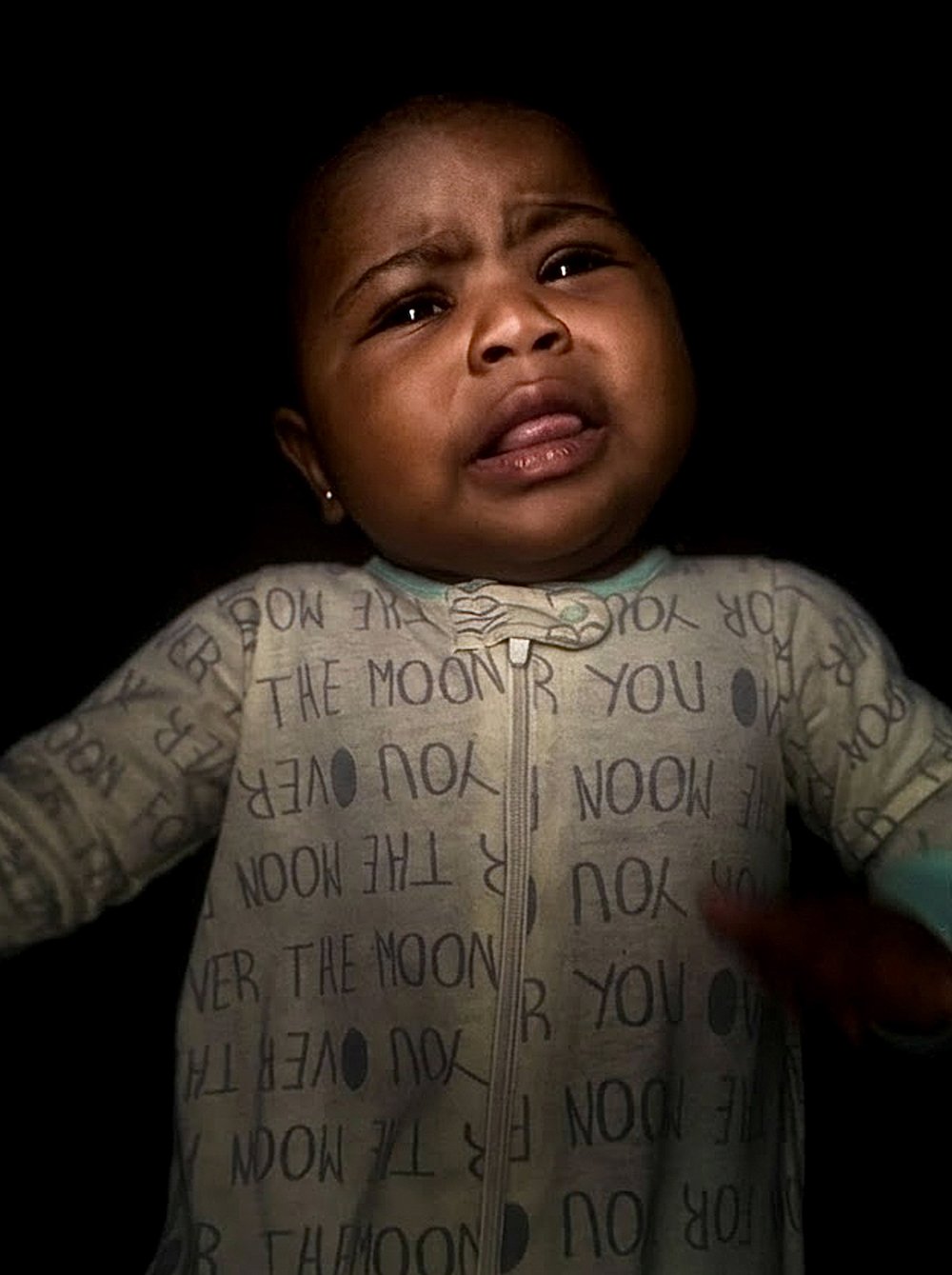 Ugochi Ezeilo | Worry | 2026
Ezeilo’s portraits remind us that portraiture begins long before a sitter learns how to pose. By lighting an infant with the seriousness usually reserved for elders and dignitaries, she affirms that every face, at every age, carries a story worth looking at closely.
0 comments on “Ugochi Ezeilo”