
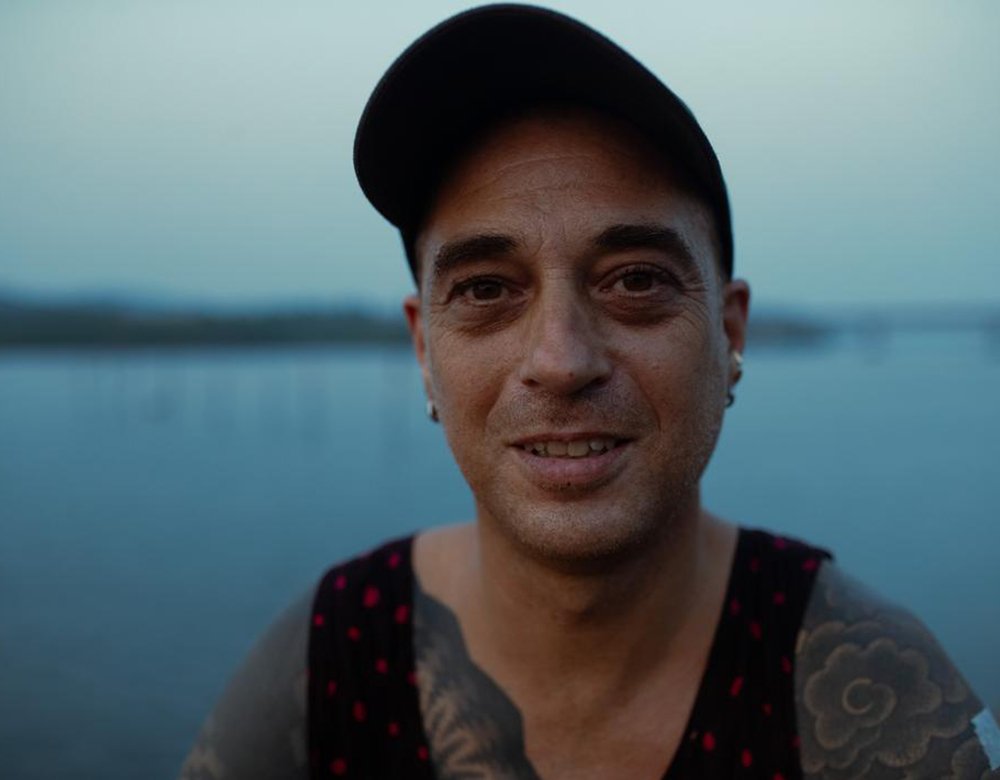
What first brought you to La Linière in 2016, and how did your role as a volunteer connect with your decision to photograph life there?
The events of 2015, widely referred to as the Syrian refugee crisis, brought more than a million refugees into Europe over a relatively short period. The scale of arrivals placed enormous pressure on state-run institutions, while numerous grassroots initiatives emerged across Europe to provide additional support to people seeking refuge.
At the time, I was living in Germany and began volunteering with some of these grassroots groups in my local area. Eventually, this work led me to the northern coast of France, where the La Linière refugee camp was located.
I initially intended to stay for just a few weeks, but I quickly became deeply involved in the day-to-day running of the camp. I felt a strong connection to the work being done there and a responsibility to contribute whatever skills and experience I could to help support the residents and keep the camp running.
My decision to photograph La Linière came only after two or three months of volunteering. Having worked as a photographer for many years, the idea came quite naturally. I began to feel that I was witnessing an important moment in time, and that the lives and experiences of the people living there deserved to be documented.
I developed a rough structure for the project and began photographing daily life in the camp, alongside conducting a series of interviews with its residents. My intention was to create an opportunity for people living in La Linière to share their own experiences and tell their side of the story, rather than having their lives represented solely through the media or the political narratives surrounding the refugee crisis.
I also hoped the project might encourage others to become involved in similar grassroots initiatives and recognise the importance of offering practical support to people forced to leave their homes.
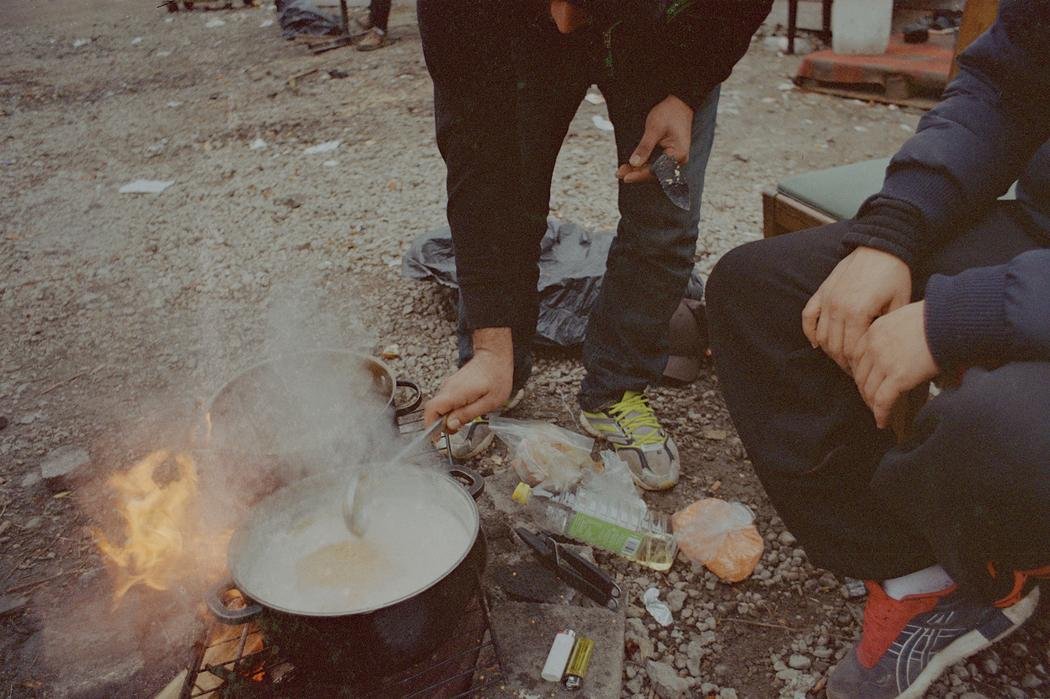 Shyam Ganju | Everyday Rituals | 2016
How did living in the camp for four months change your understanding of what was important to photograph?
Living and working in the camp for four months inevitably changed my perspective. When you are involved in the daily operations for such an extended period, your thoughts become increasingly centred around the lives of the people there, their immediate needs and the circumstances they are dealing with. You become aware of things that might seem insignificant to an outside observer but are actually very important to everyday life in the camp.
For example, shoes were one of the most sought-after items on the donation lists. This was largely because people walked everywhere, and many residents would leave the camp at night in an attempt to cross the English Channel, hiding inside the transport trucks travelling to the UK. During these attempts, people were frequently stopped by the police, who would often confiscate their shoes and mobile phones, forcing them to walk back to the camp barefoot through the freezing winter nights. As a result, something as basic as a pair of shoes became an essential and much-needed item.
Another example was the residents’ habit of gathering around campfires. They would make tea, keep warm, talk and spend time together. These gatherings became an important part of daily life, offering a sense of community and a way of maintaining morale despite the difficult circumstances.
Experiences like these gradually changed what I considered important to photograph. Rather than concentrating solely on the broader humanitarian situation or the physical conditions of the camp, I became more interested in the everyday details, routines and relationships that revealed what life there was actually like.
I think these are the kinds of things you only begin to understand through spending time with people and becoming part of their daily environment. They are often invisible to someone arriving from the outside, but they tell us a great deal about people’s lives, their resilience and their attempts to maintain some sense of normality under extraordinary circumstances.
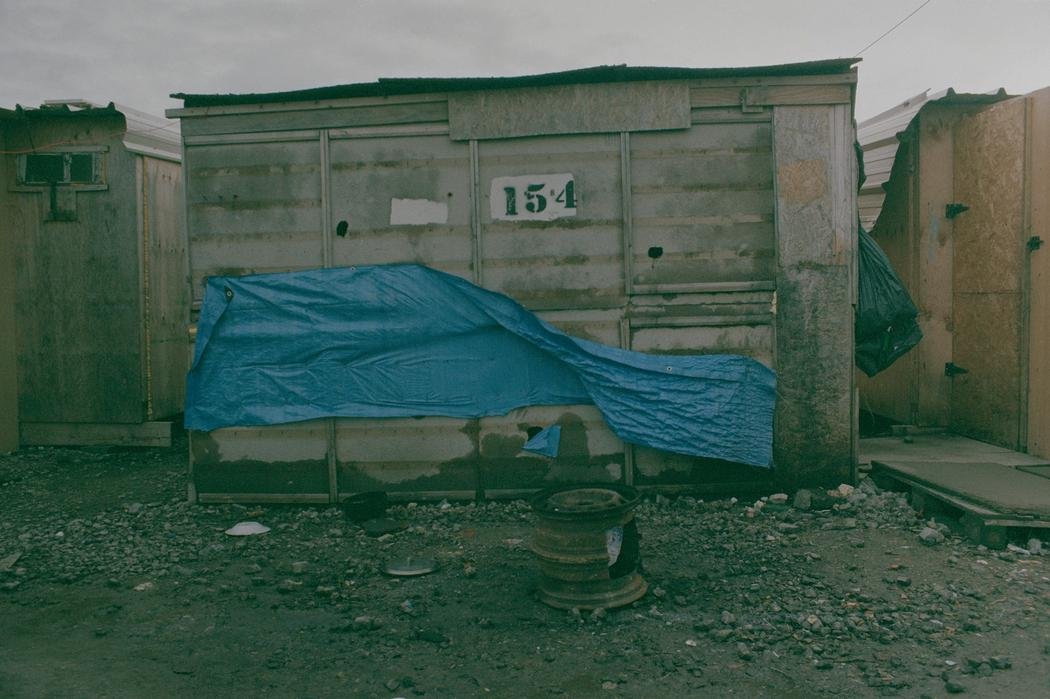 Shyam Ganju | Shelter 154 | 2016
As friendships developed, how did you navigate the boundaries between sharing someone’s daily life and documenting it?
By the time I began photographing the camp, I had already spent several months working alongside the residents and had developed genuine friendships with many of them. The photographs were made towards the end of my four-month stay, over a relatively short period of around two weeks. This meant that the relationships and familiarity were already established well before I picked up my camera.
I had explained to my friends why I wanted to make the photographs and what I hoped to achieve with the project. They were very supportive of the idea, and with their consent I approached the photography and interviews in a respectful and considerate manner. They were genuinely willing to participate and often went out of their way to accommodate my requests.
There was also an element of enjoyment involved. In some ways, taking photographs and participating in interviews offered a welcome break from the routine of everyday life in what was often a rather bleak and difficult environment. It gave people an opportunity to engage in something different, share their experiences and perhaps momentarily take their minds off their immediate circumstances.
For me, the most important thing was that the photography grew out of relationships that already existed. I wasn’t arriving as an outsider, asking people to share intimate aspects of their lives without knowing me. We had already spent considerable time together, and I think that familiarity and mutual trust made a significant difference to the way the project developed.
How did you approach conveying the uncertainty of life at La Linière through ordinary moments, rather than major events?
My role as a volunteer had a significant influence on the way I approached photographing the camp. Whenever major events occurred, I was usually occupied with my responsibilities, so there was very little opportunity to photograph during those moments. To take photographs, I would deliberately take a few hours away from my daily work.
In many ways, photography also became a form of relaxation, offering some respite from the long hours and often emotionally difficult days of dealing with the realities of life in the camp. More importantly, volunteering meant that I had developed relationships with the residents long before I began photographing them. I wasn’t approaching people as a photographer looking for subjects or interesting situations. I was spending time with friends, sharing conversations, drinking tea and simply being part of their daily lives. I would often spend several hours with people and take a few photographs in the process.
I think this shaped the photographs quite fundamentally. My understanding of the camp came from being involved in its everyday operations, rather than simply observing it from the outside. I was aware of the uncertainty, the difficulties and the personal circumstances people were living with, but I was also familiar with their friendships, humour, routines and moments of companionship.
Consequently, I wasn’t particularly interested in photographing dramatic events or trying to illustrate the suffering of the residents. I was more drawn to the quieter, everyday moments that reflected the complexity of their lives. I think volunteering allowed me to photograph people with a greater sense of familiarity and understanding, and to see them as individuals rather than simply as refugees.
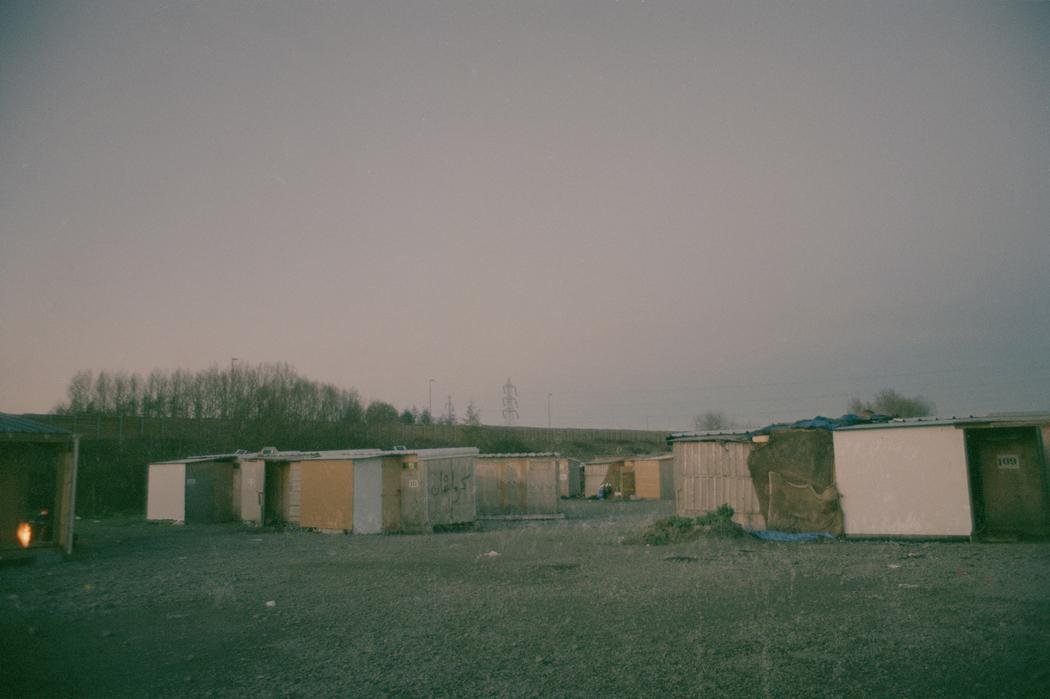 Shyam Ganju | The Camp | 2016
You value the unpredictability of analogue photography. How do you distinguish an imperfection that gives an image meaning from one that gets in its way?
I think this is quite a difficult question to answer because, ultimately, it comes down to an aesthetic judgement. It’s also part of the art and enjoyment of working with film photography. For me, the photograph still needs to work on its own merits. It needs to have a strong composition, good exposure and a reason to exist as an image. These are the fundamentals, regardless of the medium you’re working with.
Occasionally, something unexpected happens in the process. It might be an unusual grain pattern, a light leak, an unexpected shift in colour or some other happy accident. If the photograph is already strong and this unintentional element adds something interesting or gives the image an additional layer of character, then I see it as a welcome part of the process. However, I don’t think imperfections automatically make a photograph more interesting or meaningful. If the composition is weak or the exposure is poor, there is no amount of film magic that can save a bad photograph. I suppose the distinction is whether the imperfection contributes something to the image or simply distracts from it. Ultimately, it is a matter of instinct and knowing when something works.
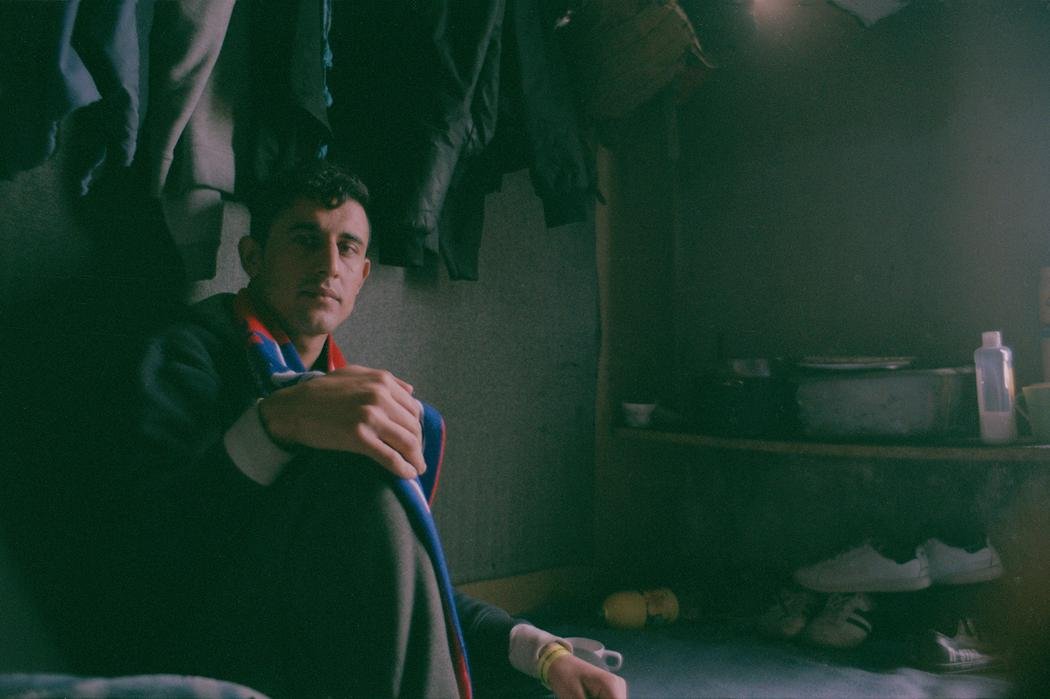 Shyam Ganju | A Private World | 2016
You describe your work as tracing the residual energy of places and emotions. Could you share an example of how something you experienced later found its way into a photograph or painting?
For me, photography and painting are both ways of telling stories. I’ve always drawn inspiration from my surroundings and personal experiences, but in recent years I’ve become more interested in finding ways to embed deeper meanings and narratives into my images.
I think everything I’ve experienced finds its way into my work in some form or another. The places I’ve lived, the people I’ve met, the things I’ve witnessed and, perhaps most importantly, the things I’ve lost. Sometimes I set out to explore a particular idea, while other times an image develops from something that has been sitting in the back of my mind for years.
I’m quite interested in symbolism and in the idea that an image can hold several layers of meaning. I don’t necessarily want to make everything immediately obvious. I like the possibility that there might be something beneath the surface, something that isn’t immediately apparent but gives the image a deeper significance.
I suppose my work is, in many ways, a reflection of how I experience and make sense of the world around me. Even when I’m photographing something that has nothing directly to do with my own life, there is always a part of my own experience that finds its way into the image.
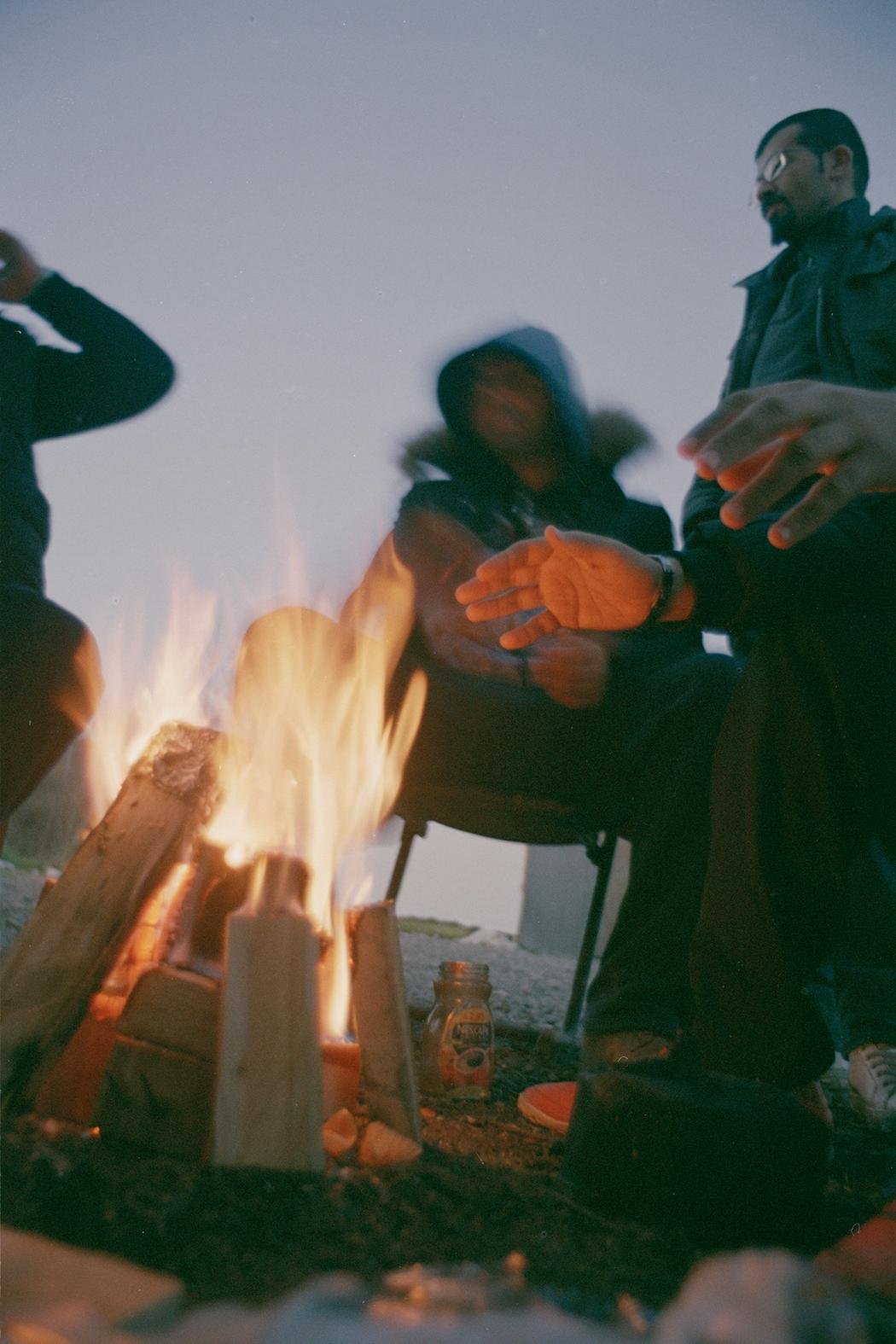 Shyam Ganju | Afternoon Tea | 2016
You see art as a tool for confronting injustice. What do you hope a project such as La Linière can change, and where do you recognise the limits of what photographs can do?
With La Linière, my intention was to offer a different perspective from the one often presented in the mainstream media. Refugees were frequently portrayed in a negative light, with very little attention given to the individual circumstances that had forced them to leave their homes. I felt it was important to show life from their perspective and highlight the fact that these are often people who have become victims of war, political turmoil and circumstances beyond their control. Through the photographs and interviews, I hoped to give them an opportunity to tell their own stories and be seen as individuals rather than simply as part of a larger refugee crisis.
Just as importantly, I hoped the project would inspire others to get involved and help wherever they could. During my time at the camp, I became very aware that although the problems facing the world can seem enormous and overwhelming, one person can make a very real difference to the lives of several other people through relatively small acts of kindness. I saw this happening every day. You don’t necessarily need to change the world; sometimes you just need to make a difference to the person standing in front of you. If enough people are willing to do that, those individual efforts can add up to something quite meaningful.
Of course, I’m under no illusion that a photographic project can change the circumstances of people living in a refugee camp or resolve the political and humanitarian issues that brought them there in the first place. Photography has its limitations. It cannot provide shelter, food or security. What it can do, however, is challenge perceptions, bring people’s experiences to the attention of others and perhaps encourage a more compassionate understanding of their circumstances.
Ultimately, I hope La Linière encourages people to look beyond the stereotypes and see the human beings behind the headlines. And perhaps, more importantly, it might encourage someone to get involved, lend a hand or simply show a little kindness to someone who needs it. I think we sometimes underestimate how much difference these small gestures can make.
0 comments on “Shyam Ganju”