
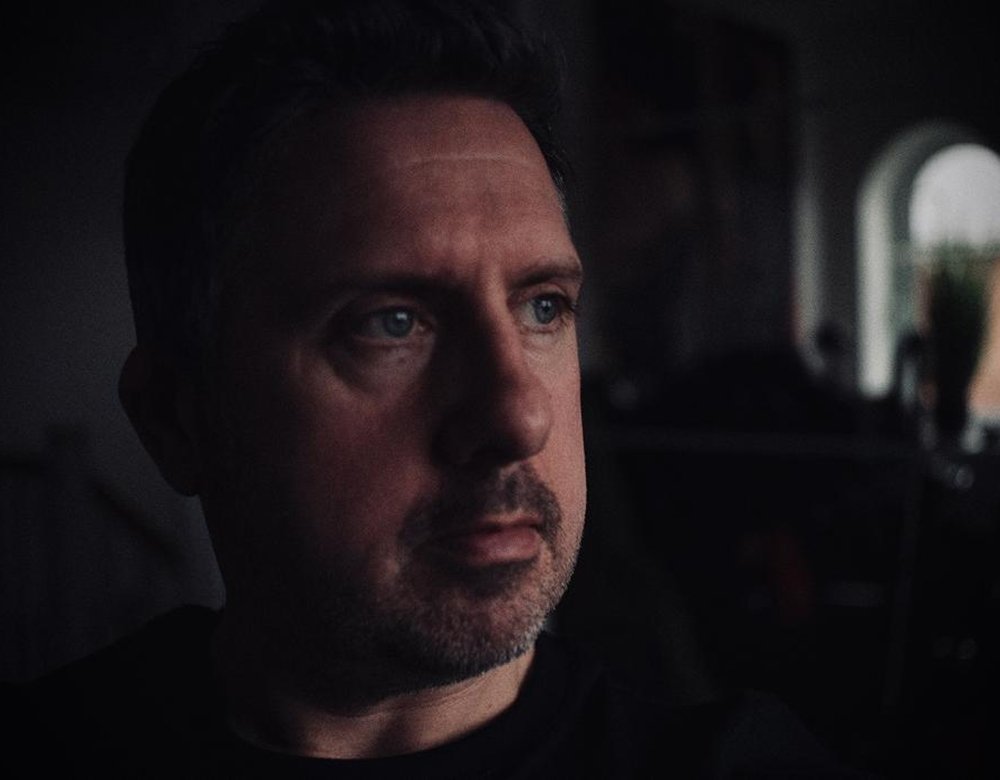
You have been making photographs for more than thirty years. How has your way of observing people and places changed during that time?
In some respects, my interests are not hugely different to what they were when I started out making photographs, but how I manage my photography has. I think that the most important change in my photography is related to adaptability. At the moment, I have three projects I’m working on, all with distinct styles and themes. They overlap throughout the year, but two of them are seasonal, so there’s this natural experience of ‘ok, now it’s time to leave this one until spring next year’. My projects, therefore, evolve as the years pass and, when I deem one to be completed, another takes its place. I wasn’t able to achieve this when I was younger. I was more single-minded, more obsessive about ‘completing’ a portfolio of work. Now I allow my photographs and the themes I’m exploring the time to percolate. They grow and morph into the stories they eventually become as I continue to develop them. This experience of visiting – then re-visiting – my photography helps me in constantly evaluating what my photographs are about, and where they should lead next. I couldn’t have achieved this approach twenty or thirty years ago…I suppose I just didn’t have the patience.
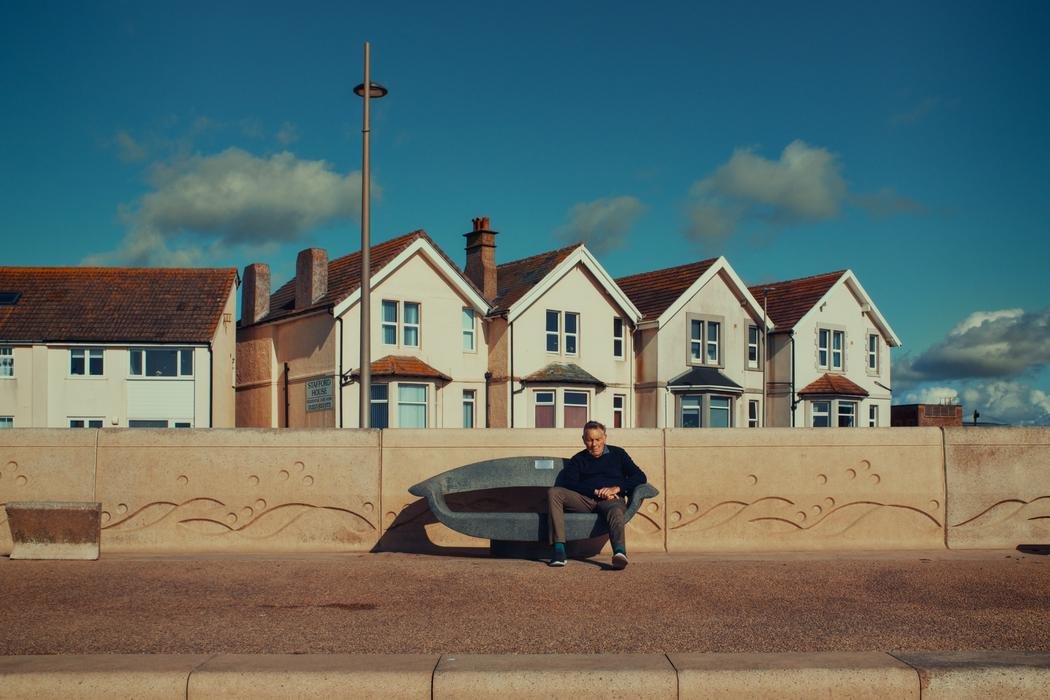
Much of your early work was centred on Blackburn, while your recent photography explores North West England more broadly. What prompted this geographical and creative expansion?
I was quite shy when I was younger, but I grew up with a large family and lots of friends so it was a secure place. Yet, it was the kind of town where people expected you to follow fairly rigid social norms. I didn’t like that aspect, but through photography I became more adventurous, more outgoing, and I wanted to see more of the world. Photography inspired me, and in some senses rewarded me with a more outward persona. By my late-twenties, I’d spent quite a lot of time in the bigger cities in the UK and across Europe. Throughout my professional career in higher education, I’ve collaborated with so many talented and amazing people across the UK and in other parts of the world. And I think it’s common that when people grow in such a way, they begin to feel less connected to the place they grew up in – not because they’ve forgotten it, or because they dislike it, but because they’ve grown beyond it. This experience has had a positive impact on my photography. As I’m looking back, in answering your question, I suppose it was natural that I started to look beyond the borders, to other regions, to new landscapes, to other cultures. And I’m bringing with me all my previous experiences and knowledge to the making of new photographs in new places.
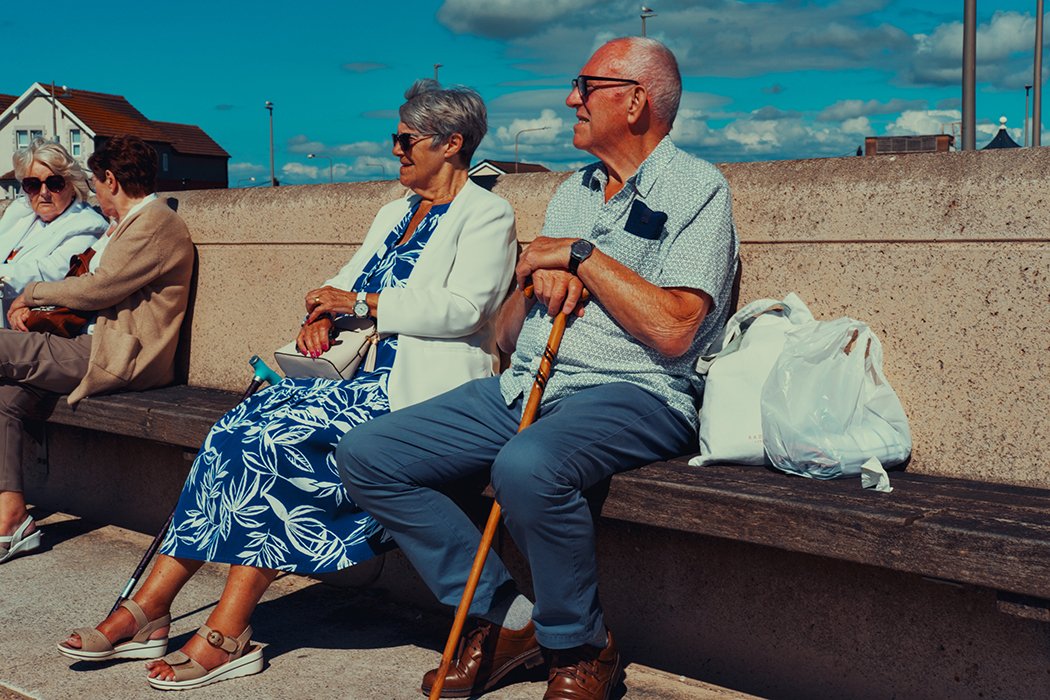
Your project draws on Gaston Bachelard’s description of the sea as “material imagination”. How do you interpret this idea, and how does it shape your photographic approach?
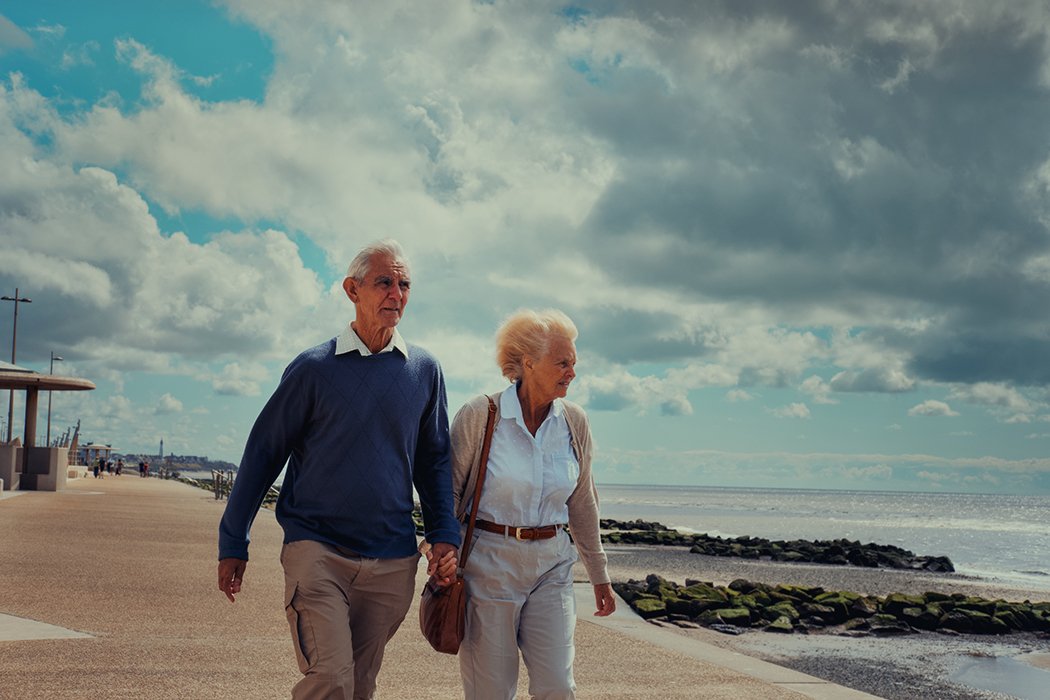
I think that Bachelard’s writing on space is so relevant and useful to how photographers and artists can engage with the world. I love how he writes so poetically about space and about the notion of home. Specifically, I’ve channelled Bachelard’s writing about the qualities of water into the making of The Shore Between Two Rivers. Prior to even making photographs, I had become fascinated with the idea of the sea as a material that provokes memory, imagination, and reflections on our past, present, and future lives. Essentially, I connected with the idea of the sea as ‘material imagination’. I think it resonated with me partly because of my age – I’d reached a milestone in turning fifty a couple of years ago – and also experienced a couple of turbulent years in my work life. So, I also found myself being drawn to the shoreline. That’s when the concept of rivers being drawn to the sea, towards a great expanse and the unknown. It seemed to me that this happens to us too. We have our own specific lives and journeys towards an older age, and we can feel ourselves being pulled towards the sea – literally or metaphorically – as we consider what our future will be like and how our past has drawn us there. Of course, people are drawn towards the sea and the shoreline for many reasons, but I’ve been particularly interested in the reflective experience that older people have in places like the Fylde Coast. The expanse of water that they confront acts almost as a portal to another future. Or, it’s allowing them the space to breathe, or to reflect on where they are in their lives. So, in this sense, Bachelard’s writing helped me to connect with the subject matter and it also influenced the visual approach as non-sensationalist, perhaps poetic, documentary photography.
Although the Fylde Coast provides the setting for this series, the sea is sometimes only partially visible – or absent from the frame altogether. How do you convey its presence through the people, light, architecture, and atmosphere of the shoreline?
I think the sea is present in all the photographs, but often it’s implied. The risk when making this work was in not getting drawn into the tremendous extravagance and busyness of the seaside resort, with its abundance of neon signs and fast-food stalls. It was also about not being too literal. I wanted the work to have a poetic, reflective quality. So, I needed to select carefully when making photographs, and when bringing them together as a story. When I photograph bouquets of flowers tied to a balustrade, that photograph can relate to a husband and wife holding hands as they look towards the sea. The story, then, is not explicitly about the shoreline or even the sea, but rather about how we, as visitors to the sea or as the viewers of these photographs, are affected by that experience. The choice of when I made photographs also helped to convey this – this has been a seasonal project, only progressing during the sunnier months, meaning there’s a warmth in the photographs. This has been a conscious choice, to capture the yellows, blues, and reds that seem so vibrant at that time of year. It’s been a conscious choice also because it links to the story of people connecting with the richness of their lives in a spectacular natural landscape.
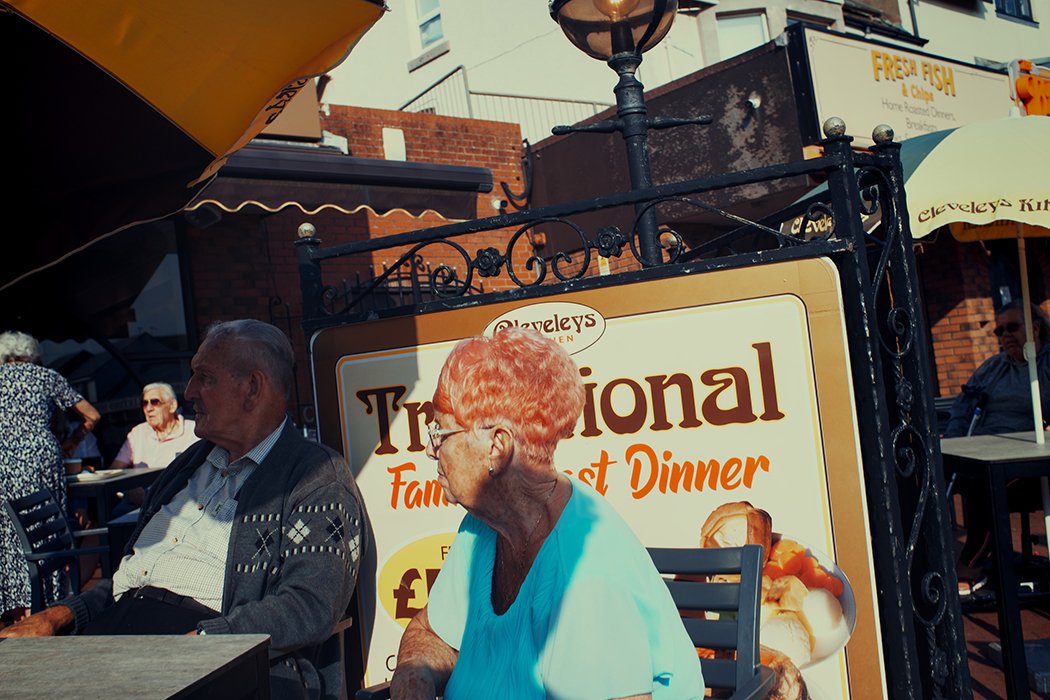
Many of these photographs focus on older people – sitting, walking, shopping, or spending time together. What draws you to these everyday moments and to this stage of life?
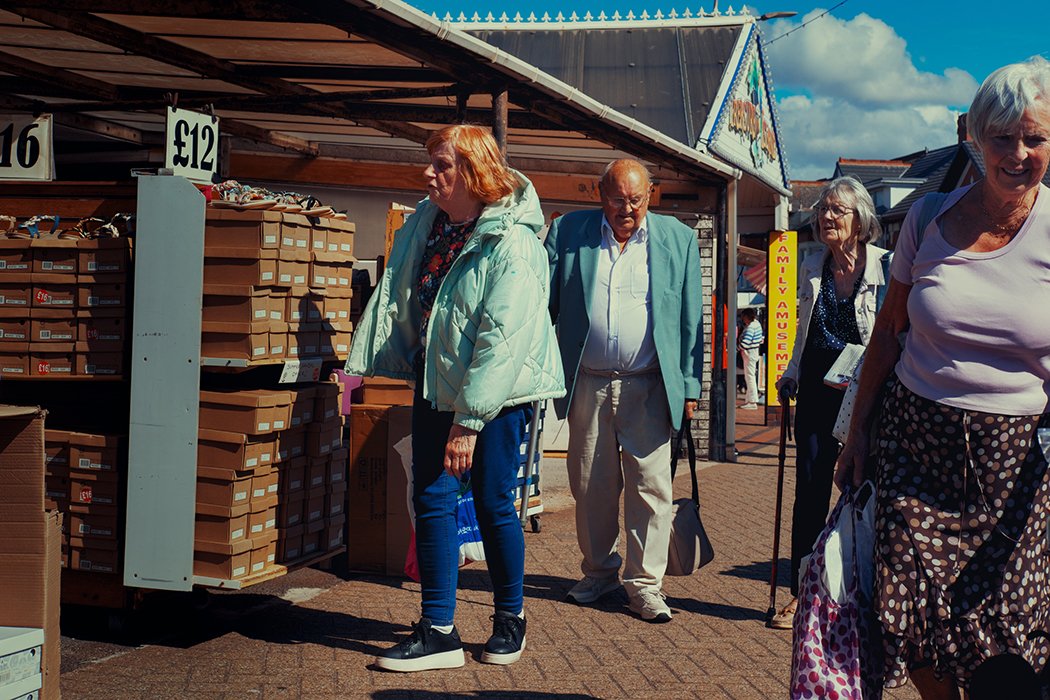
I’m trying to convey something that is distinct about the seaside, and about our experiences within that space. Firstly, I’m attempting to describe something that is liminal, a place between one world, or one journey, and the next. A portal. Yet, I’m also describing something that is elegiac, a feeling that people have as they get older, as they accept that they have more time left behind them than they do in front. There have been many different ways that artists engage with the sea and the shoreline, but in The Shore Between Two Rivers, I’m implying that a particular age of people use the sea and the shoreline as a place to reflect and to prepare. The challenge is then bringing together a series of photographs that takes the viewer along on this journey, that puts them in this environment and, hopefully, encourages them to understand this experience as a commonality. To support this, I weave still-life photographs into the series that provide an oblique perspective on the subject matter.
How do you navigate the ethics and intimacy of photographing strangers, particularly in quiet or unguarded moments?
I’ve developed a strong awareness on the range of ethical approaches to documentary photography over the years. This was consolidated further when I completed a PhD in photography, where I designed participatory and social engaged approaches. For The Shore Between Two Rivers I’ve adopted a direct and observational approach. This was an important decision, because I didn’t want to interrupt the way people engage as they meet the sea, or as they sit and look across the expanse of the shore. In this sense, you could argue my visual approach has elements of a modernist approach – setting out to capture an objectivity in the world – and a contemporary approach – applying concepts in the making of photographs. This was driven by my desire not to stage the moments of reflection, but rather portray them in the moment they occur. I felt that this was an appropriate strategy to produce the types of photographs I wanted to make. Very often, people are aware that I’m making photographs, but sometimes they aren’t – I try to reconcile this knowing that what I’m attempting to describe could be very easily distracted and interrupted by, say, a participatory approach. Yes, I’m using people’s image, and their presence, but in a way that I consider is informed and non-sensationalist. I’ve also been very conscious that the selection and sequencing of my photographs mirrors this approach. The photographs I have chosen – from many thousands – are those which I see as being delicate, reflective and respectful to the story I am trying to tell. In this sense, the ethical approach is as much about choosing the most appropriate photographs in a sequence, as it is about how I make them.
The works were created between 2024 and 2026. Did your understanding of the Fylde Coast – or of the people who gravitate towards it – change as the project developed?
They’ve certainly changed as I’ve experienced the broader range of environments and people that make up the Fylde Coast. From the industrial port, to the promenades, to the sleepy seaside parks. By spending a lot of time there, I’ve learned to understand and recognise the specific places that people head to, in order to satisfy their intention. For example, if they are there with friends and family to have a celebratory knees-up, they are going to head straight to the cafes, bars and arcades that line the seafront. They are not there necessarily to reflect on their life, but rather to be right there in the present. I’ve also learned about the geography of the Fylde Coast, about how the estuaries to the north and south affect how the land is used by industry, or by commerce. Yet, most importantly I’ve experienced how people live their lives in anticipation of something enjoyable – being near the sea, being able to sit and look out across an ocean, to take in the expanse of the sea, the land and the sky, is a universal experience that I think we can all benefit from. Photography is commonly like this: you receive an education in something much broader, as a natural byproduct of studying something very specific. It’s something I’ve grown to love greatly about being a photographer.
0 comments on “John Harrison”