
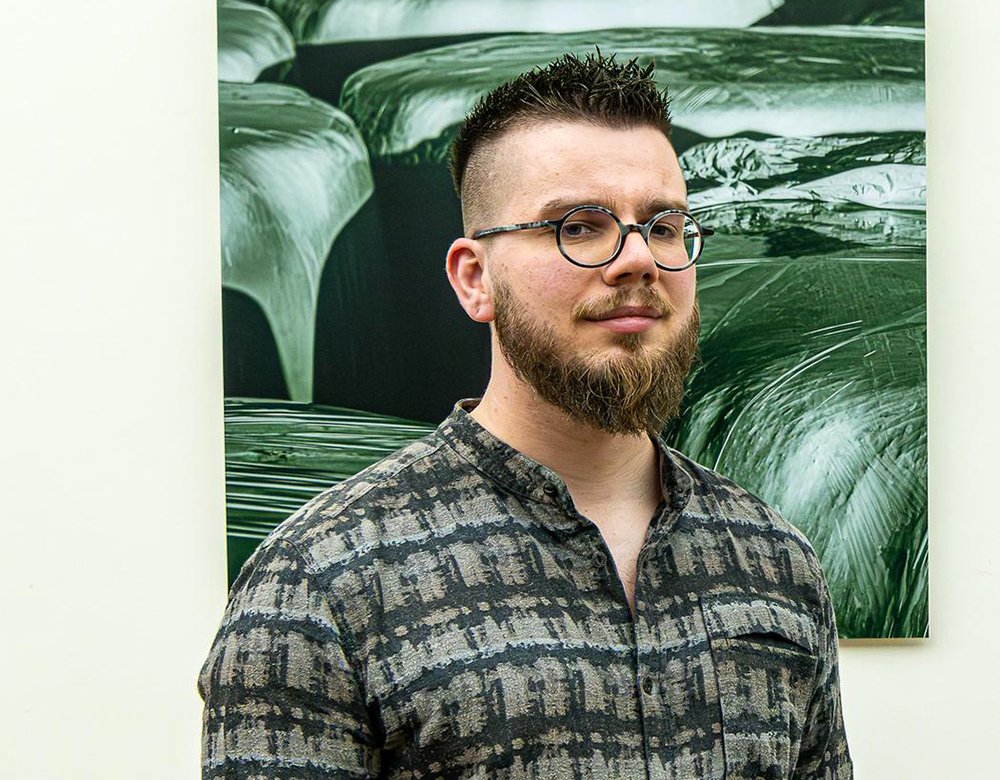
In A Trance of Chlorophyll, you describe the Monstera as a “living presence” rather than a decorative subject. What first led you to approach the plant in this way?
My engagement with animistic philosophies of nature was decisive. They encourage me to understand plants and trees not as mute material arranged for human use, but as fellow living beings with their own presence and ways of inhabiting the world. That perspective also changed how I looked at the Monstera. I no longer wanted to use it as an attractive studio prop or a symbol imposed from outside. I wanted to spend time with its leaves, openings, scars and movements, and to respond to the individuality I encountered. Calling it a “living presence” is therefore also an ethical position: the plant is not merely there to decorate the image; it participates in what the image becomes.
 Marcel van Beek | Chlorophyll Trance | 2026
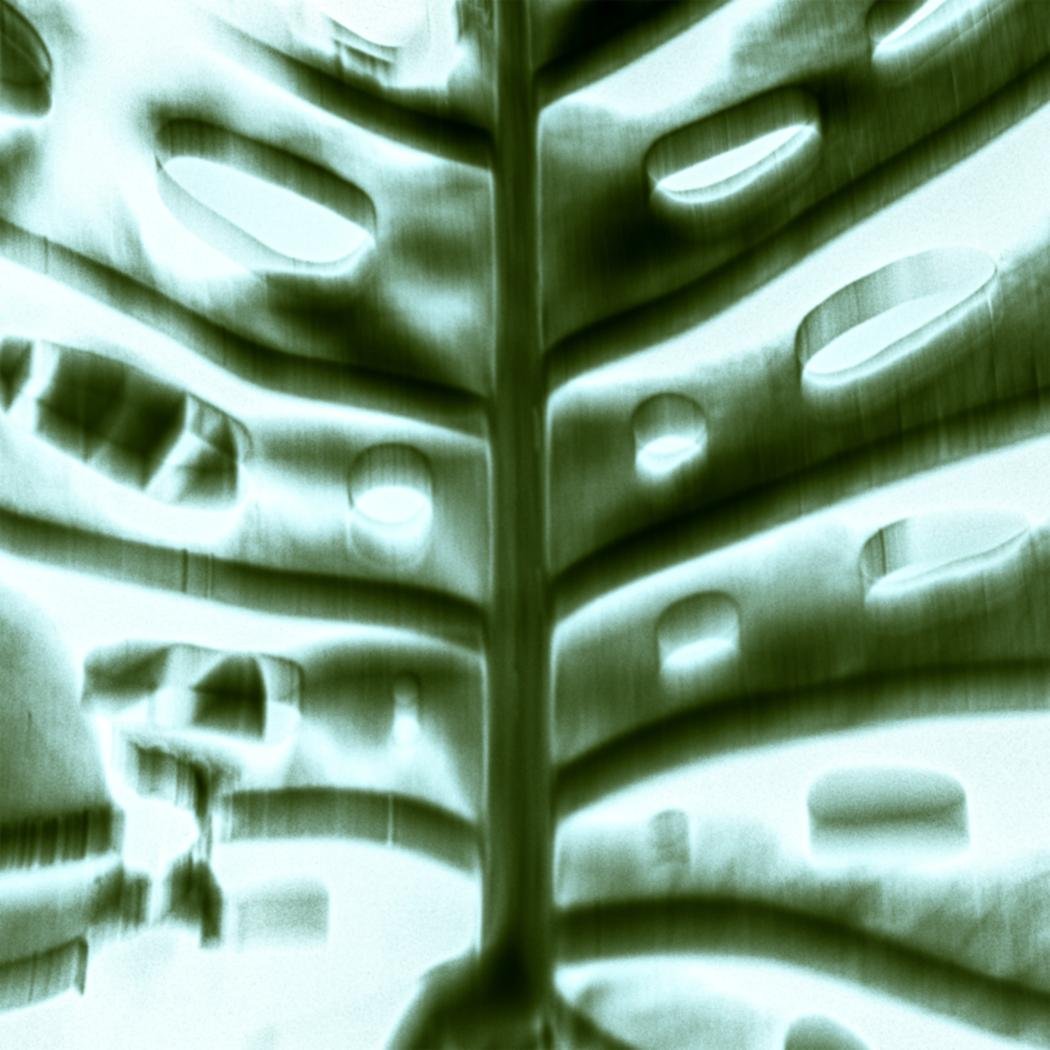
The photographs often move between recognisable botanical forms and near-abstraction. How important is this moment when the subject stops being immediately identifiable?
This threshold is central. As long as the leaf is immediately identifiable, the viewer may stay within the familiar category of “houseplant”. When recognition begins to loosen, attention shifts to rhythm, light, colour, depth and bodily association. The photograph can then become a field of sensation rather than a description. I do not want the botanical source to disappear completely; a residue should remain, so that abstraction grows from an encounter with something real. The tension between recognition and uncertainty allows the plant to be itself and, at the same time, to become a possible landscape, body, aperture or mental space.
 Marcel van Beek | Chlorophyll Trance | 2026
You use close framing, selective focus, and intentional camera movement to transform the leaves. How much of each image is carefully planned, and how much depends on chance and instinct during the exposure?
The one decision established in advance is that I am not making neutral botanical documentation. Beyond that, the process is deliberately open. I may choose a particular leaf, angle, distance or light situation, but the decisive relationships often emerge spontaneously while I am photographing. Selective focus and intentional camera movement are responsive gestures: I follow what the plant and the light offer at that moment. Chance is therefore important, but it is not arbitrary; it operates within a concentrated act of looking. In post-production I work just as intuitively, refining tonal and chromatic relationships until the image reaches the emotional register I sensed during the exposure. The single exposure remains the foundation, while the final image develops through a dialogue between intention, accident and recognition.
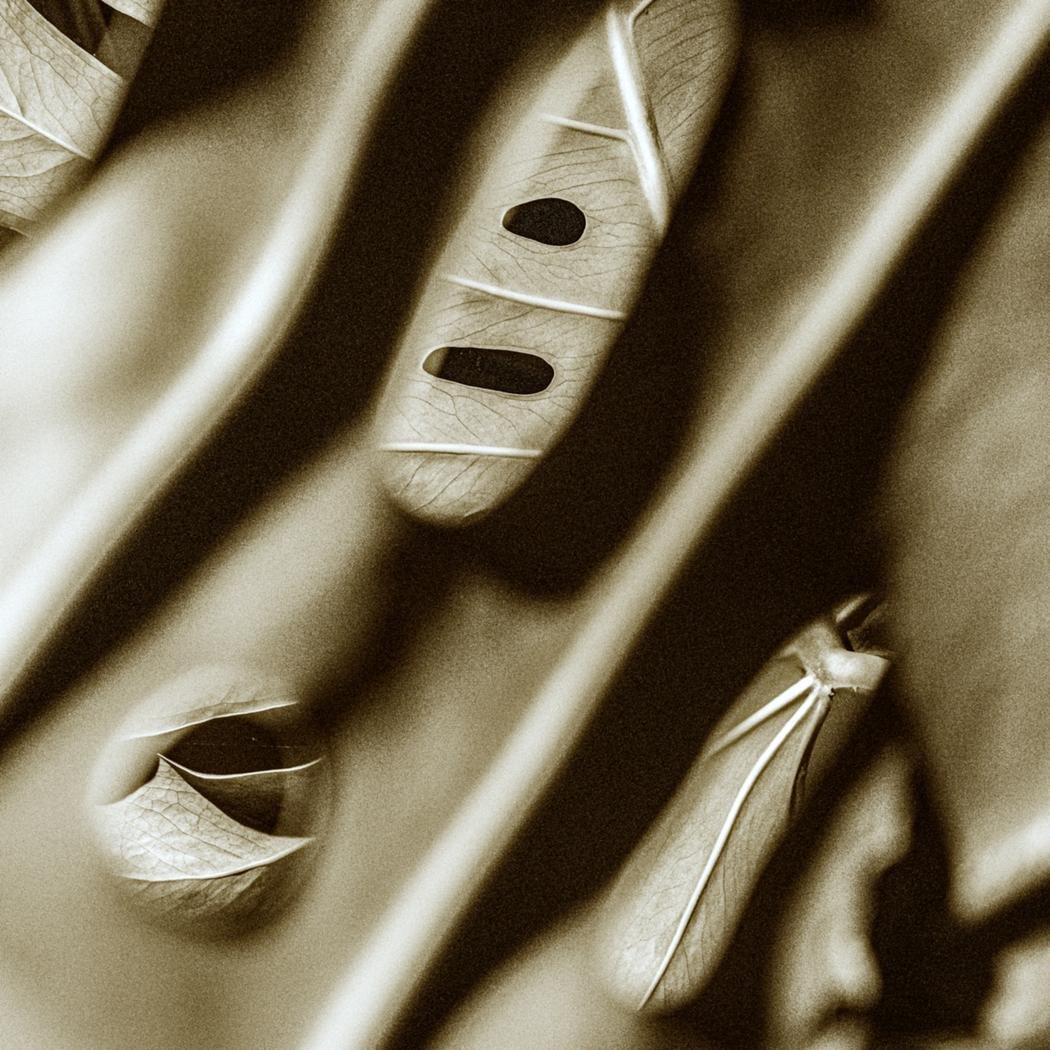
The Monstera’s natural openings become almost like eyes, windows, or apertures in several photographs. Do you think of these shapes symbolically, or primarily as formal elements within the composition?
Both. Formally, the openings are powerful because they interrupt the surface of the leaf and create depth, rhythm and a play between concealment and visibility. At the same time, it is difficult not to experience them symbolically. They can resemble eyes, windows, wounds or portals, and each association changes the emotional temperature of the image. I do not assign them one fixed meaning before photographing. The symbolism arises through the formal encounter and remains open. An aperture may invite the gaze, return it, or suggest that another space exists behind the visible surface. That ambiguity is more important to me than a single decipherable symbol.
 Marcel van Beek | Citrinitas | 2025
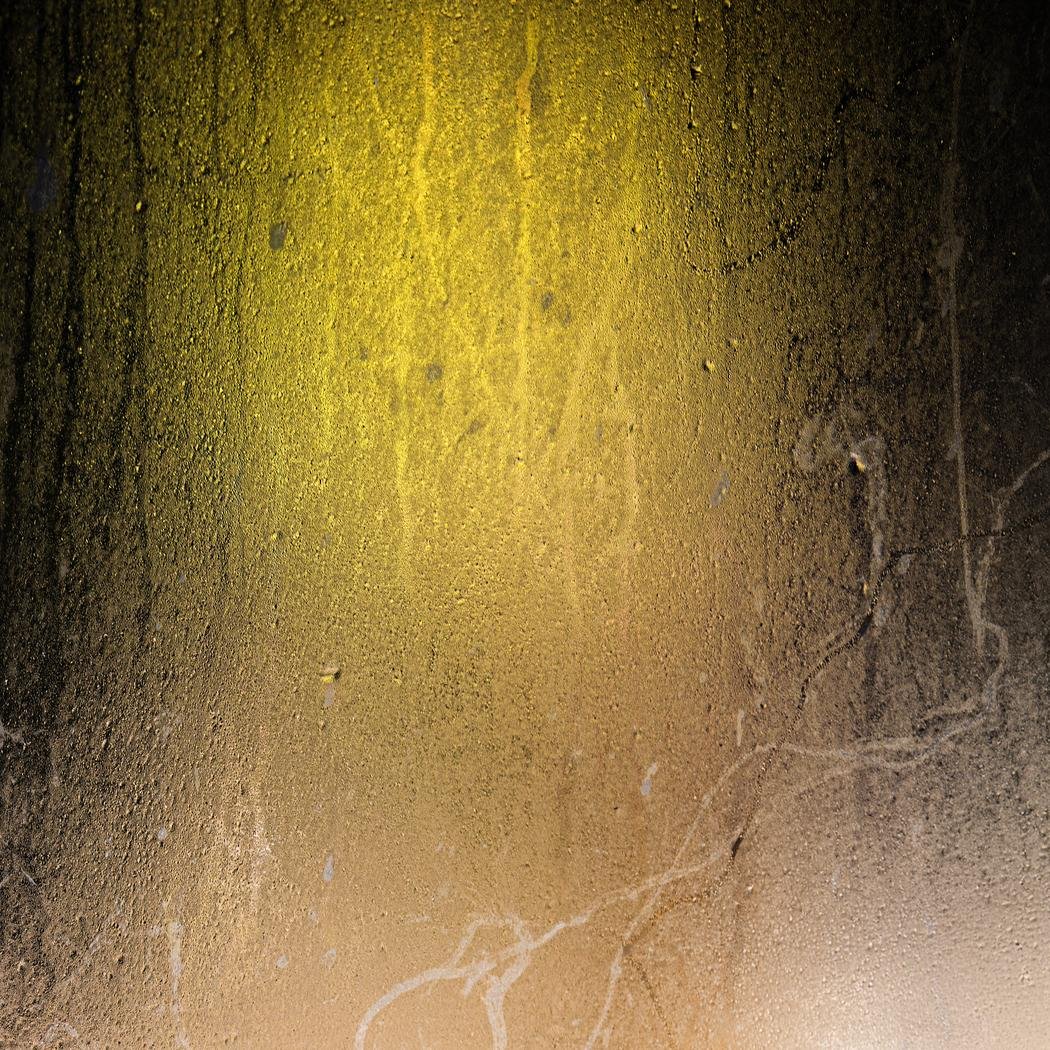
Yellow appears as a particularly significant presence in the Citrinitas works, sometimes as an architectural detail and sometimes almost as pure light. What role does colour play in shaping the emotional or symbolic meaning of this series?
In alchemical thought, citrinitas — the yellowing — marks a stage of transformation and illumination. This association is fundamental to the series. Yellow is not simply an attractive colour laid over the subject; it is the agent through which condensation, water, glass and the traces of a snail are transformed into new visual worlds. A minor architectural detail can become a luminous threshold; a trail can resemble a river delta, a map, a script or a passage between spaces. The colour gives these ordinary materials an inner intensity. Emotionally, it oscillates between warmth and warning, revelation and strangeness. It suggests that transformation can be radiant, but never entirely stable or reassuring.
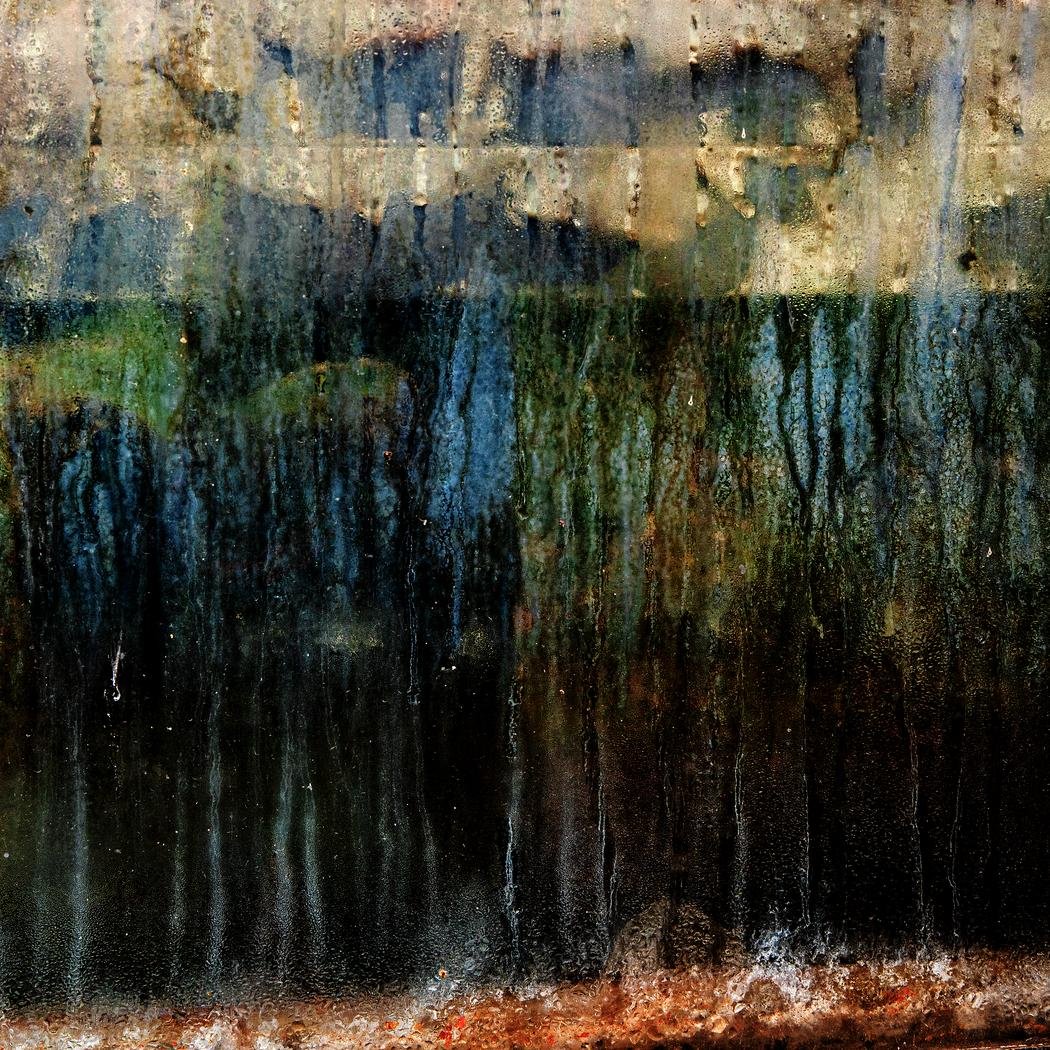 Marcel van Beek | Window Delta | 2025
Both series transform ordinary things — a houseplant, condensation, glass, traces of a snail — into images that feel unfamiliar and difficult to decipher. What attracts you to making the everyday appear strange?
This is perhaps the central impulse of my practice. I am drawn to the possibility that the everyday world contains forms and states that remain hidden until a particular light, framing or movement reveals them. Making the familiar strange allows me to uncover those latent qualities. It also creates a bridge between outer observation and inner experience. Again and again, I find things in the world that correspond to something I feel inwardly: a condensation mark may become a threshold, a snail trace a nervous system, a leaf a body or an eye. Photography enables me to recognise these correspondences without illustrating them literally. The image becomes a place where external matter and internal states briefly mirror one another.
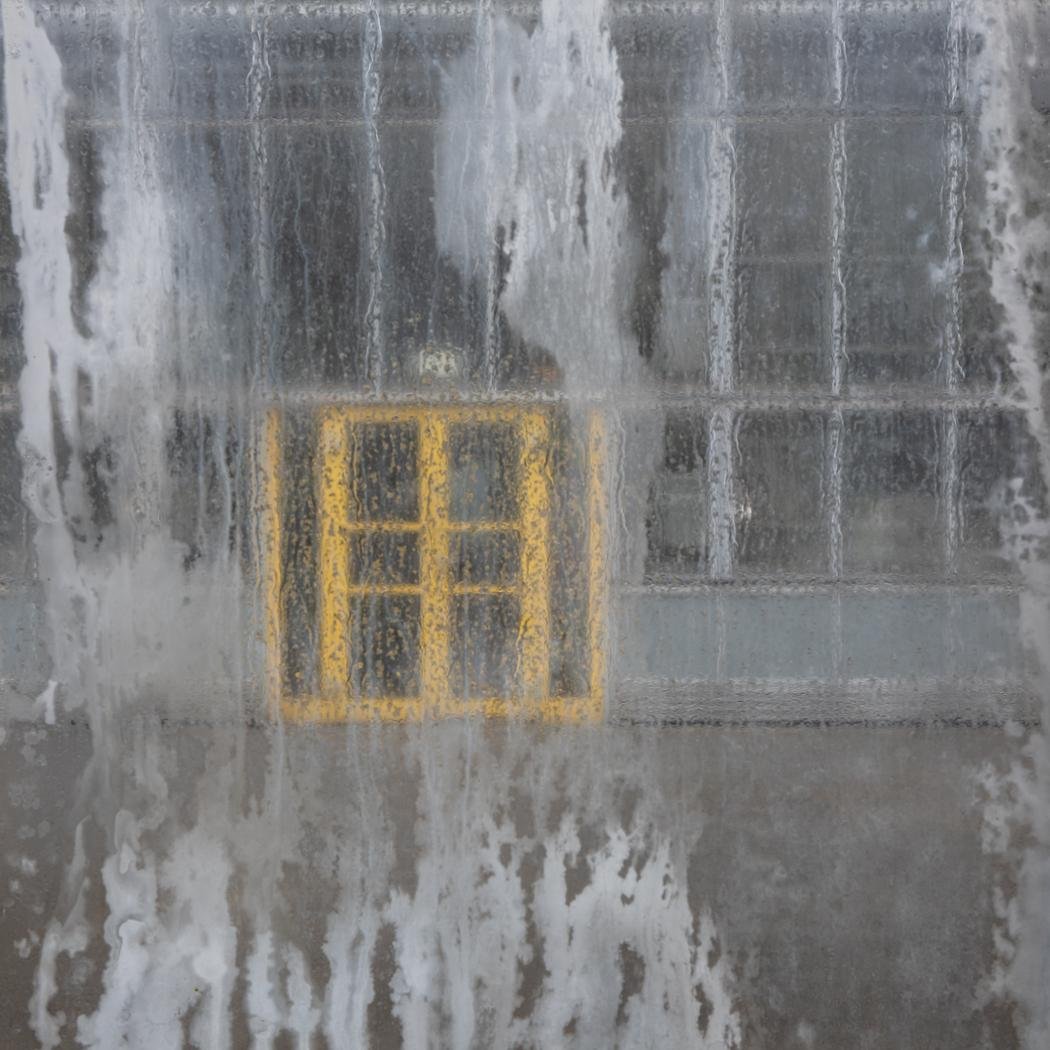 Marcel van Beek | Inside And Out | 2025
Your photographs often resist giving the viewer a clear explanation of what they are looking at. How much ambiguity do you want to preserve, and what kind of experience would you like viewers to have before they understand — or perhaps never fully understand — the subject?
I want to preserve enough ambiguity for the image to remain active after the first glance. Identification can be satisfying, but it can also close perception too quickly. My primary interest is not in ensuring that viewers understand the object exactly as I do, or even that they identify it at all. I am more interested in evoking a mood: attraction, unease, intimacy, suspension, perhaps the sense of standing before something familiar that has changed its nature. Viewers should be able to move through the image according to their own memories and sensitivities. Full understanding is not the goal. Sometimes the most meaningful encounter occurs precisely when a photograph remains partly unreadable.
0 comments on “Marcel van Beek”