
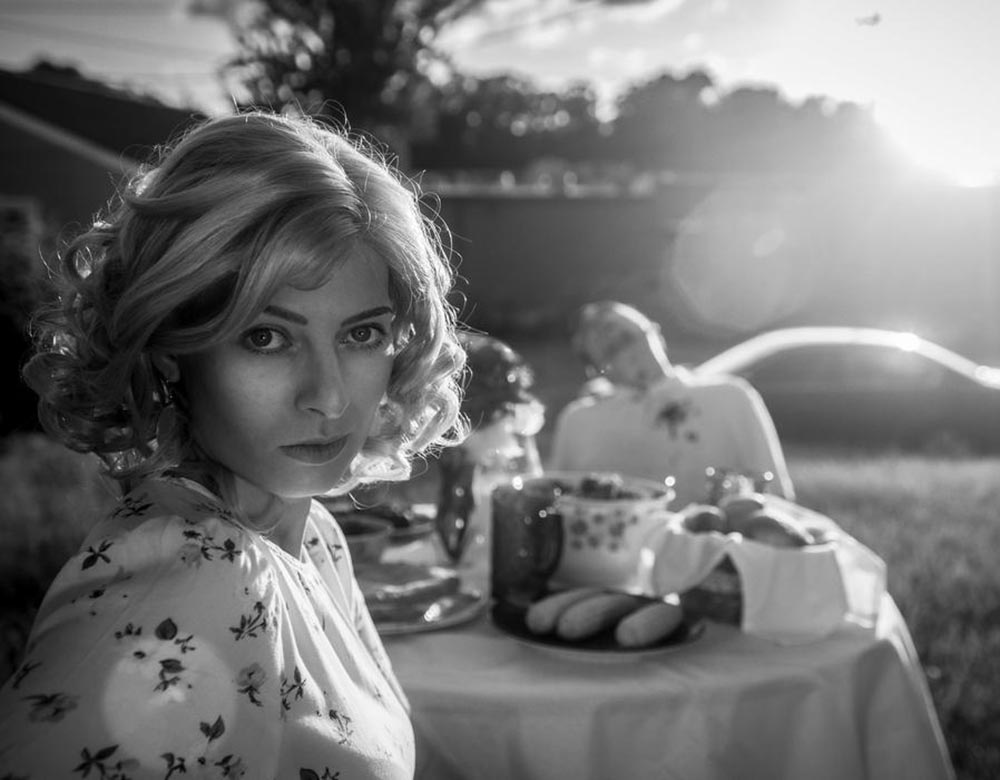
Where do you live: North Carolina, USA
Your education: Bachelor’s in Media Studies specializing in Film Production/Psychology minor
Describe your art in three words: Narrative. Activist. Troublemaker.
Your discipline: Filmmaker and screenwriter by education, photographer out of necessity. Escaped and reformed corporate husk.
Website | Instagram
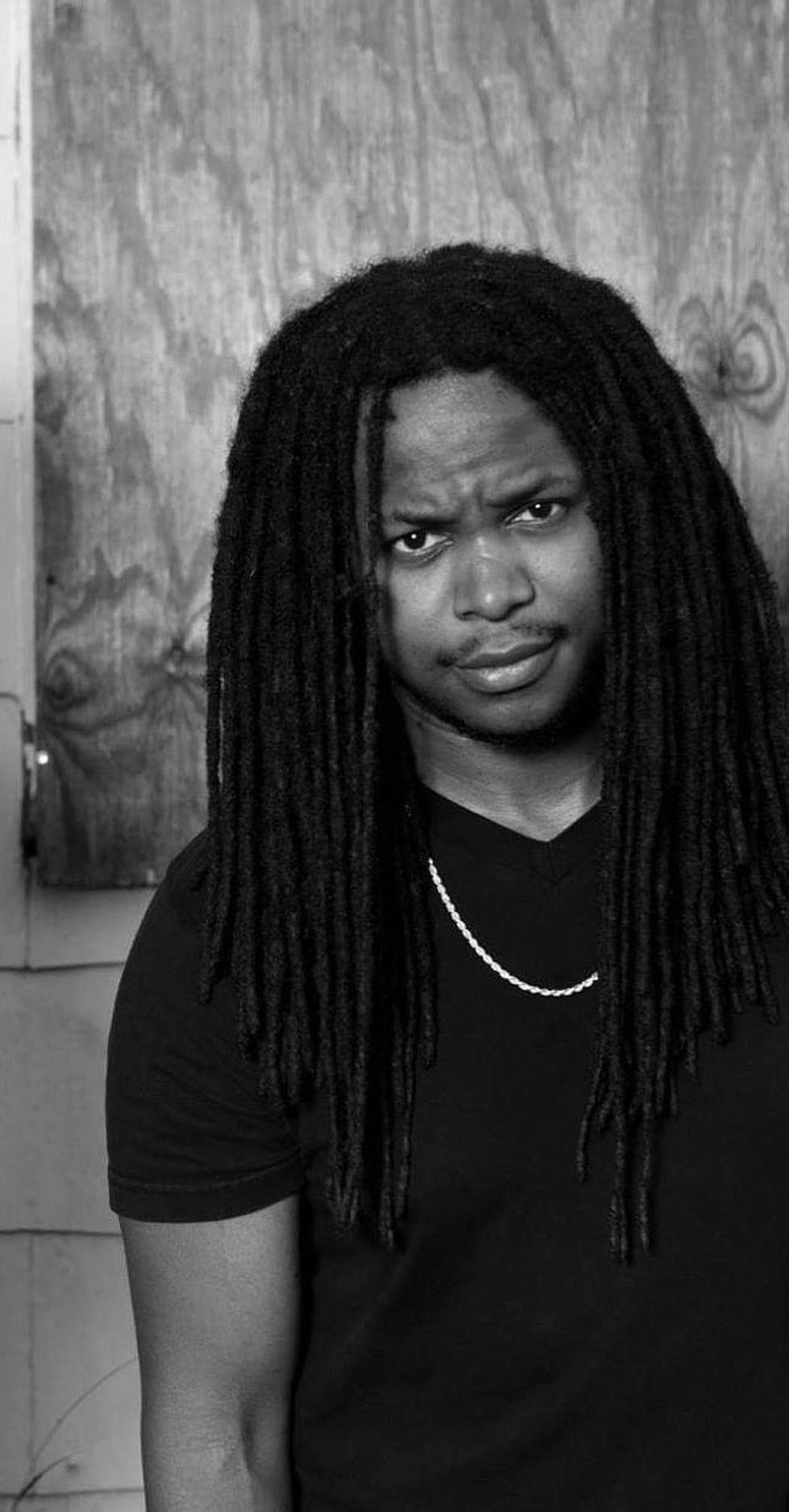
Your journey spans New York, Atlanta, and Japan. How have these different environments shaped your visual language and storytelling approach?
I love all the places that have helped me become the creative that I am today, however, Japan was the first place that made me realize that photographers are a group of people who should be actively respected and viewed as artists who are documenting the human experience. They’re archiving the moments of all of us and that’s something to be cherished.
The photo book space in Japan is extraordinary. These are bodies of work that open the doors to people, places, and times. Access to things that we’d just never be granted. You see as photographers develop relationships and trust with a variety of communities. In America, we seem to only give this treatment to photographers who have now passed. In my experience, Japan and its photography enthusiasts have created a support system that wishes to give artists their flowers while they’re still alive. I’d argue that Japan’s photo book reverence simply does not and could not exist in America.
Many of my friends in the states who are photographers spend their time doing weddings, corporate videos, and family photos. A gig economy that doesn’t view photographers as artists and wants as little personal input as humanly possible. You’re there to take the photo and deliver edits. That’s it. It’s a reality here that commands very little respect, that’s why you see so many photographers from the US who focus on the perks of their gigs and rarely ever on the work itself, because they hate the work and they’re doing it for clients who don’t respect them. Don’t believe me: Ask most working photographers how often a client asks, ‘Why should I pay your rate when my kid can take photos on their iPhone?’
I remember returning from my first experience at KyotoGraphie bursting with enthusiasm. ‘They actually love you. Not just what you can do for them. They love you as an artist.’ I routinely say this to my friends and they still can’t wrap their heads around it. Your vision of the world and how you choose to capture it is a gift. And you deserve to be valued for that. Full stop.
You often reference classic cinema and international film. Which directors or films have had the greatest influence on your photographic style, and how do those influences appear in your work?
Directors: Spike Lee. Wong Kar Wai. Anton Corbijn. Hu Bo. Sofia Coppola. Nicolas Winding Refn. Richard Linklater. Barry Jenkins. Kelly Reichardt. Bi Gan. Almodovar. Too many to name.
Films: Do The Right Thing. Moonlight. In The Mood For Love. Punch Drunk Love. Drive My Car. Perfect Days. Family Romance LLC. Long Day’s Journey Into Night. Waltz With Bashir. Drive. Klute. Like Someone In Love. Also too many to name.
I think if anything, each of these creators and films have a way of depicting human experiences in such a way that makes me want to act. Either in a journey to be a more connected human being or inspire me to create. Regardless of how a particular piece or sequence manifests itself, I’m almost always exploring the human experience.
Also, sometimes I find humor in making fun of America’s fascination with fashion.
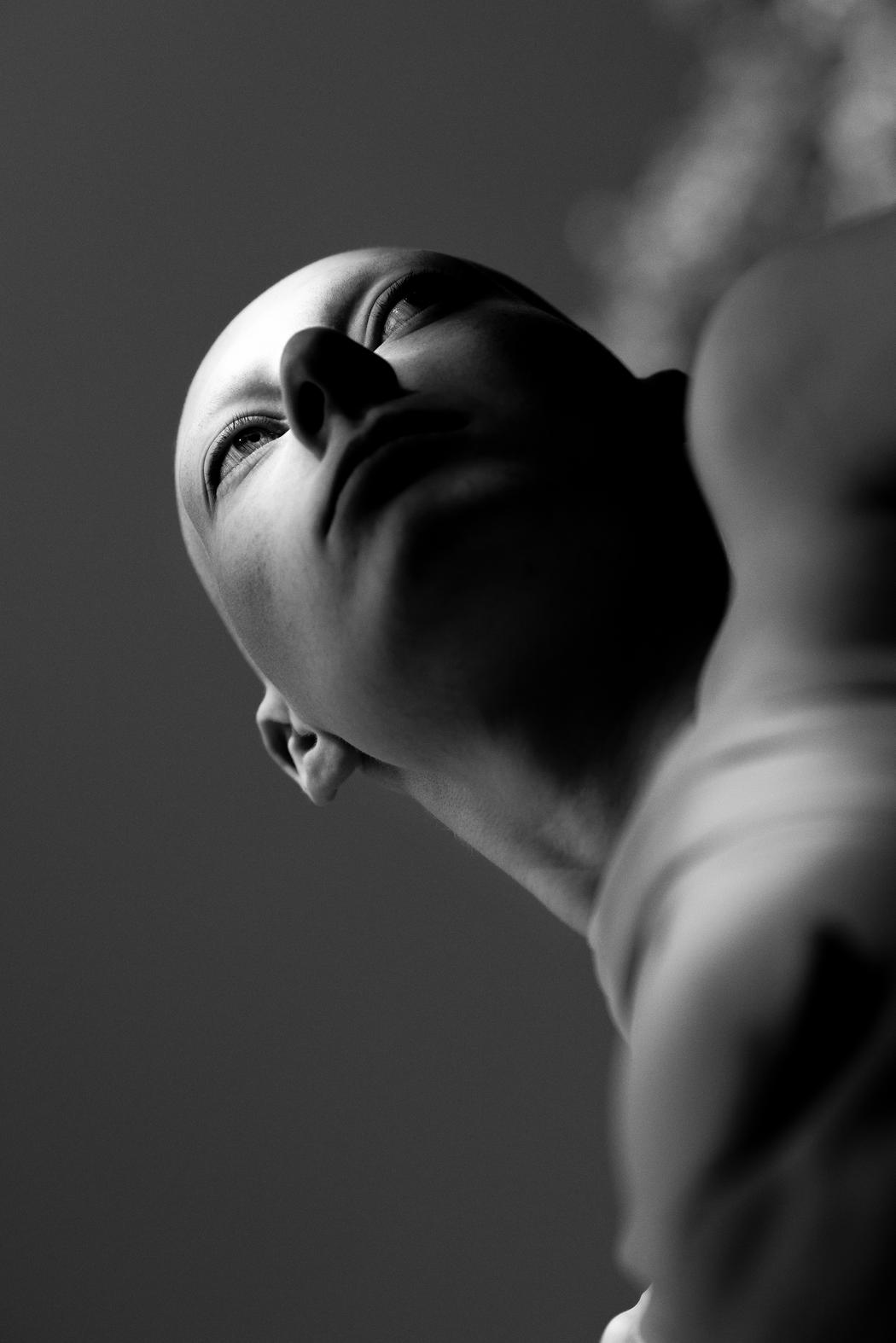 Maurice Hicks | Alien To This World | 2025
Leaving corporate life for photography is a major turning point. What was the moment when you realized you needed to make that change?
I was in Japan after finishing my ‘AKIKO’ project and I was in Haneda airport waiting for my return flight. Countless delays eventually led to a cancellation because something was wrong with the plane and the pilots didn’t feel safe flying it. And there wouldn’t be another one from the carrier for another 20 or so hours. They gave us all the routine hotel and food vouchers, information that I obviously forwarded on to my manager. Initially, she responded wonderfully, thanking me for letting her know and urging me to travel safely. I assumed that was taken care of and went on a search to use the food voucher, as one does when given free food money.
However, about 30 minutes after the pleasant end of our previous conversation, she began messaging me again and her tone was now accusatory, aggressive, and demanding. ‘You really need to find a new flight’ and ‘We need you to work on getting back here’. It was very clear that she reported the situation to someone higher up who then told her that she needed to press me. It was beyond obvious. And she wasn’t someone who possessed the ability to massage her messaging to hide this.
I had given that organization 15 years of my life, and during that time I was never someone who ran out of PTO or abused the system. And it’s not like airlines give out hotel and food vouchers for funsies if someone believed I was lying to them in order to extend my time away. I hadn’t done anything to warrant being disrespected in this manner, and it infuriated me.
Additionally, my ‘AKIKO’ project and the process of making it was significantly transformative for me. And I knew that this sort of project was something I wanted to do more of.
However, the moment in which I knew I was quitting was when I got done reading another one of her ridiculous text messages, lowering my phone and looking at my food voucher-obtained meal and realizing I didn’t even want to eat it anymore. She had ruined my meal. That’s unforgivable.
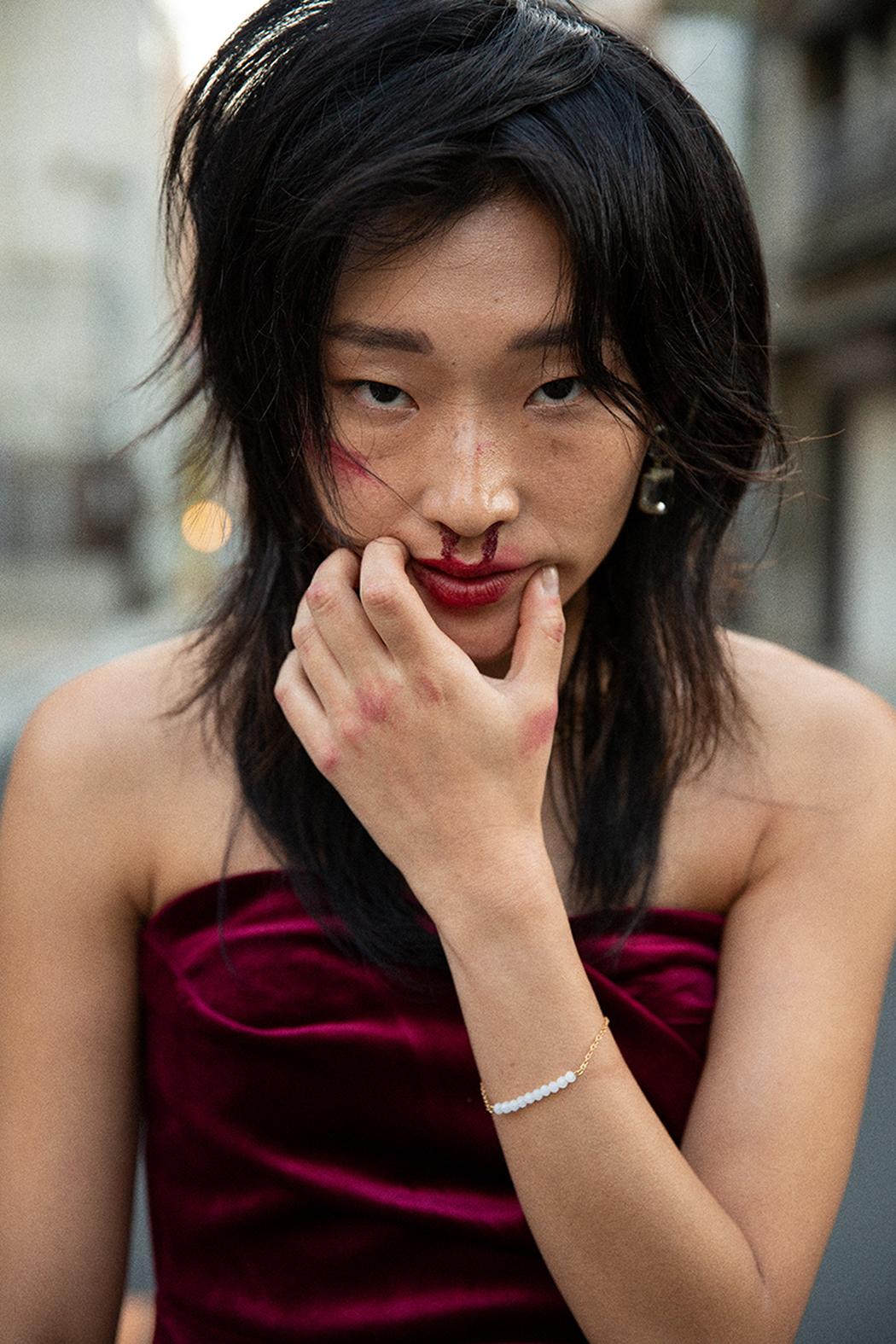 Maurice Hicks | Exist In Spite Of Them | 2024
Your series often feels cinematic, mixing beauty with tension or social commentary. How do you balance narrative, aesthetics, and emotional intensity in a single frame?
When I was in film school, one of the most crucial pieces of advice was ‘show, don’t tell’. That’s still an integral part of my process. The elements within the frame should be there for a reason. They serve the idea. If it’s in the frame, it should be questioned. When everyone involved realizes that the idea is bigger than any of us, you naturally understand that we’re all just pieces that build towards a common message. A purpose. Many of these ideas are universal. When you have the elements, after exploration and critical thinking, the balance finds itself almost naturally. You don’t have to fight for it.
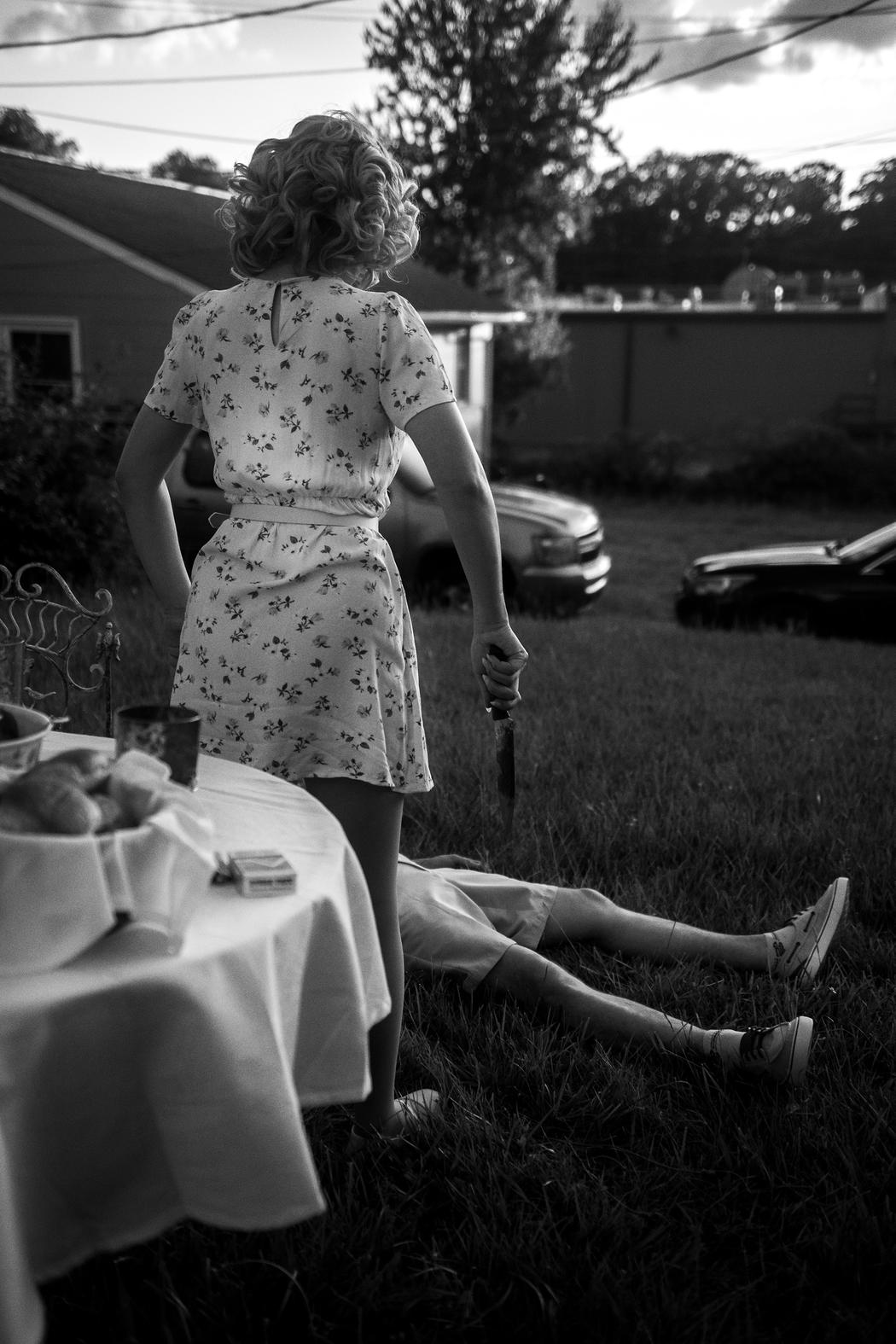 Maurice Hicks | Head Of Household | 2025
In your upcoming project Dream(s)2, what themes or ideas are you exploring that differ from your earlier books?
My current project explores fandom, parasocial relationships, and fandom. I’m old enough to remember a world before influencers and watching them become synonymous with society almost the world over has been interesting. Dream(s)2 examines that on a hyperfocused scale.
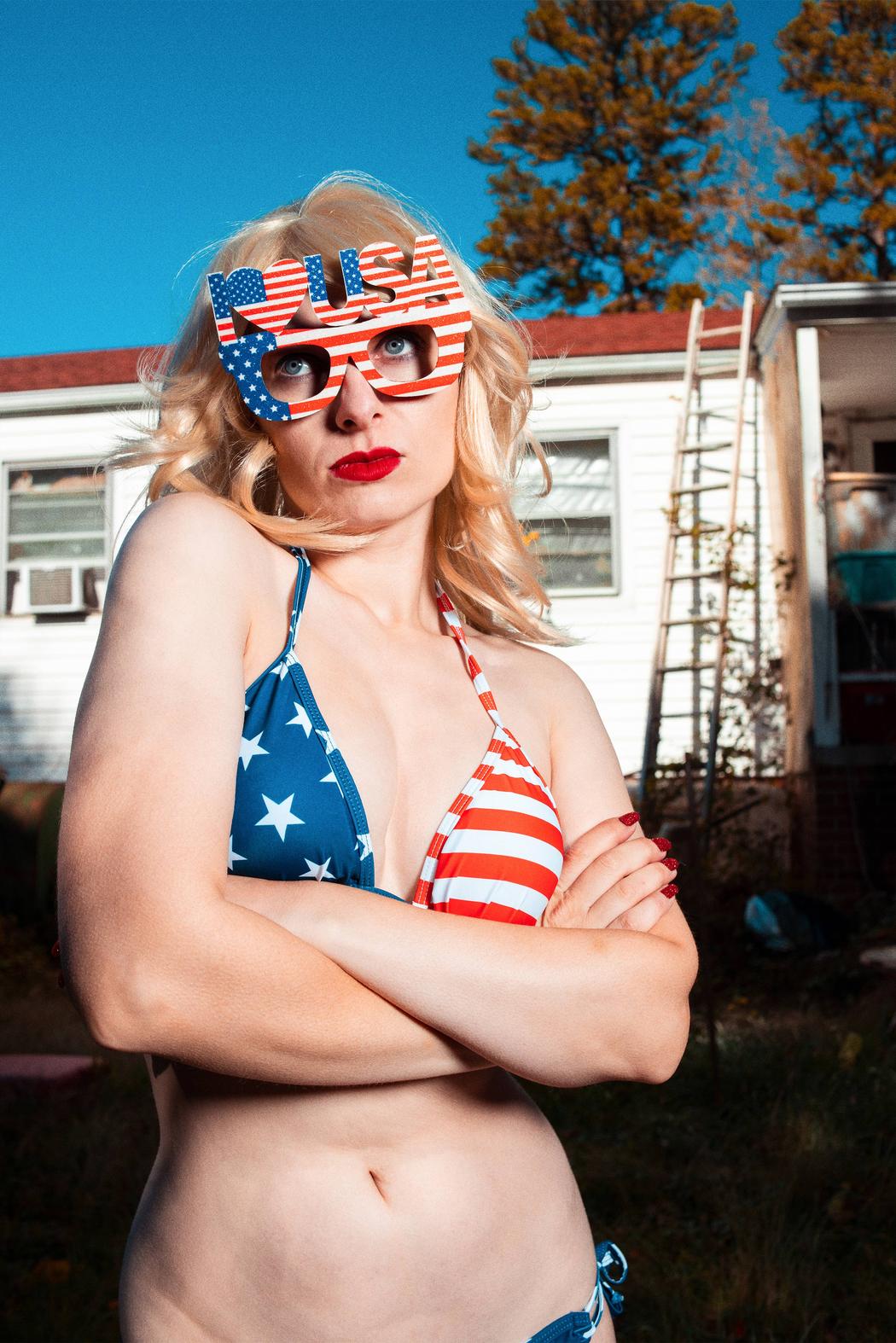 Maurice Hicks | Who Are They | 2025
Many of your images seem to ask questions rather than give answers. What questions are you personally trying to explore through your photography?
I’ve always been a bit of a social activist, however in the states, there is usually a point in which people are tired of being confronted with it. They shut down. And they almost never respond positively or openly to anger. Even when the anger is warranted. The current political climate of the United States is a tricky one to navigate, especially in terms of art regarding the opinions, experiences, and perspectives of marginalized groups. So we have to get creative. Especially when you’re being subversive.
I’m often reminded of a scene from the film Cop Land. It features Ray Liotta and Sylvester Stallone. Liotta’s character delivers some amazing advice, ‘The goal is perpetual motion. You turn the wheel when you hit a red light. You want to come at them head on? No. You move diagonal. You jag.’
If I’m being perfectly honest, that advice applies equally in both the corporate and art worlds. So when I create and I want to say something, I present the issue in a fashion that the intended audience will want to look at it. It’s a trick. And I’ve seen people get upset when they realize that they’re being confronted with a topic that they may have wanted to avoid. Men, in particular, get antagonistic. You see the moment of the epiphany as it dawns on them. It’s beautiful. That’s always been hilarious to me.
But to finally answer your question: I wish to pose questions about social justice, racism, feminism, bodily autonomy, materialism, and equality. All things deemed worthy of getting you put on a list somewhere within the current administration.
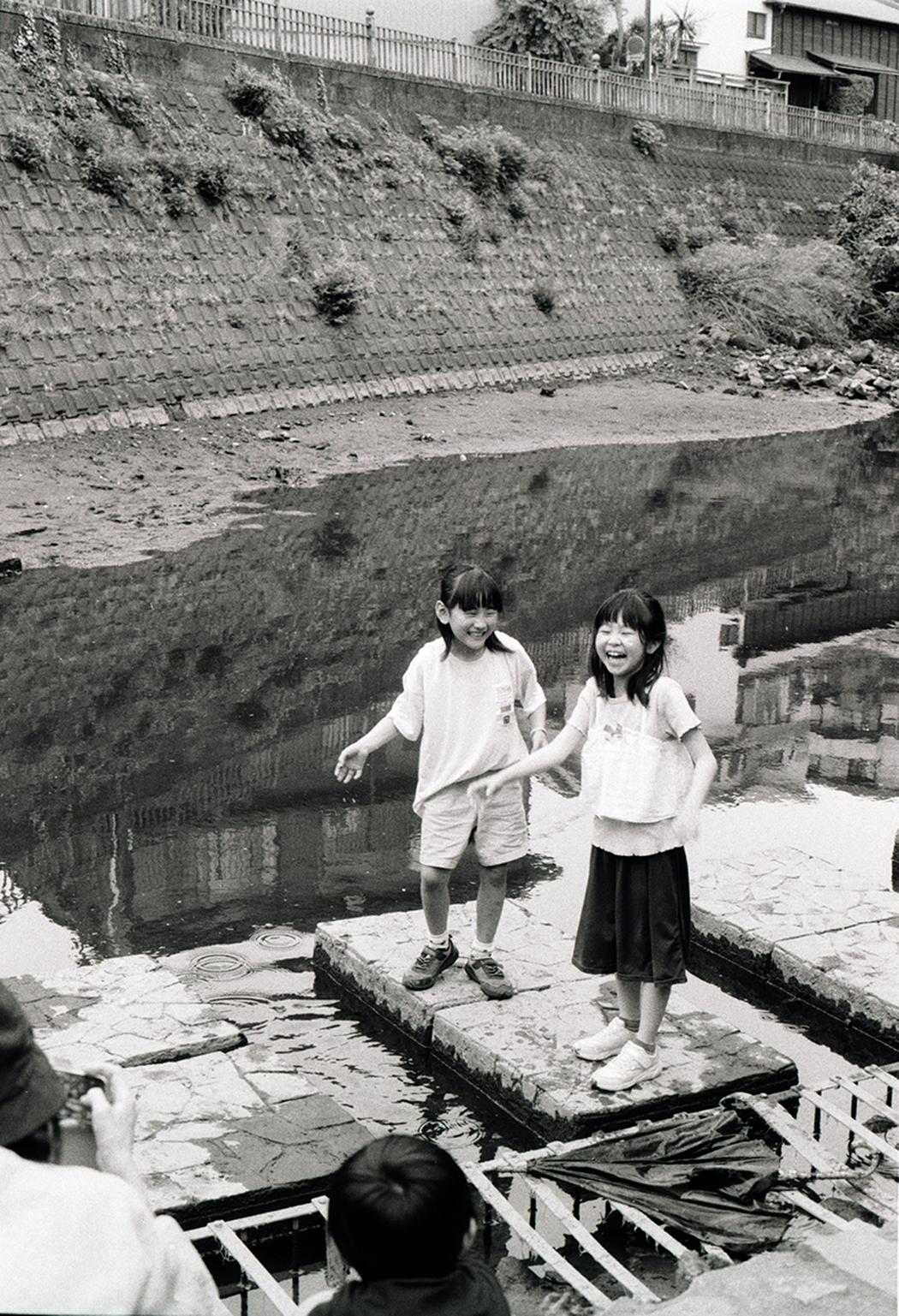 Maurice Hicks | Joy | 2024
How do you work with models and subjects to create the raw emotional authenticity seen in your portraits?
Almost all of my portrait sessions are designed beforehand as sequences. Even when more abstract in nature, I develop a clear beginning, middle, and end. Usually there is a climax of sorts. Shot lists are expanded in such a way that they include ‘moments’, not just reference images. Having all of this information allows for the vision to be clearly communicated, and when clarity is presented, the ability to grasp the material is so much easier. It ensures that myself and the model are operating the same universe and that allows for a tremendous ability to explore and create something unique.
0 comments on “Maurice Hicks”