
Curatorial Review
by Anna Gvozdeva
There is a particular honesty in a photographic series that admits it began as a friendship. Chadi Ouanes’s NYA, made in Bamako over five years, does not claim the detached gaze of documentary, nor does it hide behind the pure artifice of fashion. It occupies a third space: a collaborative staging in which the subject is also co-author, and in which being photographed becomes a rehearsal for being seen differently.
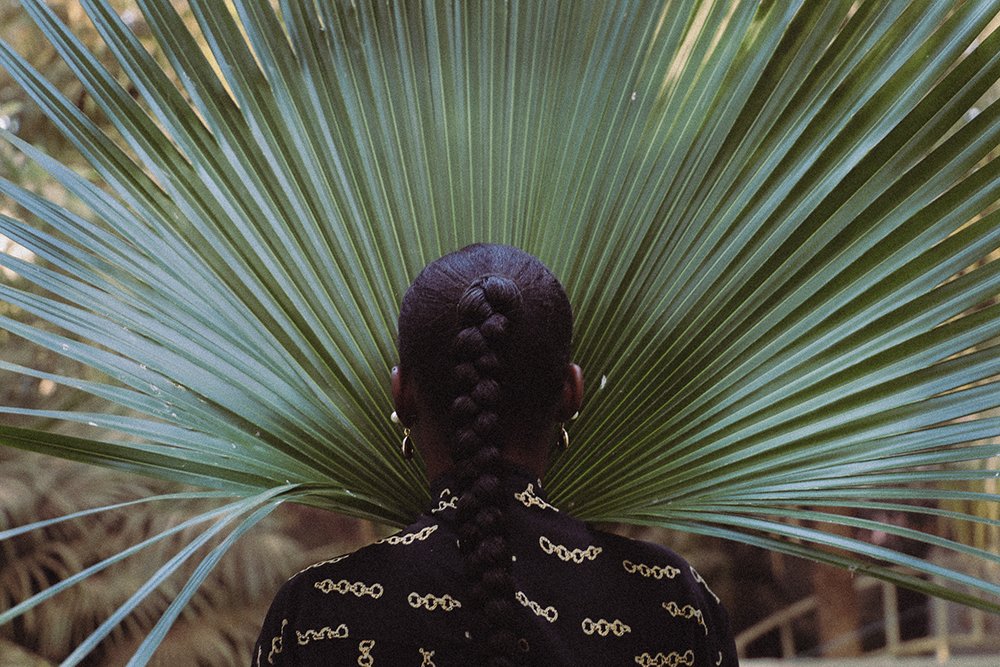
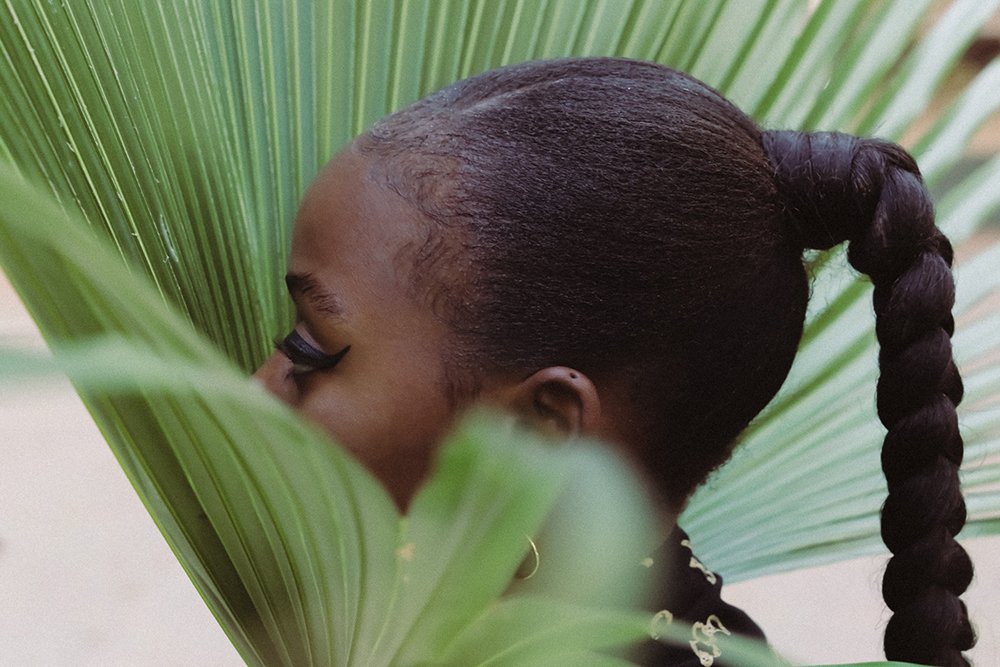
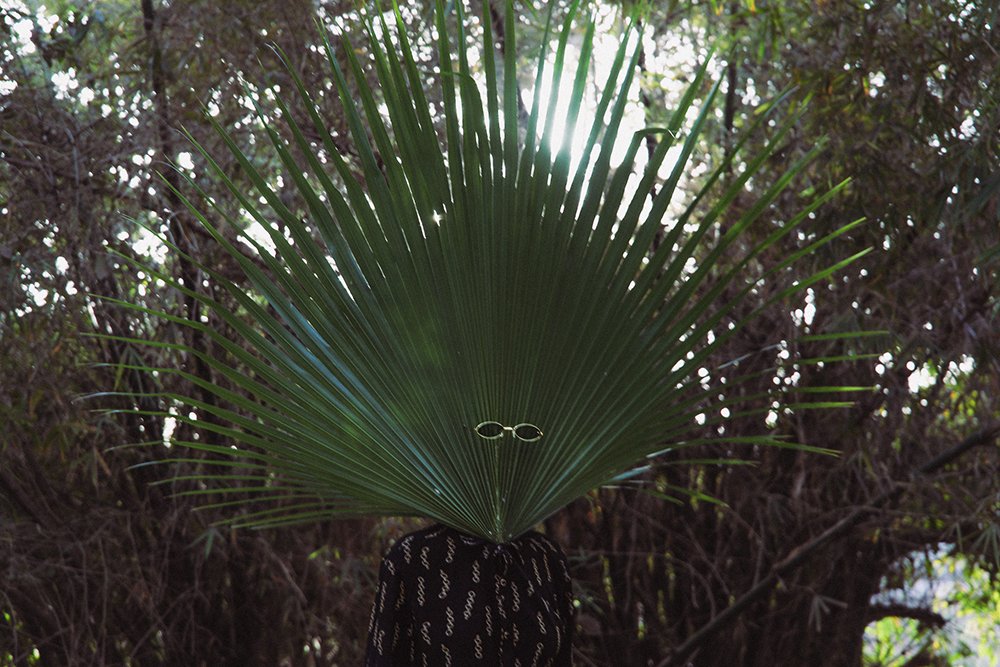 The series is built on a small, disciplined vocabulary: the fan palm, the rattan enclosure, the long braid, gold chain jewellery, a black garment patterned with chain links. These recur like motifs in a poem, and their meaning shifts from frame to frame. In the most striking image, a single palm leaf replaces Nya’s head entirely, with a tiny pair of gold spectacles perched where her eyes should be. It is witty and quietly surreal, part Magritte, part costume, and it states the series’ central argument: identity is often something placed upon a person, sometimes absurdly. When the same leaf reappears behind her as she turns away from the camera, it becomes a halo or a radiating crown, and the braid running down her spine reads as a line of resolve.
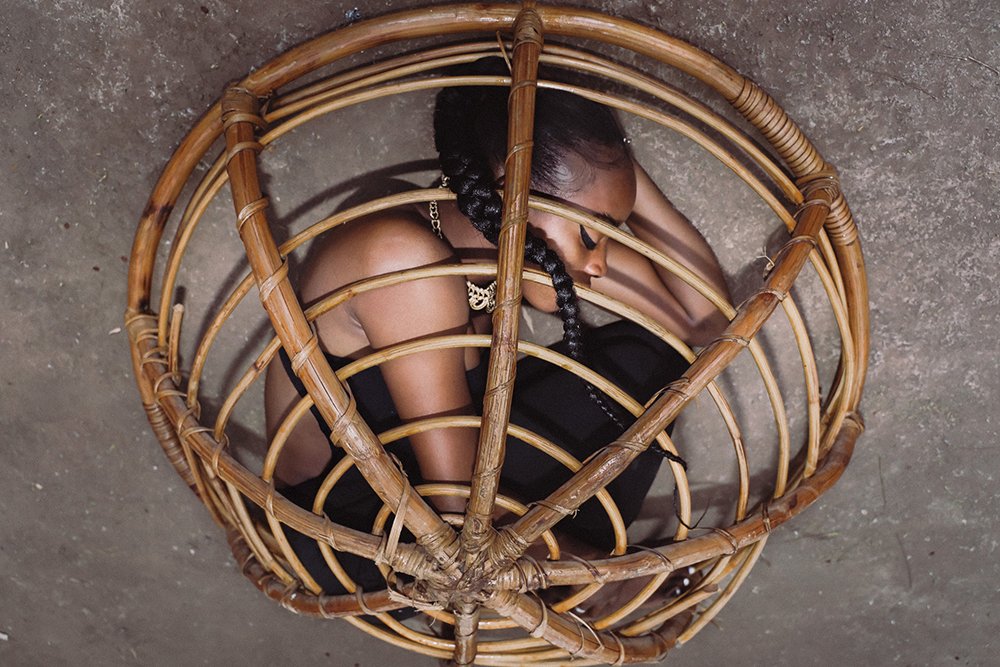
 The rattan chair is the most loaded device. Overturned and shot from above, it becomes a woven cage around a crouched figure with closed eyes, the clearest visual statement of the “imposed identities” the project describes.
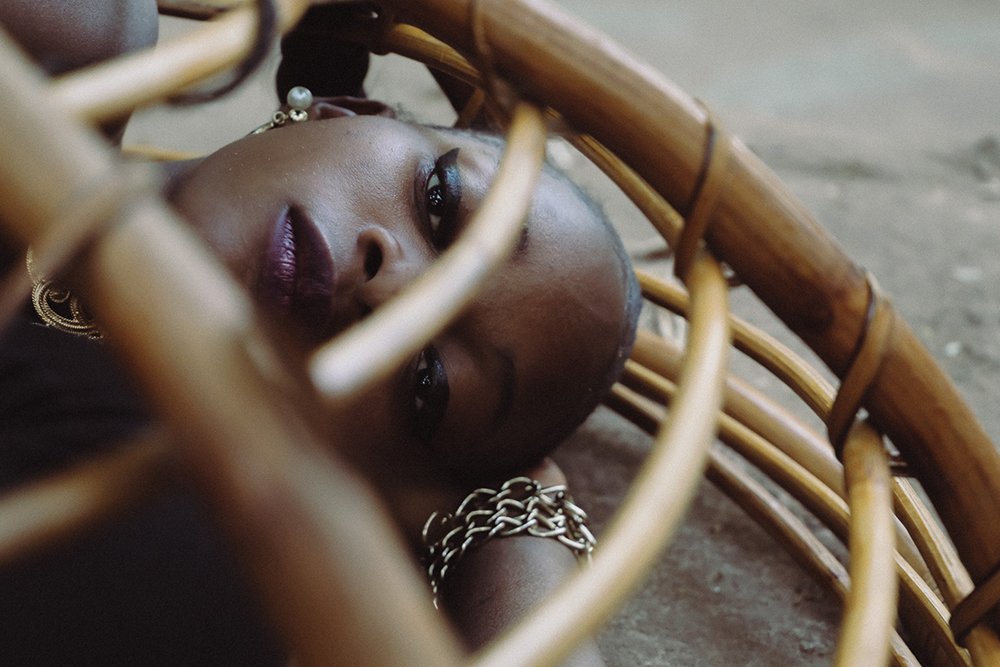
 Yet in the close-up where Nya lies looking through the same bars, her gaze is level, unhurried, almost amused. Ouanes resists the easy narrative of victimhood: the enclosure is present, but so is her self-possession. This tension between structure and presence is where the work is strongest.
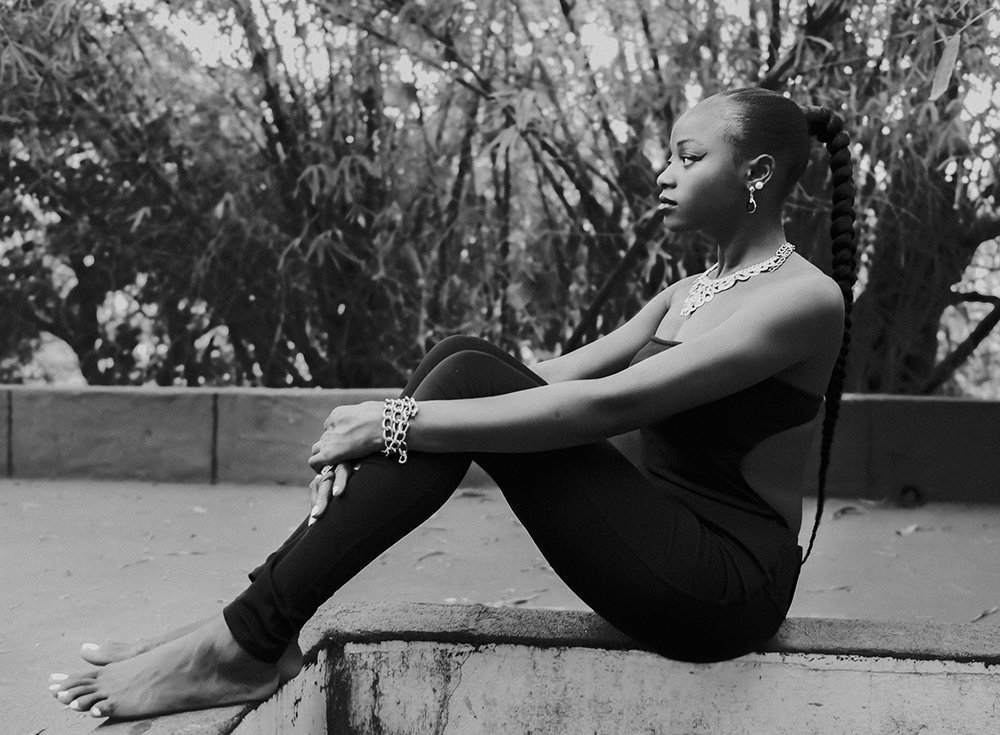
 Formally, the series moves between a warm, softly desaturated palette of greens and honeyed browns and a single black-and-white portrait of Nya seated in profile on a concrete ledge. That monochrome frame, with its classical poise and sculptural limbs, offers a moment of stillness and dignity among the more theatrical compositions. Shallow depth of field and foreground leaves repeatedly veil her face, a strategy of partial concealment that protects as much as it withholds.
 What gives NYA its weight lies partly outside the frame: the agreement that Nya would attend literacy classes, and the moment she wrote her own name. This is a delicate element. It risks tipping the project toward a narrative of benefaction, and viewers may fairly ask whose story is being told. Ouanes largely handles it with care, as the images feel playful and consensual rather than extractive, but the series would gain from giving Nya’s own voice a more direct place, perhaps through her handwriting presented alongside the accompanying poem, For Nya. The poem is tender and sincere, though its neat rhymes at times close down meanings the photographs leave productively open.
 Still, the achievement is real. Shaped by nearly twelve years of humanitarian work and recognised with a Gold Medal and a Jury Special Mention at the 2026 Maghreb Photography Awards, Ouanes brings to conceptual portraiture an ethic of attention rarely found in fashion-adjacent imagery. NYA is ultimately a series about authorship: a young woman learning to write herself, with a pen and before a lens. It is quiet, intelligent and humane work that lingers long after the last frame.
0 comments on “Chadi Ouanes”