
Adam Jahnke’s photographic practice operates at the intersection of embodiment, mobility, and technological mediation, positioning the bicycle not merely as a means of transportation but as a conceptual and performative framework. His panoramic images, produced while actively riding, resist the conventions of still photography and instead foreground movement as both subject and method. In doing so, Jahnke challenges photography’s traditional claim to fixity, proposing an image-making process rooted in flux, effort, and bodily presence.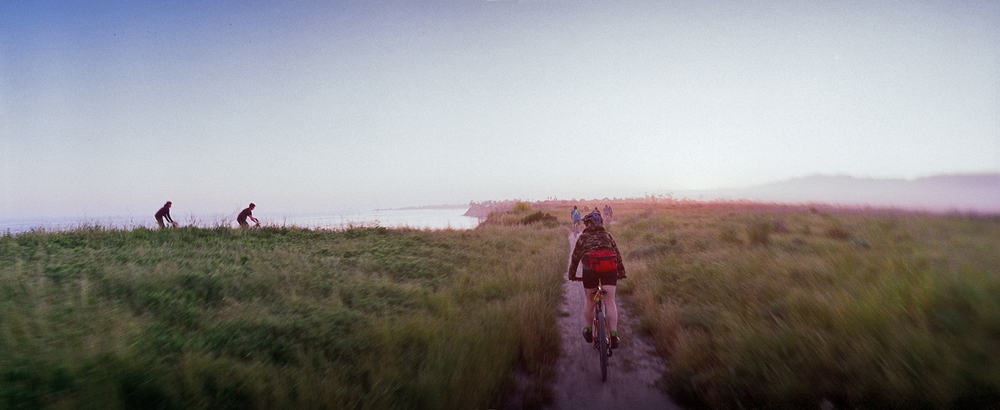 Adam Jahnke | Sunset Dusk | 2024
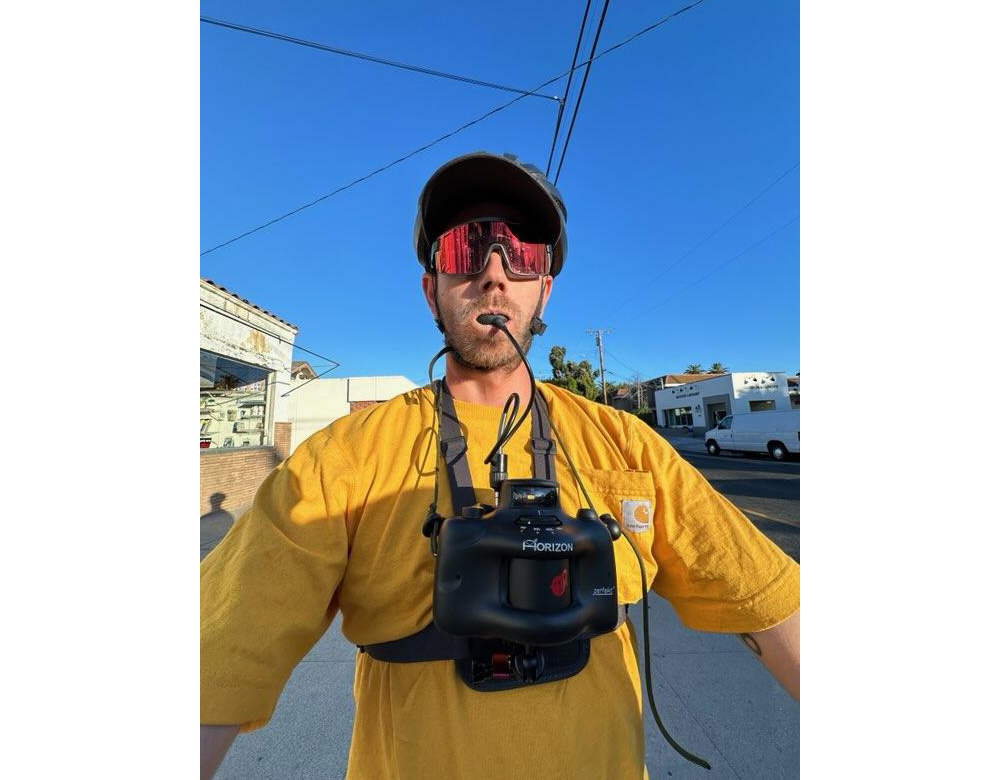
Central to this work is the integration of camera and body. Using a 35mm Horizon swing-lens panoramic camera mounted to his chest, triggered by an air cable release held in his mouth, Jahnke effectively transforms the act of cycling into a hybrid performance. The photographer is no longer positioned behind the camera as a detached observer; instead, the body becomes a stabilizing and destabilizing force simultaneously. Arms, hands, handlebars, and terrain enter the frame as partial, recurring motifs, reinforcing the notion that vision here is inseparable from physical exertion and balance.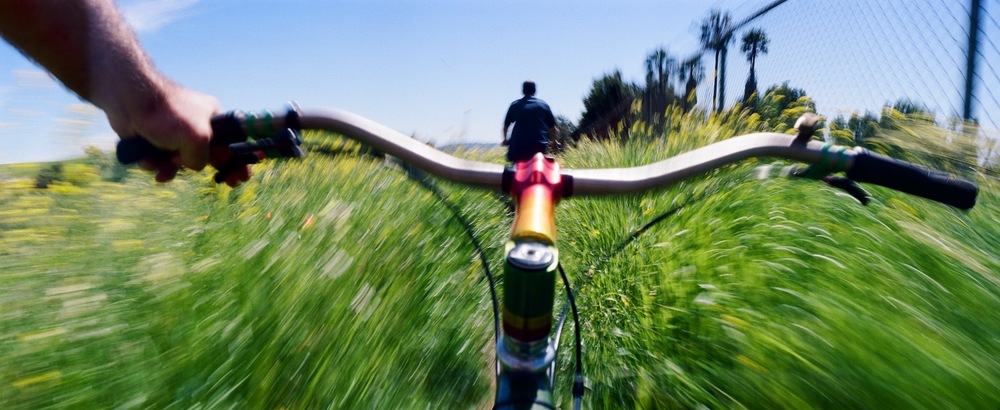 Adam Jahnke | Cabre Verde | 2024
The choice of a 1/60th second shutter speed plays a critical aesthetic role. This setting produces a controlled instability—sharp enough to retain legible detail, yet slow enough to allow motion blur to distort edges and horizons. The resulting images oscillate between clarity and disorientation, mirroring the perceptual experience of moving through space at speed. Landscape, in this context, is not depicted as a static environment but as a dynamic field that bends, stretches, and resists visual containment.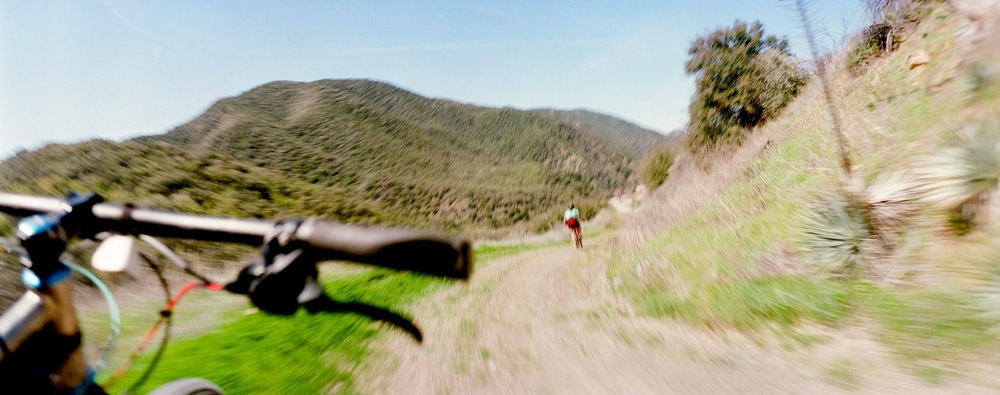 Adam Jahnke | Shea | 2023
Jahnke’s panoramas complicate the romantic legacy of landscape photography. Rather than presenting nature as sublime or pristine, these images reveal a negotiated terrain shaped by infrastructure, labor, and social movement. Roads, trails, rivers, and open fields appear not as destinations but as transitional zones—spaces defined by passage rather than arrival. The bicycle functions as a cultural avatar, symbolizing autonomy and ecological awareness while also acknowledging the physical demands and vulnerabilities embedded in human-powered mobility.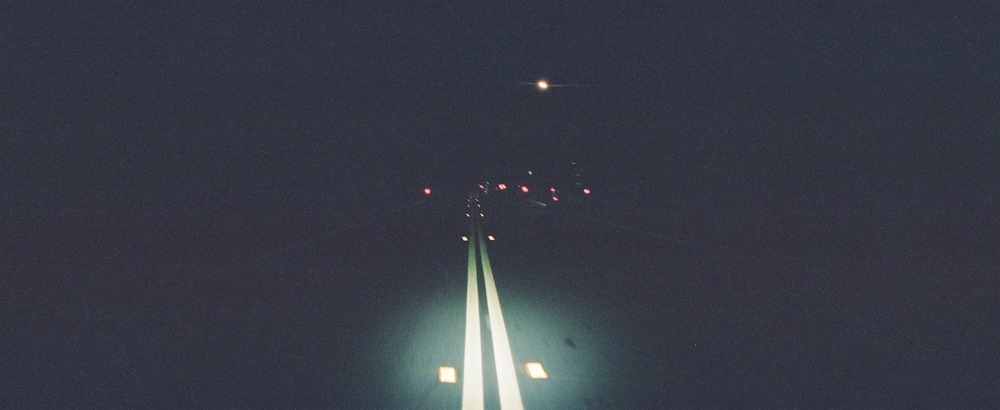 Adam Jahnke | Behind In The Dark | 2023
There is an underlying social dimension to the work that emerges through collective motion. Many images imply companionship—other cyclists appearing ahead, beside, or just beyond the frame—suggesting that movement is often shared rather than solitary. This subtle presence of others reinforces themes of community and relational experience, positioning cycling as a social practice that fosters connection across bodies and landscapes.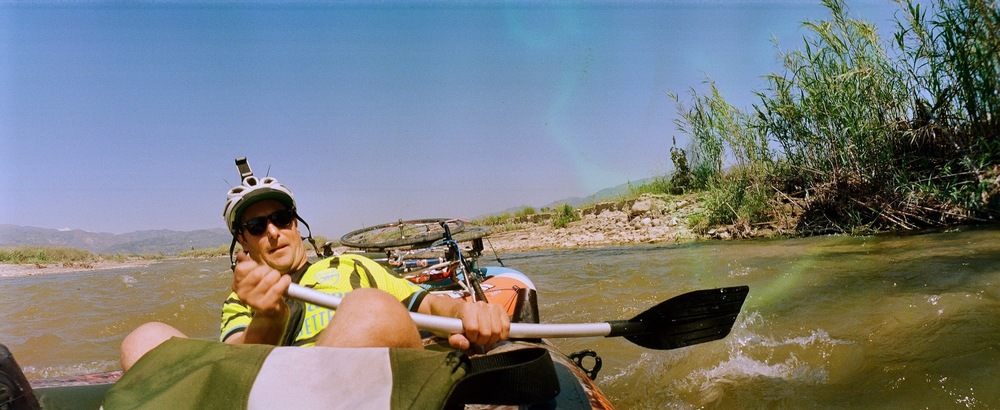 Adam Jahnke | Round Trip | 2024
Importantly, Jahnke’s work resists spectacle. The images do not dramatize speed or risk in the manner of action sports photography; instead, they emphasize sensation, effort, and continuity. The distortions created by the swing-lens camera are not purely technical artifacts but expressive tools that translate lived experience into visual form. The resulting photographs function as traces of duration rather than decisive moments.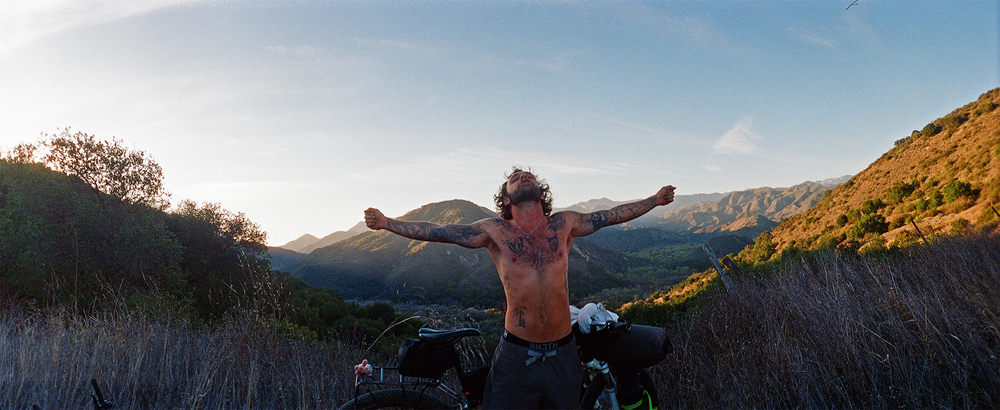 Adam Jahnke | Prayers In Church | 2025
In this way, Adam Jahnke’s photographic project can be understood as an inquiry into how images are shaped by movement, ecology, and embodied knowledge. By collapsing the boundaries between artist, apparatus, and environment, his work repositions photography as a practice of participation—one that records not only what is seen, but how it feels to move through the world.
0 comments on “Adam Jahnke”