
Curatorial Review
by Anna Gvozdeva
Brian Hughes’s My Neighbour the Past sets itself a demanding brief: to locate historical memory not in temples and museums but in the ordinary traffic of Japanese city life. The Galway-based street photographer approaches these streets as an outsider who has learned to look patiently, and the six images share a disciplined, cool palette in which navy blue (of school blazers, winter coats, shop awnings and rain-darkened pavements) becomes an unexpected unifying thread. That consistency gives the series a coherence that street photography, built from chance encounters, often lacks.
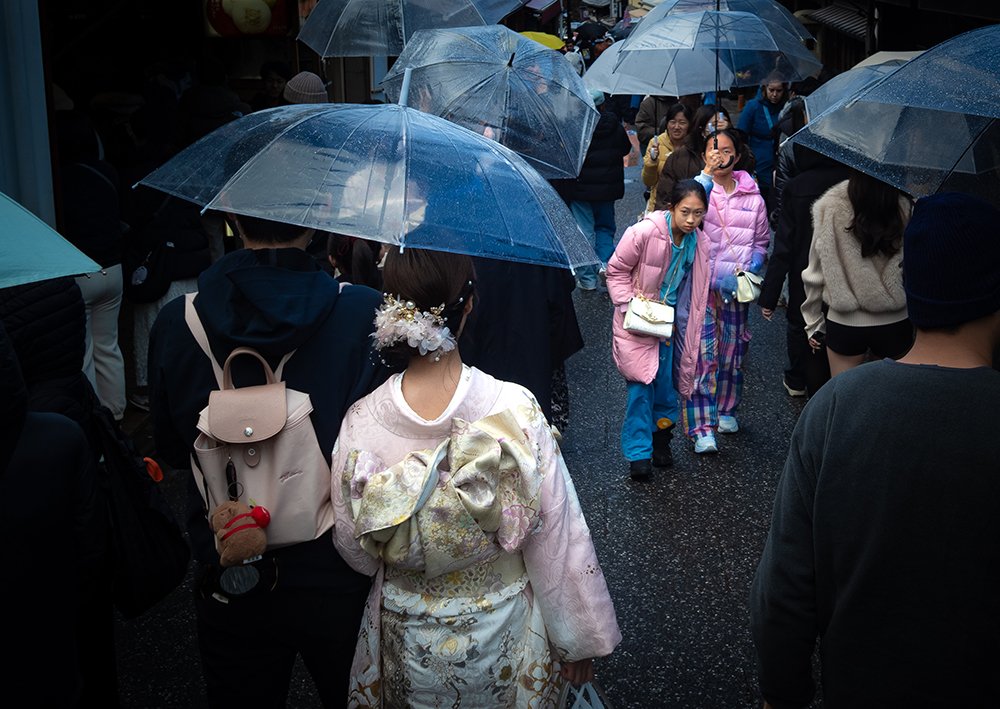 Brian Hughes | In Awe | 2025
The strongest works are those in which the overlay described in the statement becomes visible within a single frame. In awe is the clearest example: a young woman in a pale silk kimono, her hair dressed with ornaments, walks beneath a transparent umbrella through a crowd of puffer jackets and plastic canopies, while a girl in pink looks up towards the camera from the middle distance. The kimono is seen only from behind, which keeps the image from becoming postcard exotica; tradition here is something one moves alongside rather than gazes at.
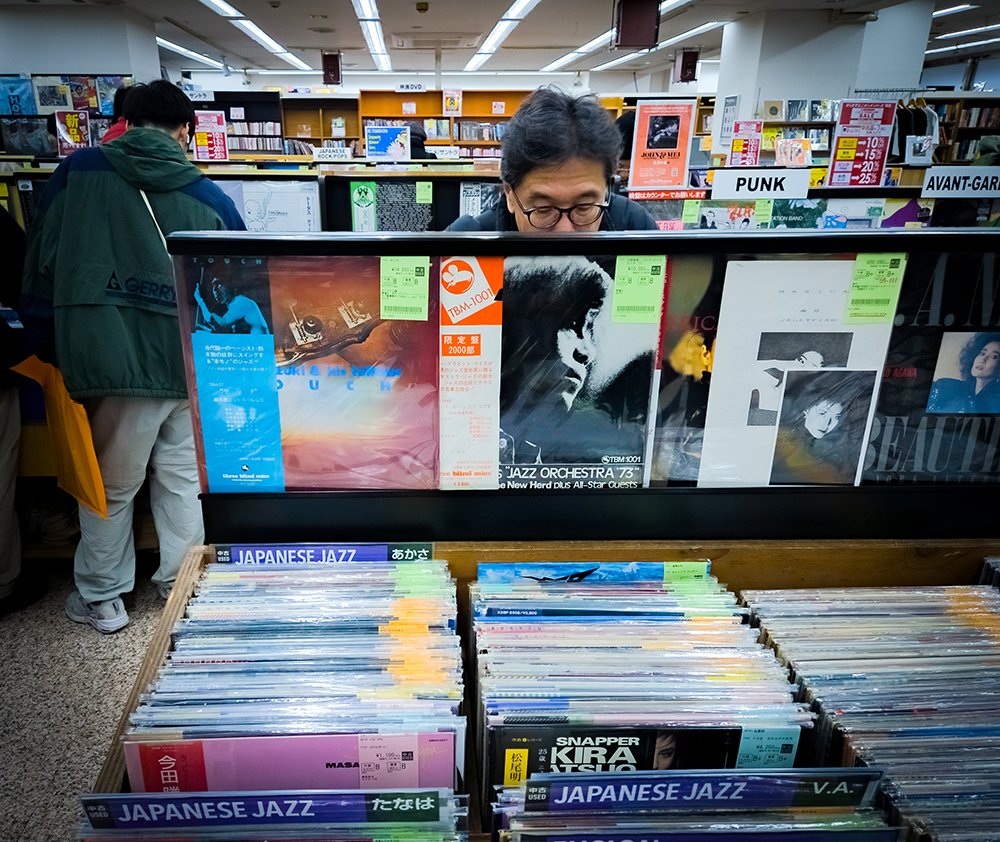 Brian Hughes | Jazz Face | 2025
Jazz face works through wit and rhyme. A collector’s head surfaces above a rack of LPs, his spectacled face aligned with the portrait on a vintage 1973 jazz sleeve, so that listener and recorded past seem to regard each other across half a century. The genre signs hovering overhead, “Punk” and “Avant-garde”, add a quiet joke about categories and taste.
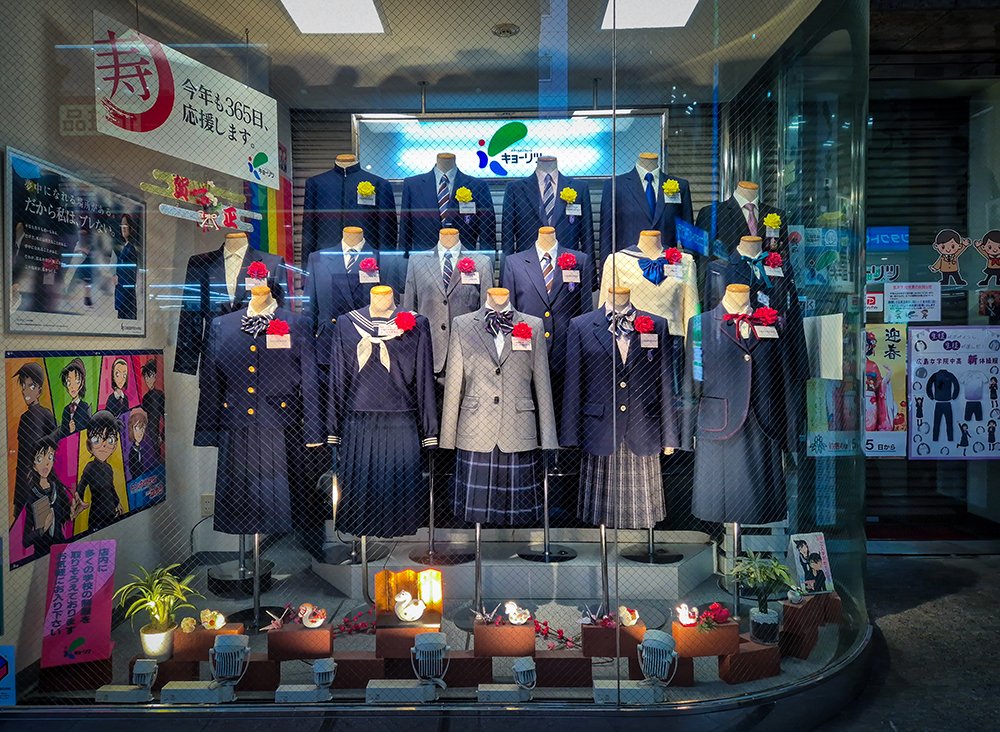 Brian Hughes | A Thousand Days of Study | 2025
A thousand days of study and Anime army on manoeuvres form an intelligent pair around the motif of the school uniform. In the first, mannequins stand in rigid rows in a shop window framed by New Year decorations and anime posters, the glass overlaid with wire mesh and reflected light, as though the uniform were a costume inherited rather than chosen. In the second, painted idols in blazers and tartan skirts beam from a hoarding while real pedestrians, dressed almost uniformly in black, pass with eyes lowered to their phones. The contrast between saturated fiction and the muted living crowd is striking, if a little easily won.
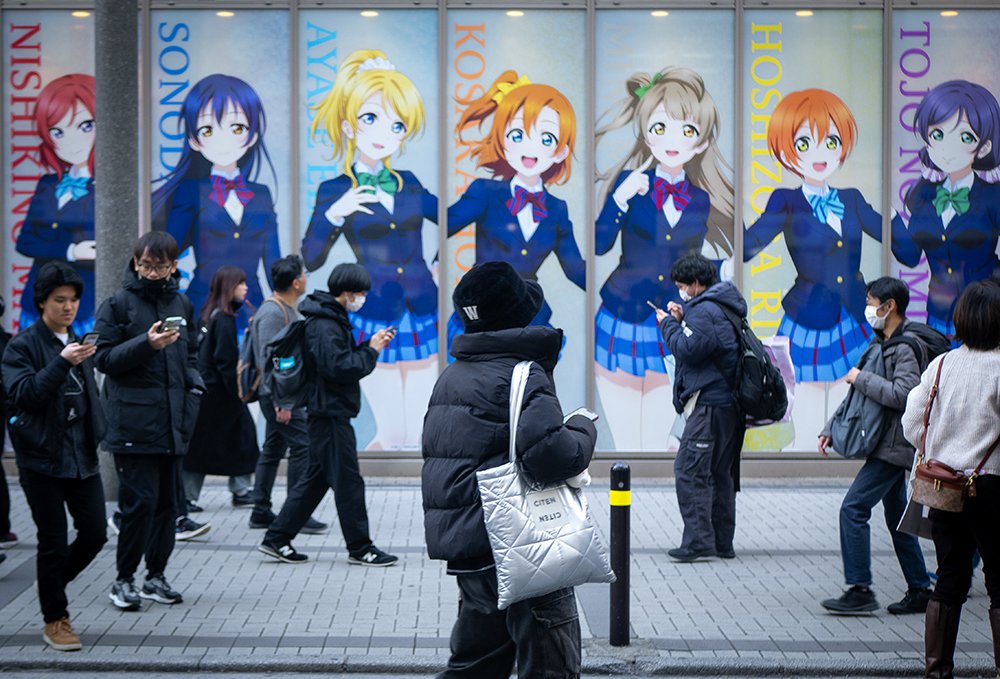 Brian Hughes | Anime Army on Manoeuvres | 2025
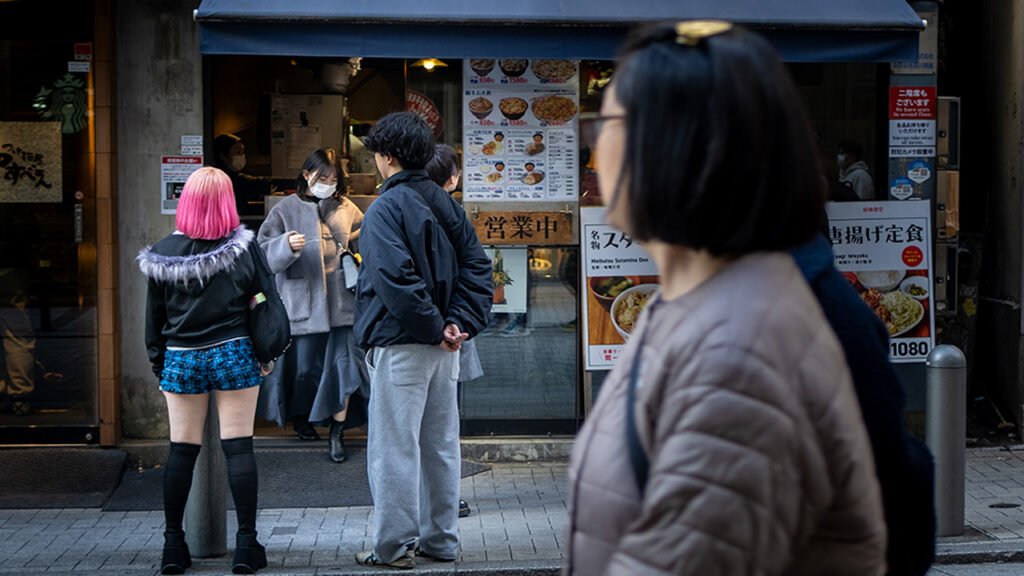
Signals is the most open-ended image of the set. The pink-haired girl and the small queue at the doorway make an engaging scene, and the blurred figure in the foreground adds a sense of passing movement, although it also covers a good part of the frame, and the title leaves the viewer to imagine what is being communicated.
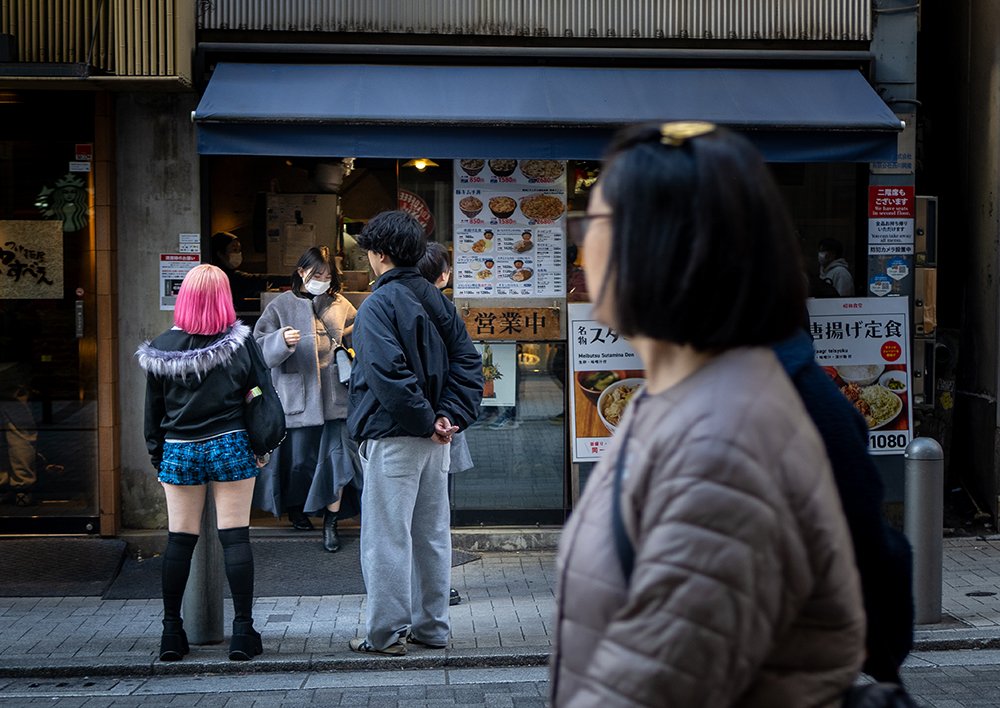 Brian Hughes | Signals | 2025
Nighthawks of Shibuya pays a graceful nod to Hopper: a lit interior seen from a dark street, coloured bulbs, a server sorting menus, and a lone customer with her back to us. The darkness across the lower third works like a proscenium, and the cinematic mood is well judged. The Hangul on the wall adds an intriguing extra layer of cultural exchange, which the artist might wish to acknowledge in relation to the project’s focus on Japan.
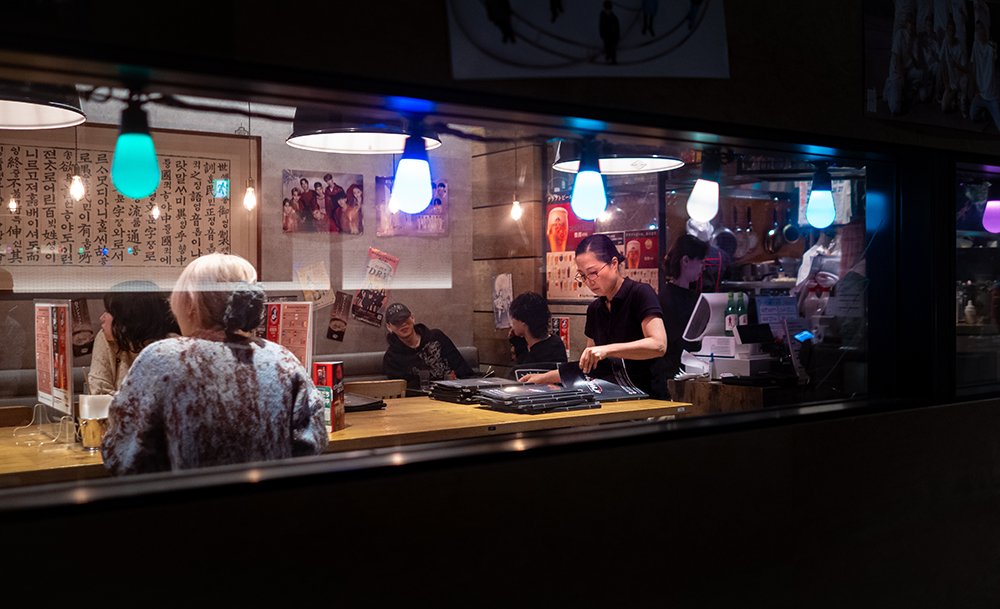 Overall, the series is held together by confident colour, glass, screens and reflections. This consistent visual language gives the work a distinctive voice, and the artist may enjoy adding some variety, since three of the six pictures are shot through windows. The images capture a vibrant present very well, and the past is felt most clearly where two eras share a single space, as in In Awe. A selective edit along those lines, together with fuller captions to place each scene, would bring the photographs even closer to the spirit of the statement. Hughes has a keen eye for the human moment, and this series is a promising step towards making history as visible as it is in his text.
0 comments on “Brian Hughes”