
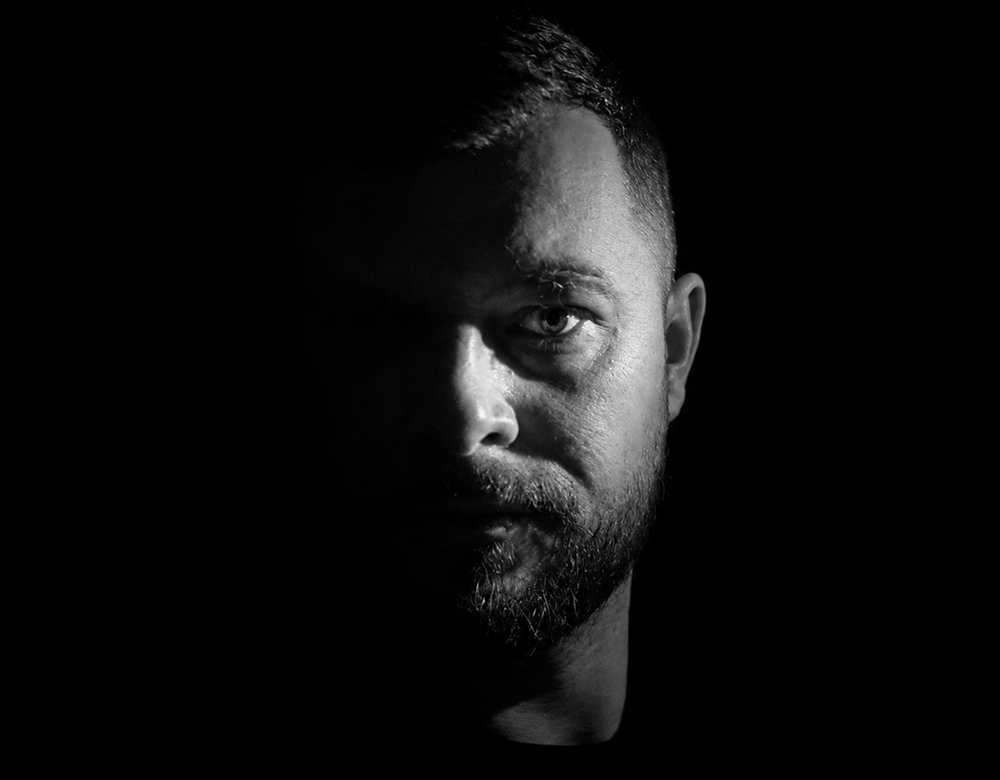
What inspired you to begin PROJECT LIFE, and how did you arrive at the idea of presenting human life as a sequence of photographic chapters?
PROJECT LIFE did not really begin as a project. It began with a single photograph, PROTECTION, which I created with my daughter Zoe. Her mother passed away, so the photograph grew from a deeply personal thought: “As long as I am here, you will not walk through life alone.”
At first, I wanted to capture that one feeling: protection, closeness, and a father’s responsibility toward his child. Gradually, however, I realized that the photograph contained something much broader. Life is not made up of a single moment or emotion. We move through decisions, losses, falls, searching, pain, forgiveness, and many other states.
That was when the idea of PROJECT LIFE began to take shape: to tell the story of human life through individual photographic chapters. Each series captures one part of that journey, while together they gradually form a larger story.
Although PROJECT LIFE grew out of a very personal moment, I do not want it to tell only my story. I want every viewer to be able to find a part of their own life within it.
 Ján Špireng | Pain
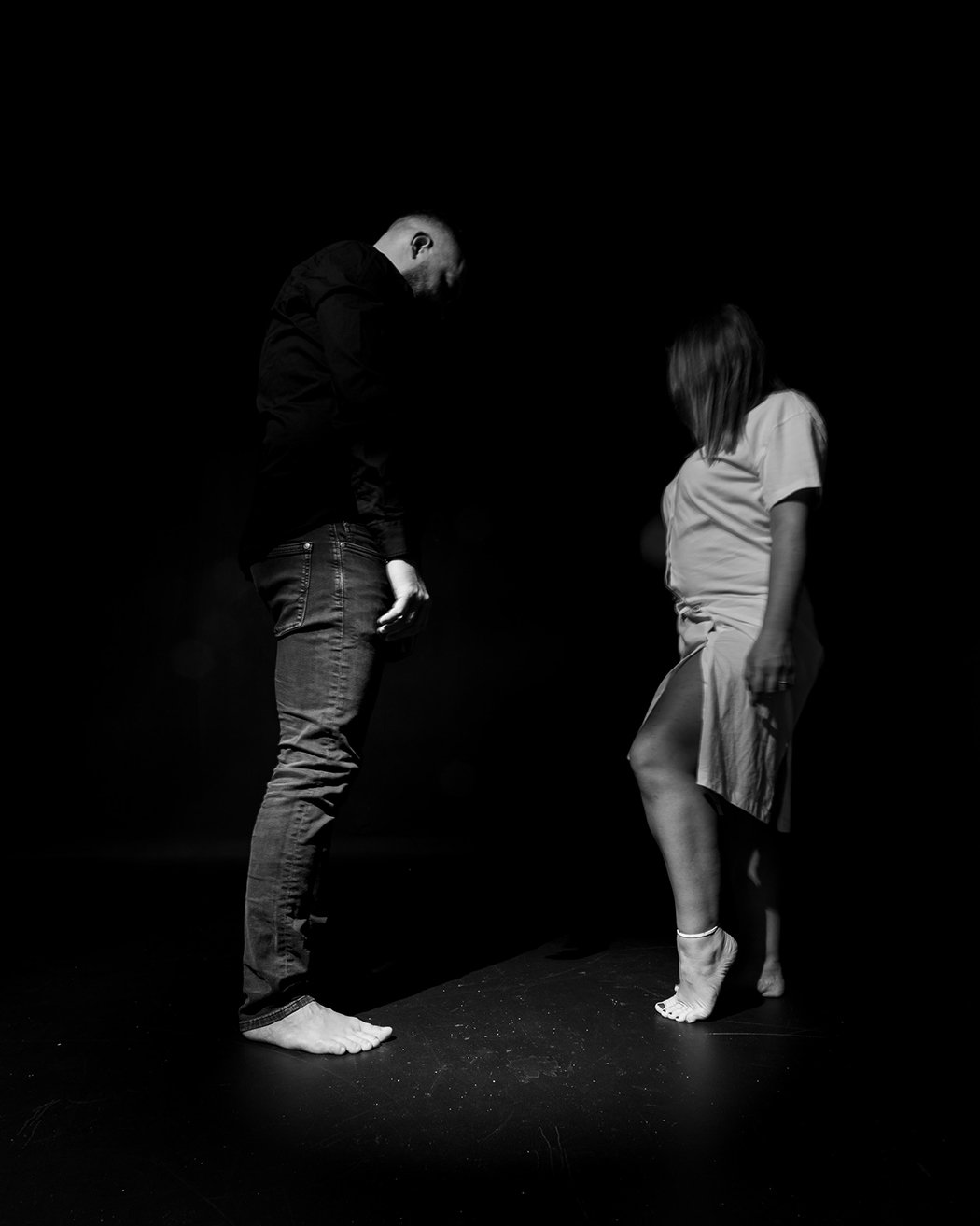
PAIN and FORGIVENESS form a continuous emotional journey. What, in your view, allows pain to transform into forgiveness?
For me, pain does not have to be the final outcome of a life situation. Even when we hurt one another, there is still a possibility to stop, look at ourselves, recognize our own mistakes, and try to work on them together.
Forgiveness does not mean forgetting what happened or pretending that the pain never existed. It means accepting that something happened and still being able to move forward.
That is what the transition from PAIN to FORGIVENESS represents for me. Pain does not have to be the end of the story. It can be the moment after which we decide what comes next.
Are these two chapters rooted in personal experience, observations of other people, or a combination of both?
I think almost everyone has experienced both pain and forgiveness at some point in life. We all know what it feels like to be hurt, but we may also find ourselves on the other side, deciding whether we are able to forgive.
PAIN and FORGIVENESS are personal chapters for me. They come from my life and from my relationship with my partner. Even so, I do not want the photographs to tell only our story. That is why they contain no specific faces, places, or circumstances that would tell the viewer whose story they are seeing.
I believe people who encounter these series may find part of their own story in them. If the photographs help someone see their own pain differently, or perhaps make the decision to forgive and try to continue through life together, then the work gains an even deeper meaning for me.
 Ján Špireng | Pain
The figures in your photographs rarely reveal their faces clearly. How does this anonymity help you create a more universal emotional narrative?
Anonymity in my work is not simply a visual style or an aesthetic device. I deliberately photograph the figures so that they remain anonymous because I want viewers to be able to place themselves in their position.
I do not want someone looking at a photograph to feel, ‘I am watching the story of two strangers.’ My aim is for the image to awaken the viewer’s own emotions, memories, and experiences.
For me, an anonymous figure is therefore not someone without an identity. It is a space the viewer can fill with their own identity and story. When that happens, they are no longer simply looking at my story; they become part of it.
 Ján Špireng | Forgiveness
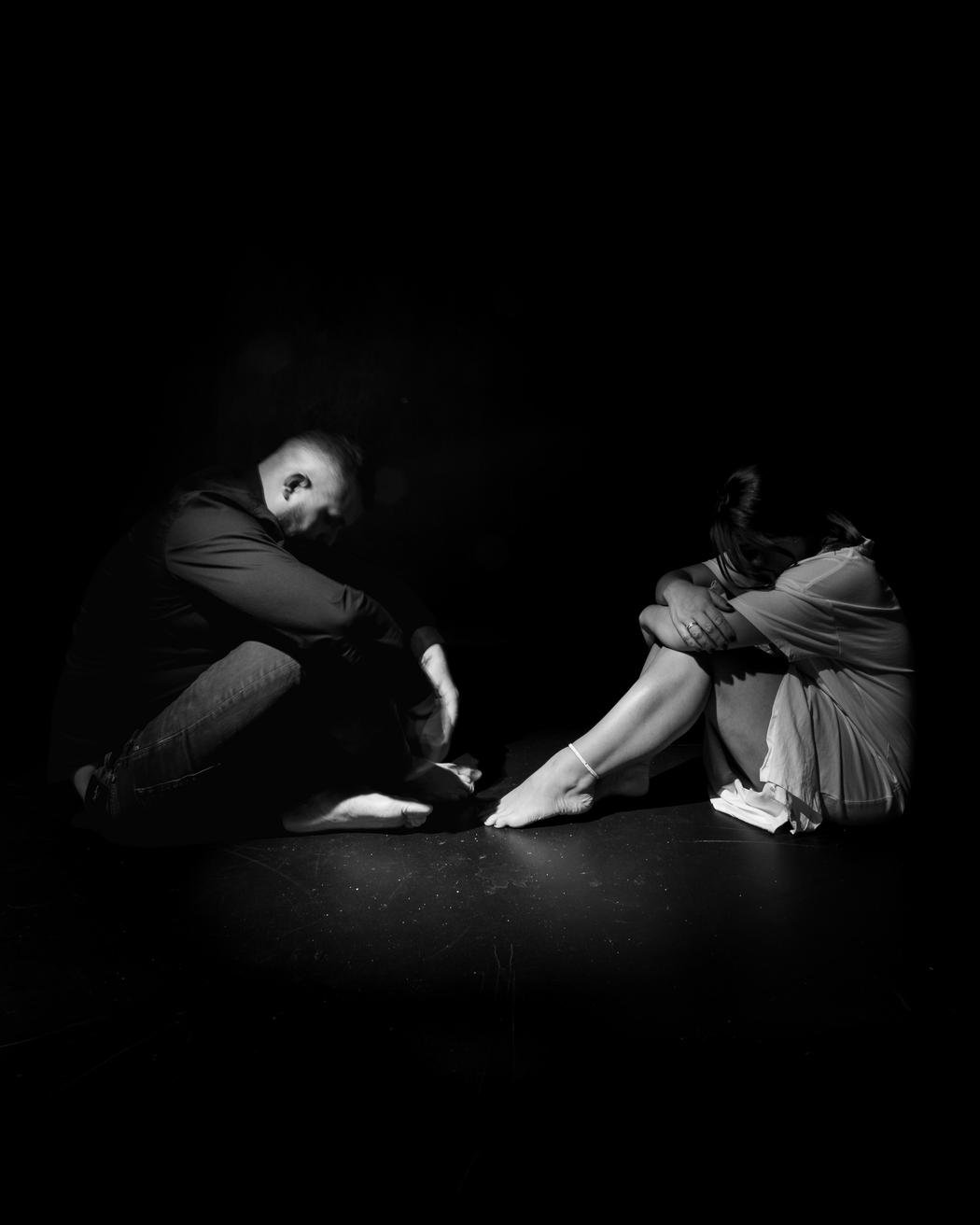
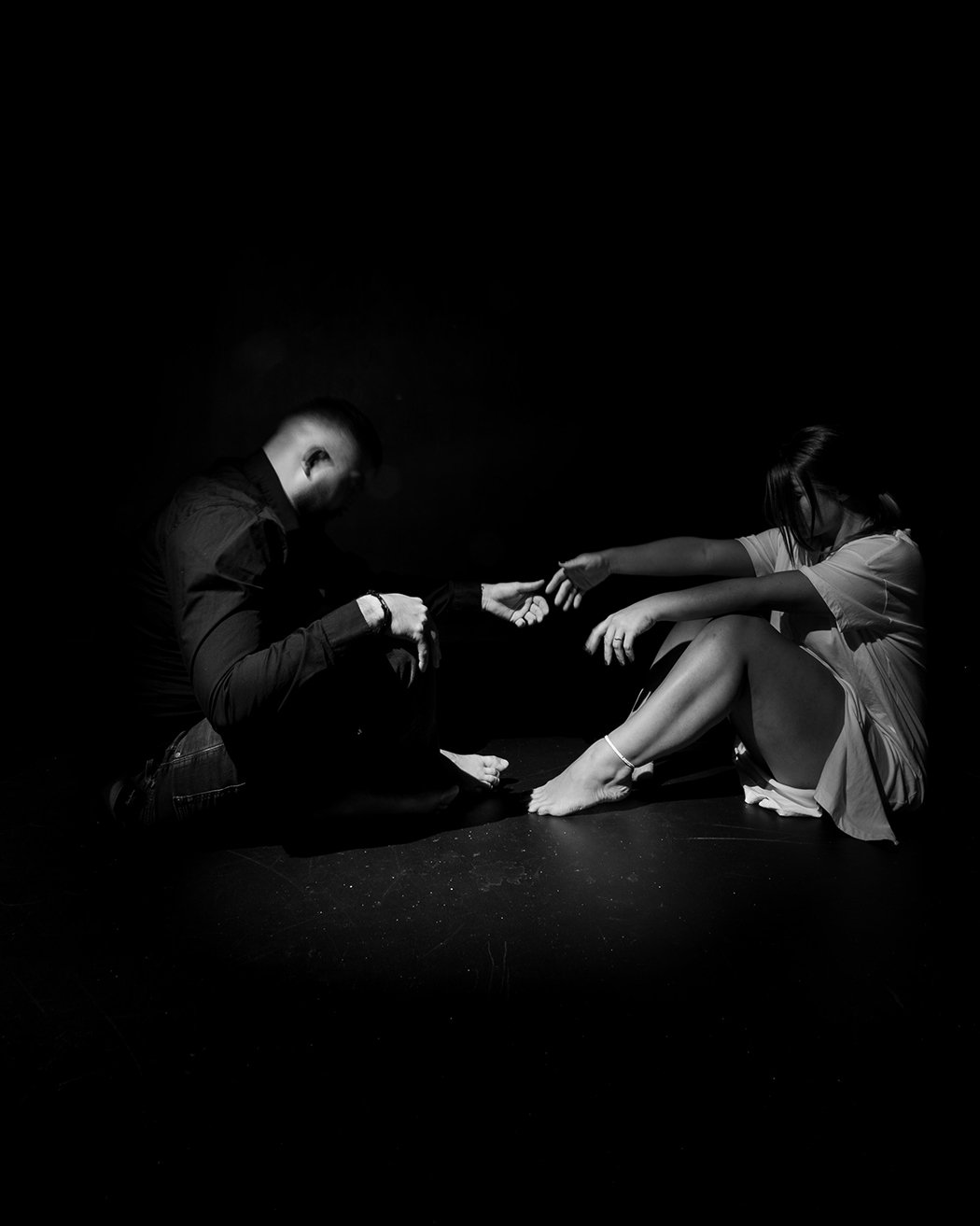
Physical distance plays an important role in the series: the figures sit apart, reach toward one another, turn away, and eventually move forward. How did you develop this choreography of gestures?
My photographs do not begin in front of the camera. First there has to be an idea, a thought, an emotion, or an experience that I want to express. I then visualize it and consider how to translate it into a series of three photographs, so that each image can stand on its own while all three create a single story.
Only when I have that story in my mind does the actual production begin. I use gestures, the distance between figures, the way they turn, and sometimes very small suggestions to guide the viewer through the series. I do not need to state everything directly. Sometimes the space between two people or the gesture of a hand is enough to suggest what is happening between them.
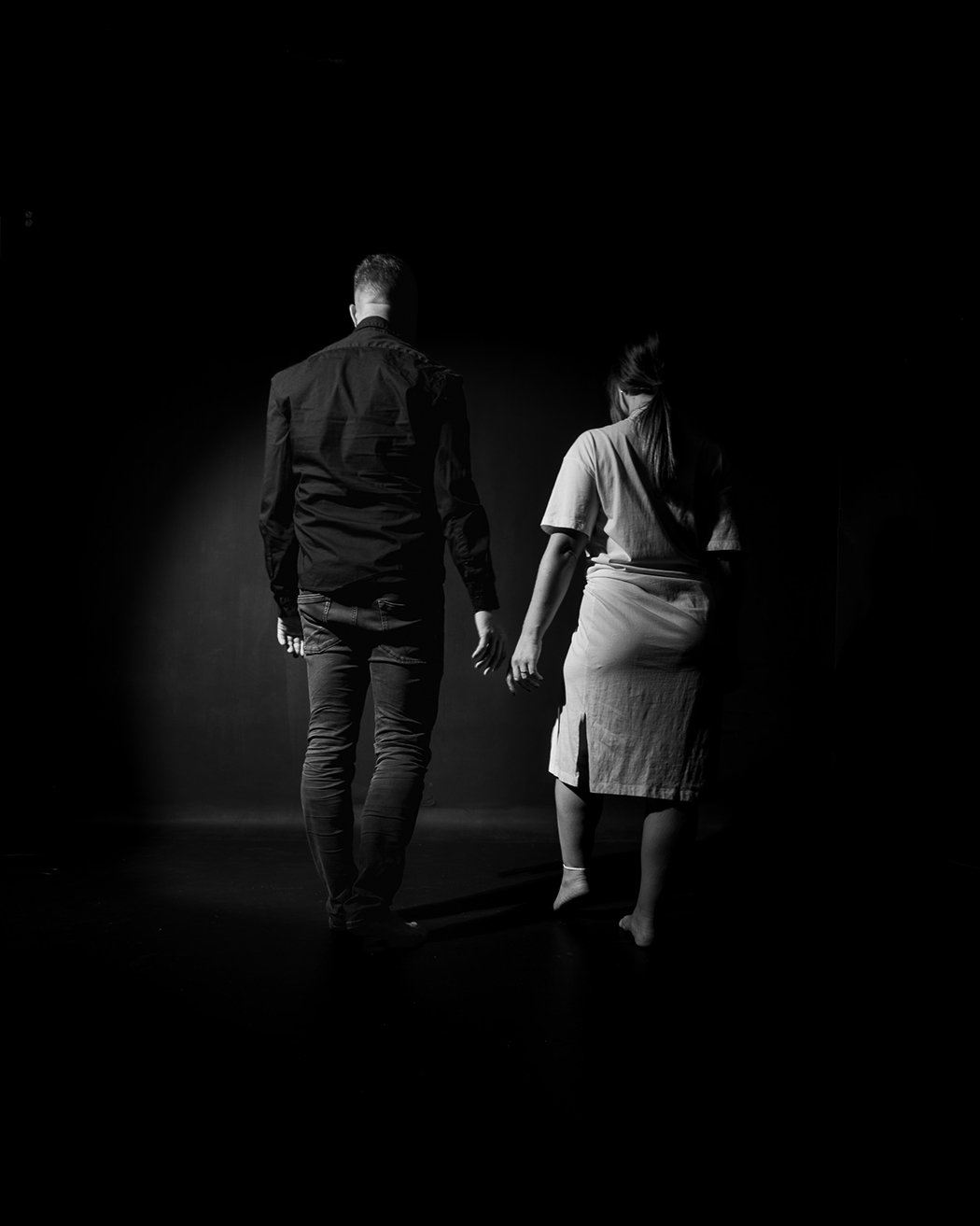
At the same time, I try not to give my stories a completely definite ending. PAIN and FORGIVENESS, for example, form one continuous story. The final photograph in FORGIVENESS shows two people who have chosen to continue through life together. They walk away side by side, but there is still darkness ahead of them. We do not know what is waiting there or how their story will end.
That space for uncertainty is important to me. I want to guide the viewer through the story, but I do not want to tell them how they must complete it.
 Ján Špireng | Forgiveness
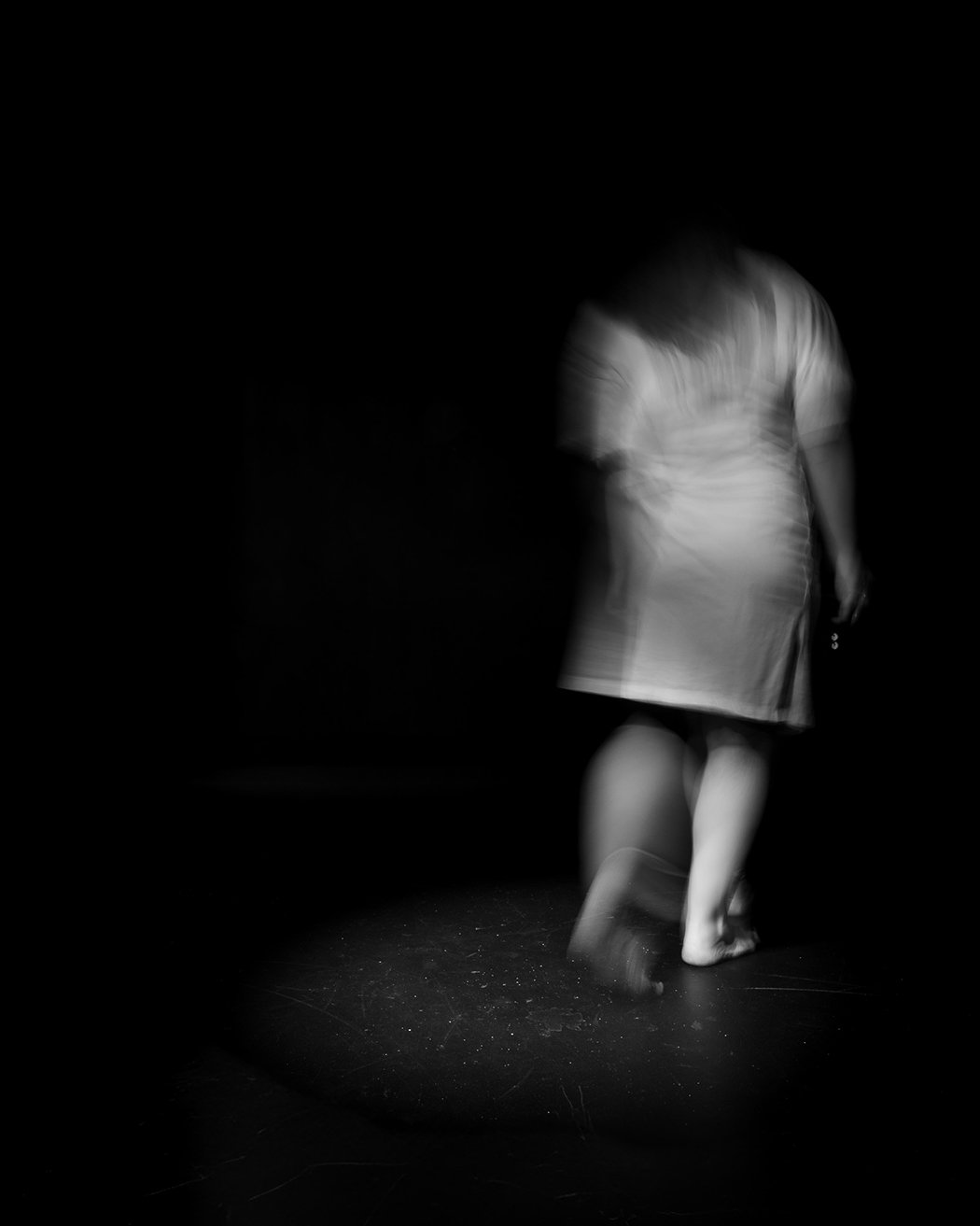
Motion blur makes some figures appear to be fading, departing, or transforming. What role does movement play in expressing memory, loss, and the passage of time?
Motion blur is one of the elements I use to express the passage of time, a memory, or simply something that was once here and is no longer present. A disappearing figure can represent a person, a moment, or a part of life that we can no longer hold on to, but which still leaves a trace within us.
I work with light and darkness in a similar way. Light often represents a path, a direction, or a sense of certainty. Its opposite is darkness and the large areas of negative space, which can suggest uncertainty, the unknown, or something still to come.
I also try to use as few elements as possible within the frame. I do not want to distract viewers with anything that is unimportant to the story. Movement, light, darkness, and empty space are not simply visual effects; they are ways of directing attention toward the central idea of a photograph or an entire series.
Technique is not the goal of photography for me. It only has meaning when it helps tell the story.
 Ján Špireng | Forgiveness
How important is the precise sequence of the photographs? Do you want viewers to follow a particular narrative, or are they free to construct their own story?
By creating a series and deciding the order of its photographs, I tell the story as I see it. The sequence is not accidental: the individual images build on one another and together create a particular emotional journey.
That does not mean the viewer has to read the story in the same way I do, and I do not mean only the order of the images. People often write to me and describe an interpretation of a series that is completely different from the story I had in mind when I created it.
For me, that is one of the greatest compliments. It means the photograph has opened something in them: a memory, an experience, or an emotion of their own. They are no longer passive observers of my story.
Every viewer can enter the story personally and find something different from what I saw when I created the series. I determine the beginning of the journey, but I do not have to determine where it takes the viewer.
0 comments on “Ján Špireng”