
Curatorial Review
by Anna Gvozdeva
Marcel van Beek works in a tradition that photography has always harboured but rarely made its explicit subject: the image as perceptual event rather than representation. Across these two series, the camera is deployed not to describe the world but to destabilise our confidence in how we see it, and the results are, at their best, genuinely disorienting in the most productive sense of the word.
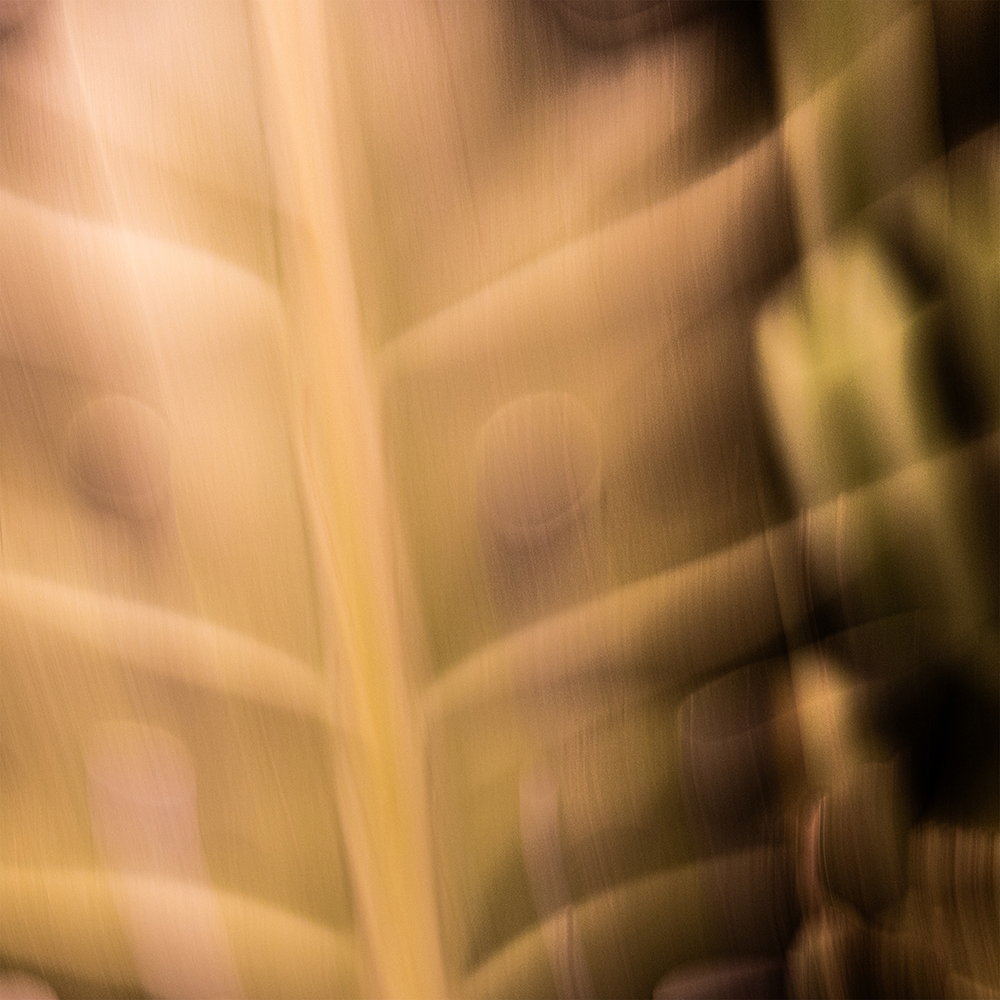 Marcel van Beek | Chlorophyll Trance I | 2026
The Chlorophyll Trance triptych demonstrates the range of approaches a single conceptual commitment can sustain. Trance I is the most openly sensory of the three — a warm dissolution of leaf and light in which the image refuses to settle into legibility, the motion blur functioning less as technique than as atmosphere, something close to the visual equivalent of submersion. It is seductive without being self-indulgent, because the colour alone — the amber and ochre pulled from the plant’s own spectrum — carries enough structural argument.
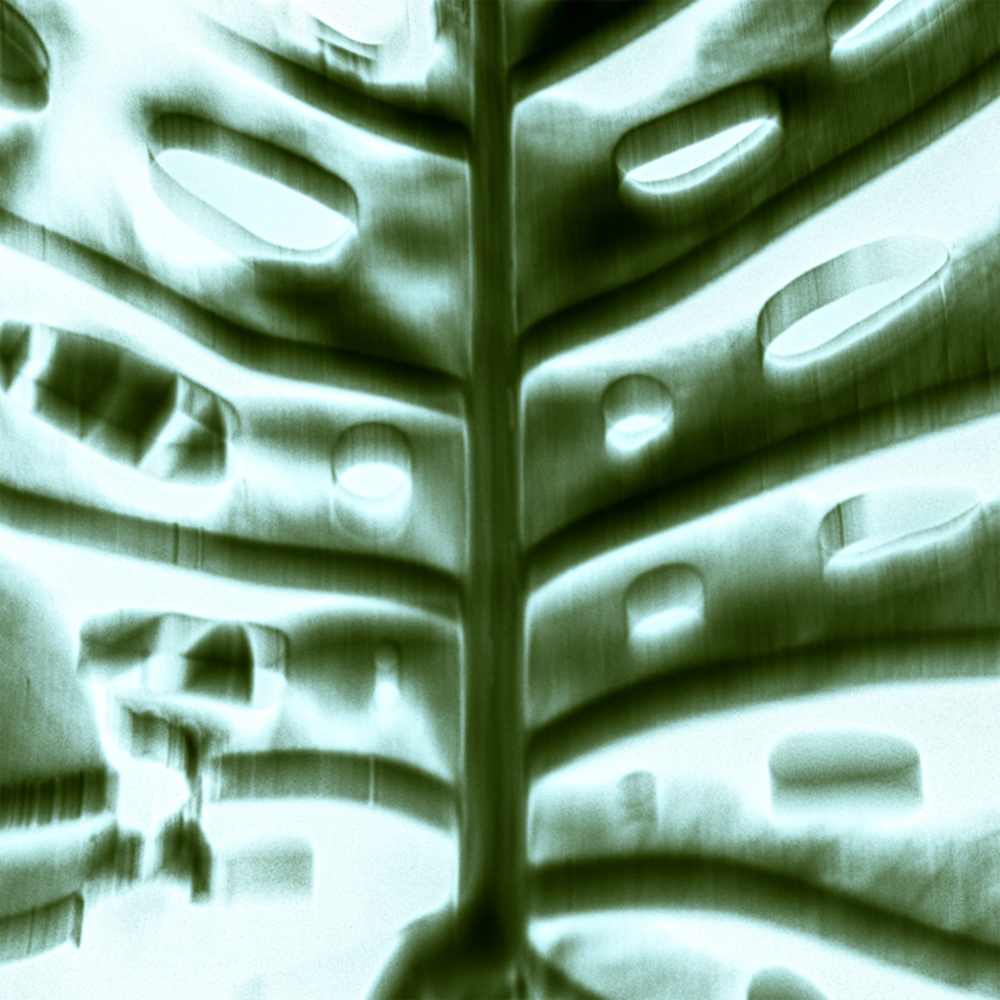 Marcel van Beek | Chlorophyll Trance III | 2026
Trance III is the most formally ambitious: the tonal inversion of the Monstera surface creates a cyan photograph of such unexpected architectural rigour that the botanical origin becomes almost irrelevant. What reads is a circuit board, a map, a modernist grid — the leaf’s fenestrations recontextualized as apertures in a designed system. The conceptual leap here is clean and exact.
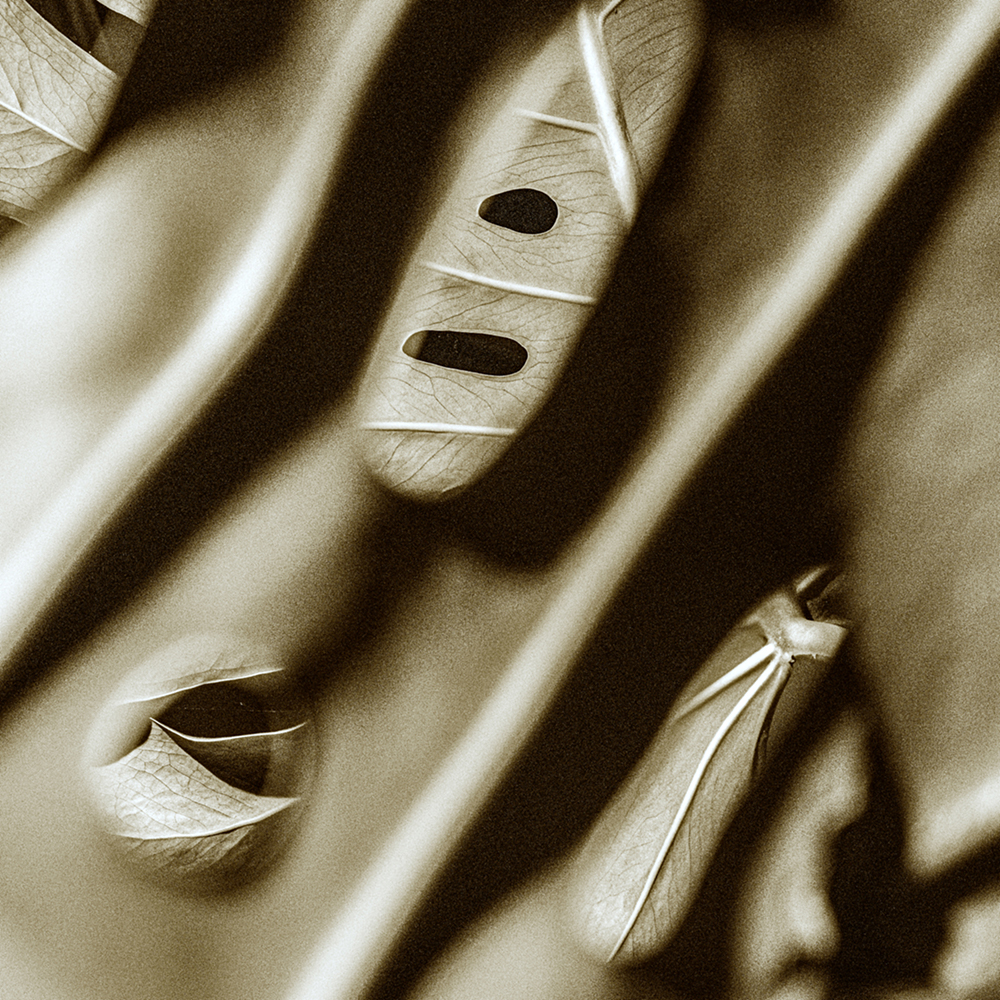 Marcel van Beek | Chlorophyll Trance II | 2026
Trance II occupies a more complicated position. The sepia monochrome and the sharp rendering of leaf fragments glimpsed through soft diagonal bands is formally elegant, the tonal range beautifully controlled. Yet it is also the image most aware of its own aesthetic lineage — one can feel the weight of a certain mid-century botanical fine art tradition in its bones — and it benefits less from van Beek’s formally experimental instincts than from a more classically photographic command. This is not a flaw, but it does mean the image coheres differently from its companions, which occasionally makes the triptych feel like a series with two centres of gravity rather than one.
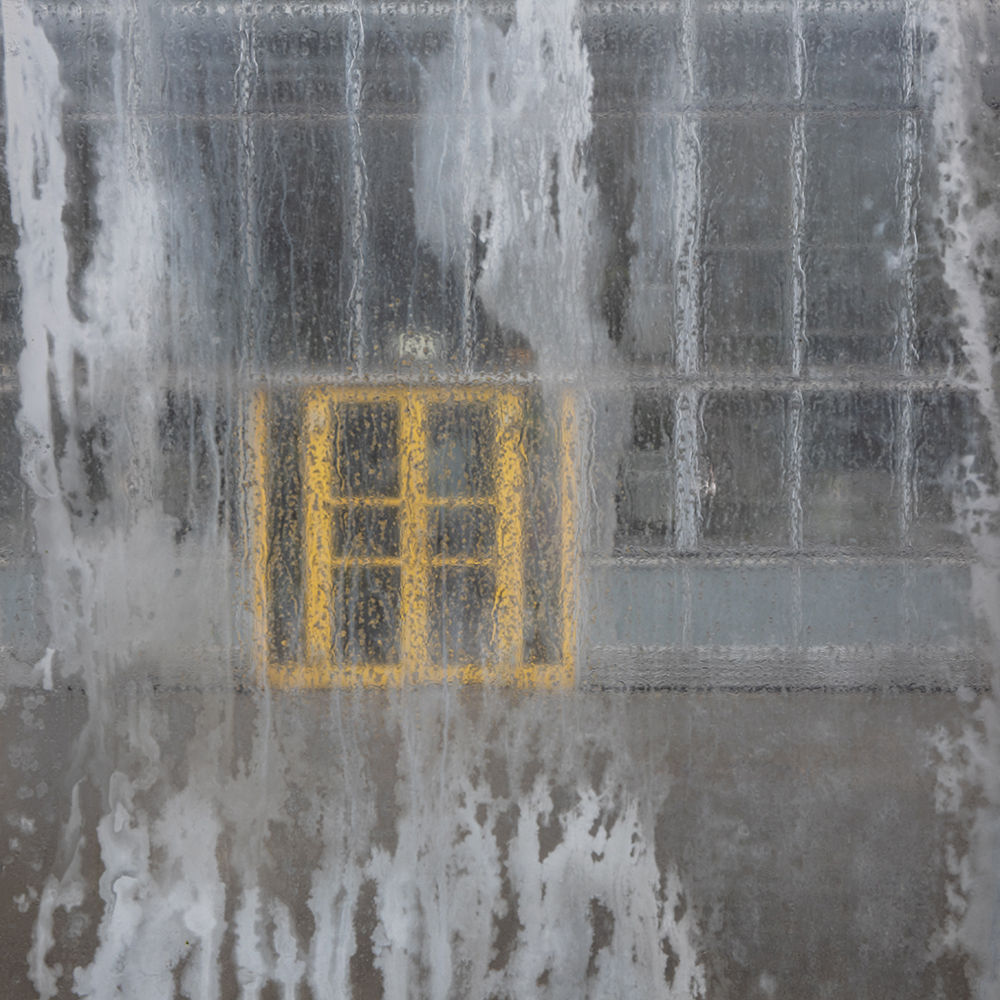 Marcel van Beek | CITRINITAS 01 : Inside and Out | 2025
The Citrinitas works introduce a decisive formal shift: the subject is no longer the plant but the transparent surface that mediates between the camera and a world beyond. Condensation, snail traces, and the fall of light across a fogged pane become the vocabulary of a practice that is now explicitly about mediation itself — about the screen between perceiver and perceived. Inside and Out is the most immediately striking: the yellow window frame, burning through the wet glass with an almost ominous saturation, reads as both colour-field painting and architectural document. The alchemical title earns its place here; the yellow really does function as signal, as the first visible warmth inside an otherwise cold grey matrix.
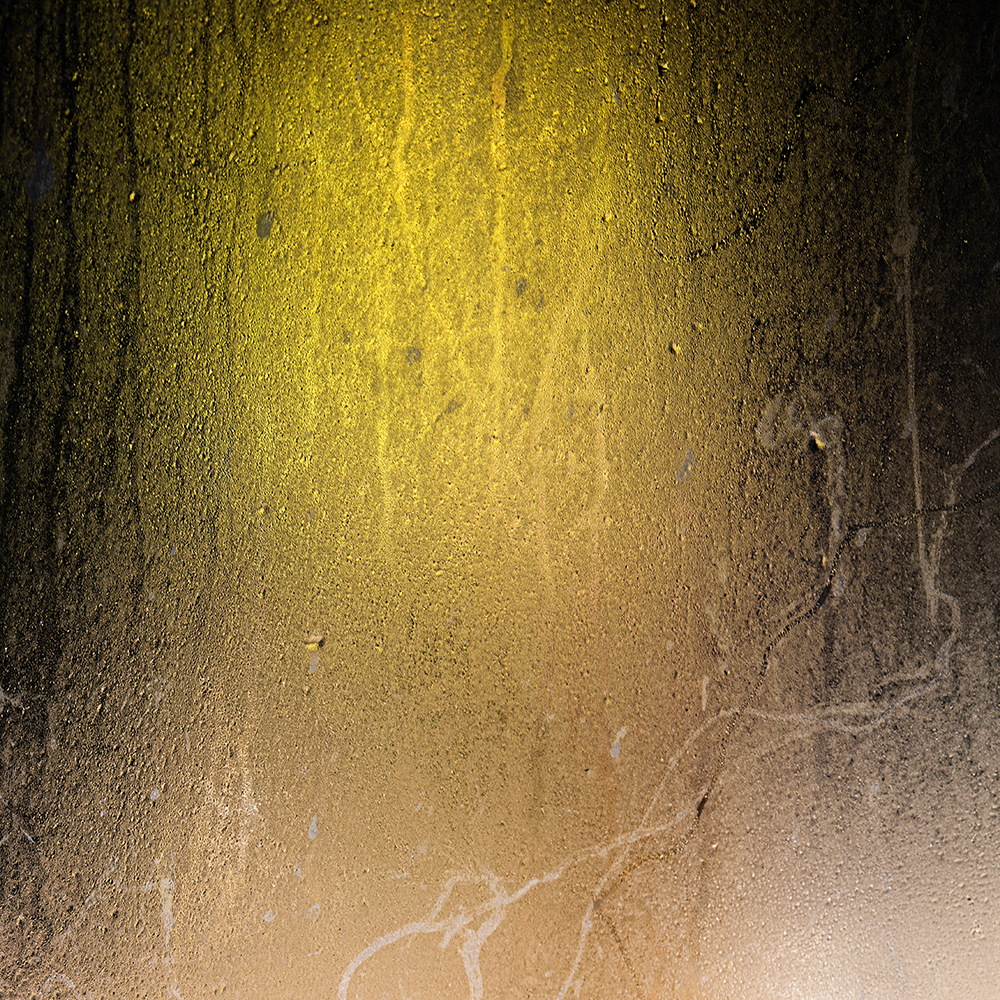 Marcel van Beek | CITRINITAS 02 : Citrinitas | 2025
Citrinitas (the pure surface work) is the series’ most confident image and perhaps the strongest single photograph in the entire selection. The granular luminosity of the condensation, the slow drip lines that descend like notation, the decay of yellow into copper and then into shadow — this is a picture that has no interest in explanation and needs none. It holds.
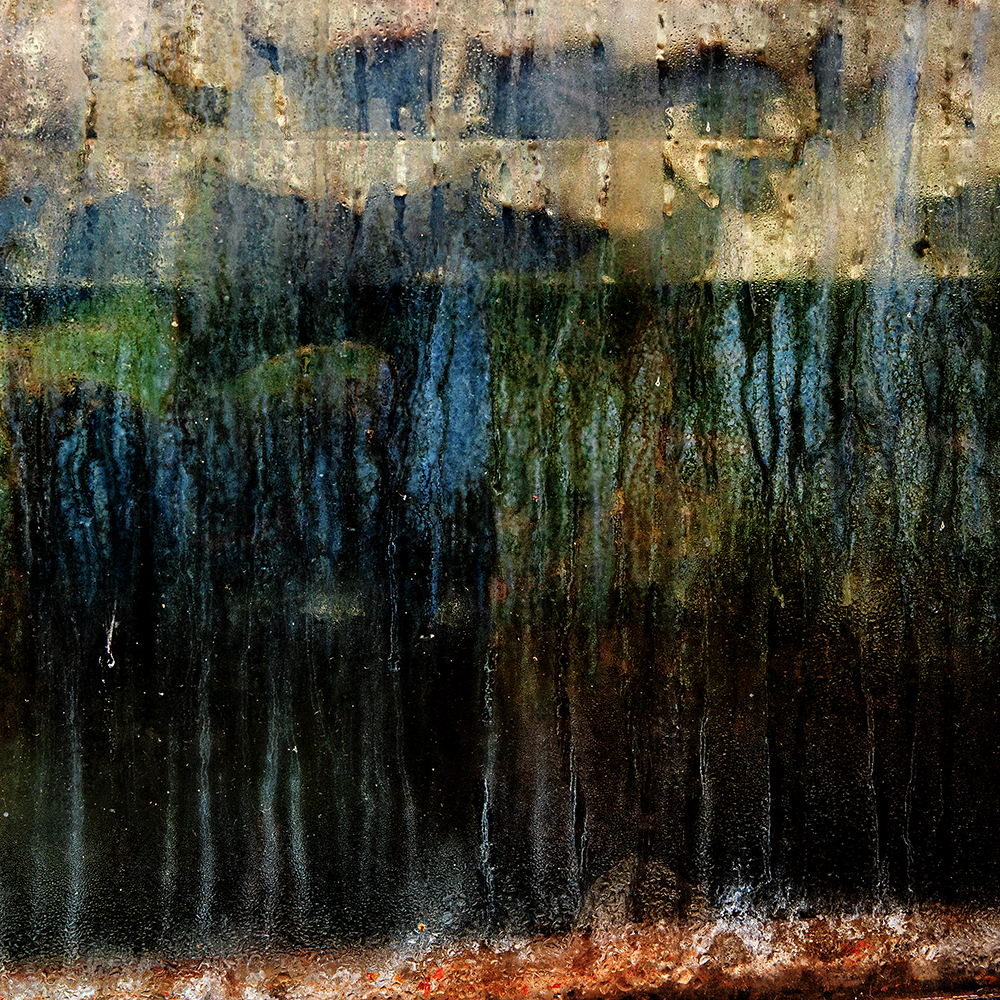 Marcel van Beek | CITRINITAS 03 : Window Delta | 2025
Window Delta is the most painterly of the group, its dark horizontal register of water-streaked colour suggesting a compressed landscape — forests, lakes, rock — with the condensation texture binding everything into a unified material surface. It works, though it is also the image that most clearly reveals van Beek’s visual debt to certain abstract expressionist and painterly photographic traditions. Whether that lineage is a resource or a constraint is the open question his practice is still negotiating.
Together, the two series constitute a coherent statement about perception, surface, and transformation that is formally rigorous and evidently sustained by genuine optical intelligence. The alchemical framework — vegetal immersion, yellow illumination, emergence — is applied with enough restraint that it enriches rather than overdetermines. Van Beek’s most significant contribution is the insistence on strictly in-camera methods: these images are earned, not assembled, and the commitment to photographic process as the meaning-making act is what distinguishes the work from digital abstraction. The challenge ahead is to push further into the territory his best images already occupy — where the viewer’s perceptual certainty simply gives way.
0 comments on “Marcel van Beek”