
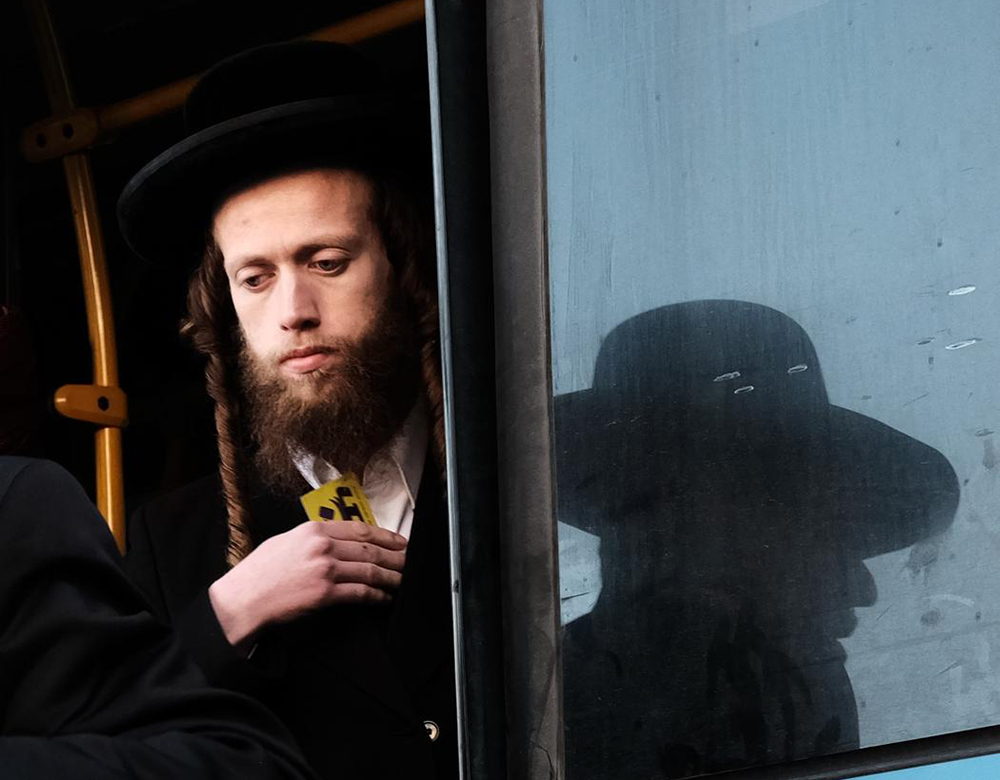
Your statement begins with Yogi Berra’s idea that “You can observe a lot by watching”. What does observation mean to you as a street photographer?
Observation means watching everything. You never know where you’ll see something special. It’s a little like sports. Yogi Berra was a great baseball player. Now, when most of us are watching sports, we follow the ball. Our eyes are usually focused only on the player handling the ball. We don’t pay much attention to the other players.
But Yogi understood how much we can learn about a sport by watching the players who don’t have the ball. As a street photographer in Jerusalem, that’s what I’m doing most of the time – watching the people without the ball.
And I try to be discreet and respectful. I’m not an “in your face” photographer. My role is to observe people, not disturb them.
You describe Jerusalem as more human and original than the clichés often associated with it. What aspects of the city do you most want viewers to notice through your photographs?
If I had to pick one aspect, it would be the little moments that everyone can relate to. Over the years, there have been countless good photographs from Jerusalem. But most of them are stock photos. This building, those clothes. The technical skill may be impressive. But often the image only scratches the surface.
My goal is to capture simple yet revealing moments. Hopefully, each photograph stands on its own as a work of art. And I hope it says something about people in Jerusalem, or maybe says something about all of us.
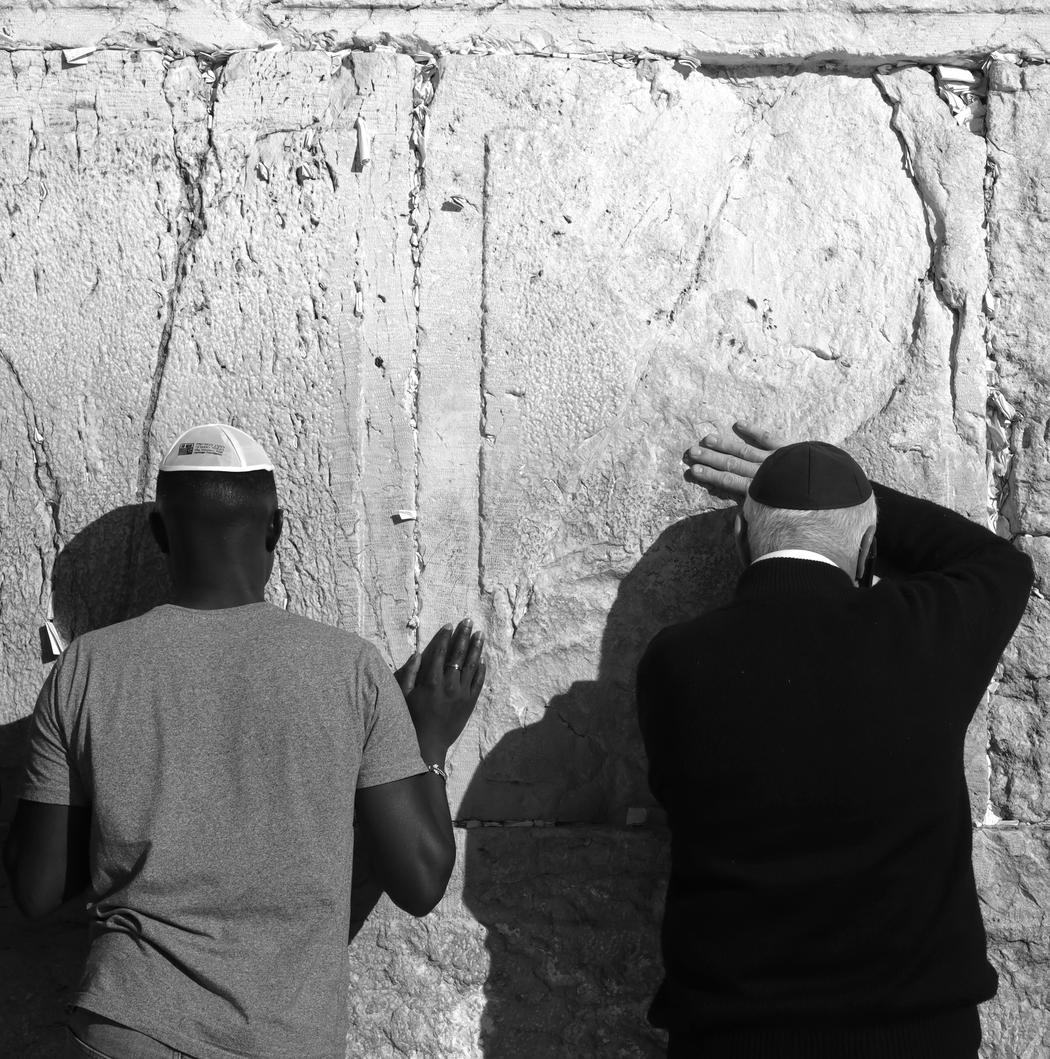 Rick Blumsack | The Western Wall In Black And White, Jerusalem | 2025
Many of your images capture fleeting, unexpected moments. How do you know when a scene is worth photographing?
It’s hard to know for sure. But when the stars align, you sense it. In other words, each street scene is a new random constellation of people and things. When does the constellation have the geometry, color, texture and meaning that it feels like you’ve got something?
Is the image visually compelling? Is the metaphor meaningful? Can the viewer relate to it? Is it worth preserving for another time?
Are the optics interesting? For instance, is there a balance to the composition, or an intriguing juxtaposition, or sharp contrast?
Is it a scene which particularly lends itself to black and white or bright color?
Can I isolate what’s important from the chaos around it? Is the subject clear? I’m a minimalist at heart. If a photograph feels messy, all over the place, then I probably won’t like it.
By the way, you’re right. The moments are fleeting. On the street, the scene only lasts a split second. If we miss it, it’s gone forever. We shouldn’t take it for granted.
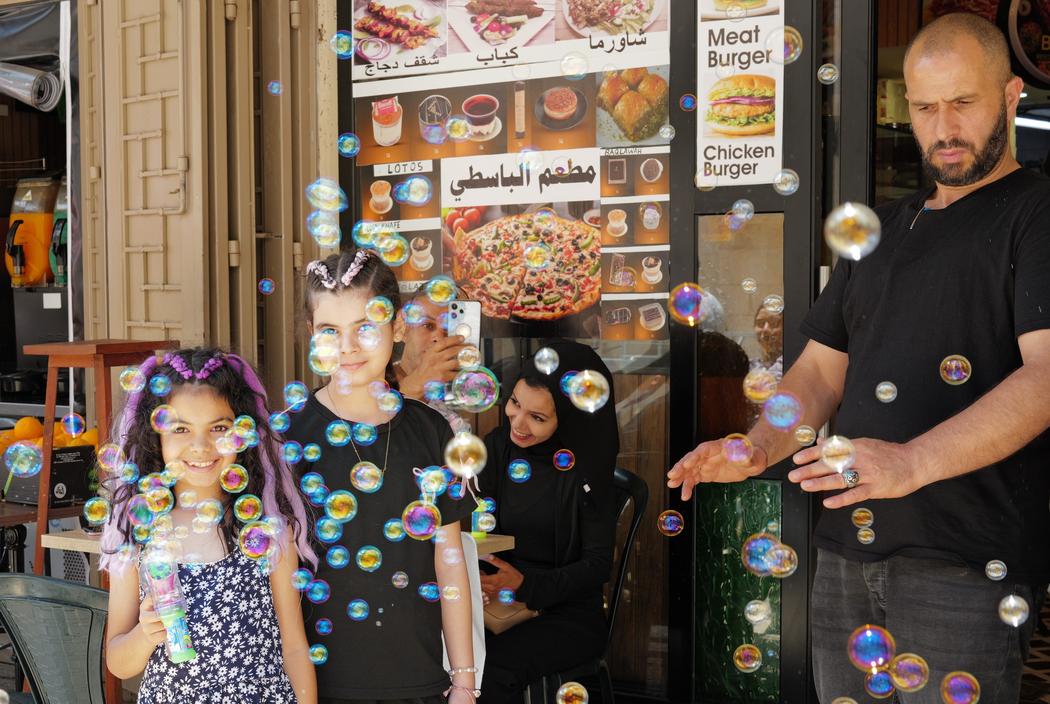 Rick Blumsack | Girl Shooting Soap Bubble Gun, Jerusalem | 2026
Humor and poignancy often appear side by side in your work. Is this contrast something you consciously look for, or does it emerge naturally from the street?
I think it emerges naturally. The key is remembering that everyone is human. We’re multi-dimensional. It sounds obvious perhaps, but it’s not.
One of my criticisms of some fine art photography is the prevalence of deadpan portraits. The fine art aesthetics are lovely. But why are there so many portraits of faces staring blankly at the camera? A few photographers have tried to explain it to me, but I’m not persuaded.
In my time walking the streets of Jerusalem, I’ve seen people who are having a good day, or a bad day, or they’re relaxed, or they’re stressed, or whatever. But I’ve never seen anyone frozen, staring blankly into space.
When speaking with young photographers, I’ll sometimes remind them that their subjects are human beings, not caricatures. If this is your mindset, then the pictures come more easily. The scenes suggest themselves. The people reveal themselves. You’ll notice it.
But if your mind is closed – if you view subjects as inanimate objects or stereotypes – there will be shots you’ll miss.
Your photographs are not staged and do not use AI. Why is this commitment to real-world experience important to your artistic practice?
I admit I’m old-fashioned about this. I believe truth is good and lies are bad. As the American politician Daniel Moynihan famously said, “People are entitled to their own opinions, but not their own facts.”
Even today, with computers all around us, we generally believe our own eyes. At least we want to. When we see a photograph, our innate assumption is that it’s real. But an AI image is not.
Now, it’s one thing if the artist informs you, “This is make believe.” Like writing a novel and being upfront with the reader that it’s fiction. All good.
But showing an AI (or staged) image and misleading the viewer? In my view, it’s dishonest and harmful.
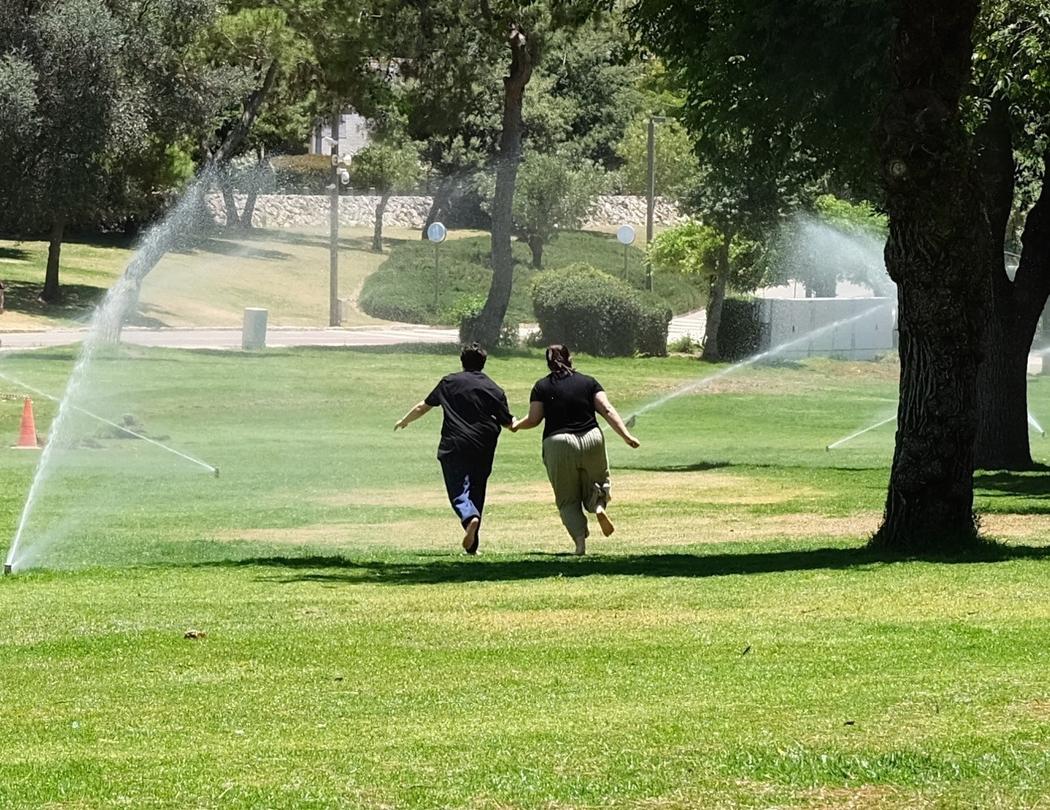 Rick Blumsack | Lesbian Couple Running Through Sprinklers In The Park, Jerusalem | 2023
How does living in Jerusalem shape your eye differently from someone photographing the city as a visitor?
Well, when tourists visit our city, they want to see the famous landmarks – the places in Jerusalem which can’t be found anywhere else.
It’s usually a once in a lifetime visit for them, so they want their experience to be out of this world (literally). They also have very little time, rushing from one site to another. I understand. I’m the same way when I visit other cities. If I visit, say, New York or Paris, I’m not photographing it like the famous street photographers did.
Street photography provides the opportunity to uncover a city in a way the tourists never see. My best photographs have come from circumstances where I felt like both an insider and an outsider. I was comfortable in the environment, but I felt removed enough from the specific situation to maintain distance in photographing it.
I was an observer, not a participant. But I understood the participants. I think this combination happens more often where we live, not where we visit.
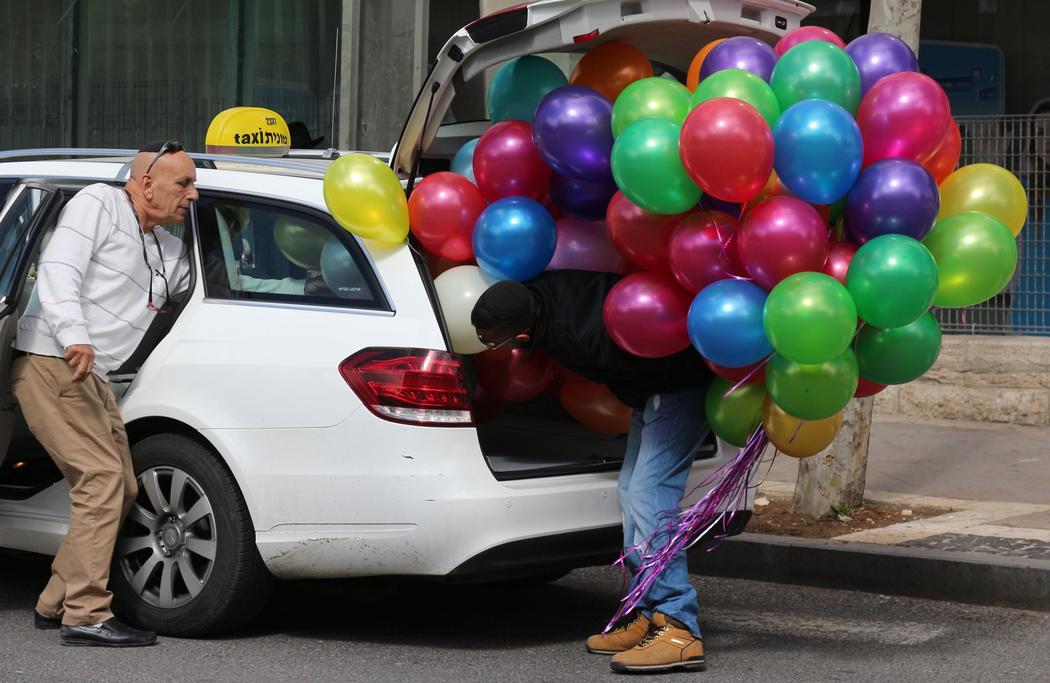 Rick Blumsack | Loading Balloons Into Taxi, Jerusalem | 2015
As both a practicing attorney and a fine art photographer, do these two parts of your life influence each other in any way?
At first blush, they seem totally different. As a lawyer, I’m sitting at a desk trying to be precise with words. As a street photographer, I’m wandering outside trying to sense images and metaphors. Honestly, if I transition too quickly from one to the other, it feels like my head will explode!
But they have something important in common – anticipating what will happen next. As a lawyer, if I’m in a meeting, it’s useful to anticipate what others will do next. If I say X, how will they respond?
Street photography is the same. If I see a tempting composition only at the last second, and rush to catch a photo of it, I’ll probably miss it. But if I’m watching a scene unfold, and can predict in my mind where the people will be in 3 seconds, then I have a decent chance of catching it.
Asking the question repeatedly – What will they do next? What will they do next? – is a transferable skill.
0 comments on “Rick Blumsack”