

Curatorial Review
by Anna Gvozdeva
Nuno Alves’s Bhutan series arrives with a clear ambition: not to catalogue a destination but to register an atmosphere — what the artist calls, in his statement, “the rhythm between the visible and the invisible.” this series succeeds precisely where it resists the documentary impulse to explain.
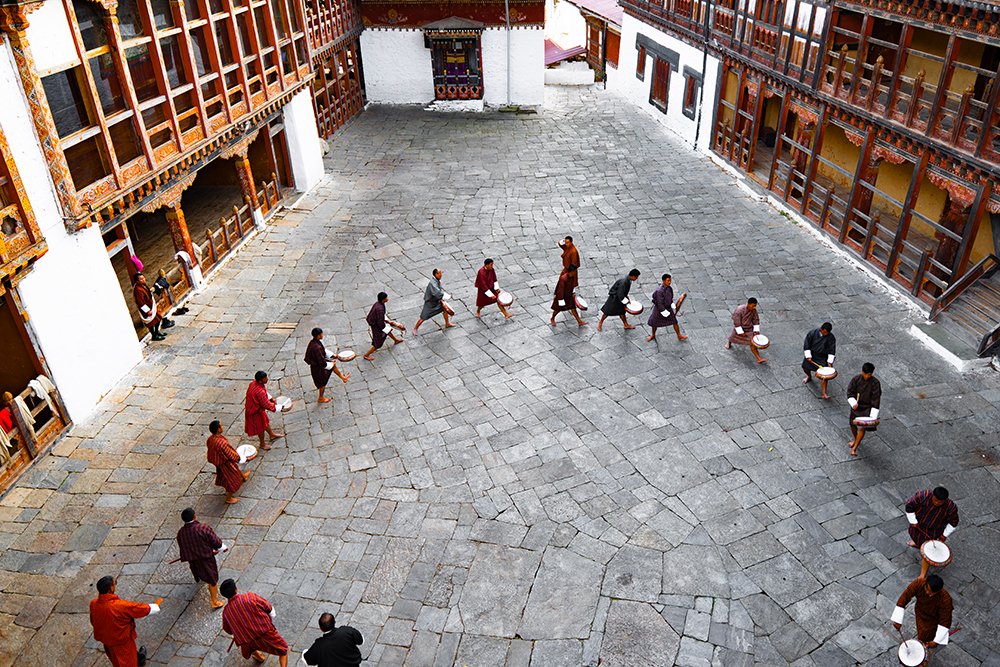
The strongest images here are built on contrast and restraint: the aerial view of drummers crossing a dzong courtyard reduces the human figure to a rhythmic, almost calligraphic line against the immense grey geometry of the flagstones, while the framing of a single eye peering from behind a heavy red curtain compresses an entire monastic world into one wary, curious glance.
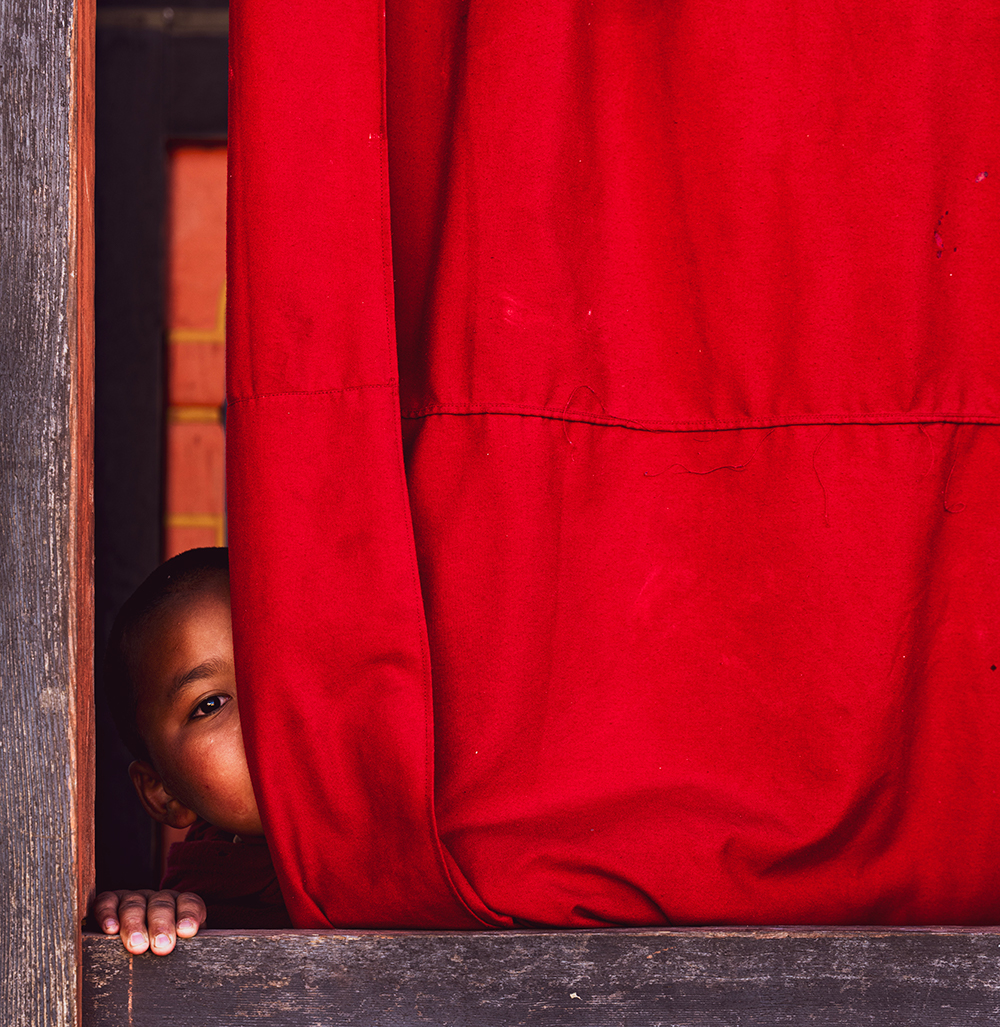
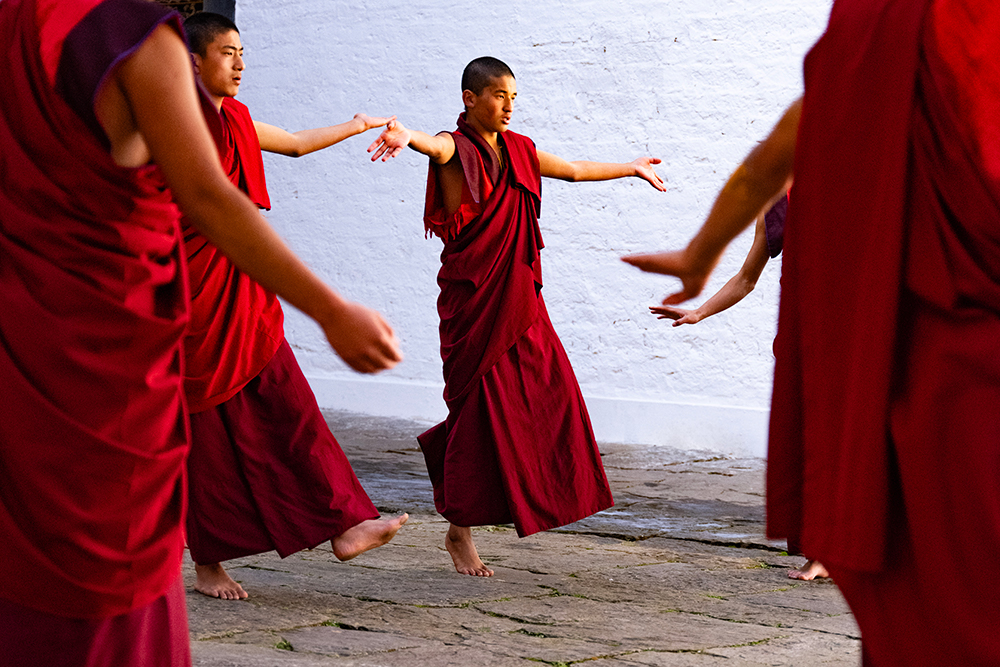
Alves clearly understands that Bhutan’s spiritual register is best conveyed through fragments rather than panoramas.Color is handled with real intelligence throughout. The crimson of monks’ robes recurs as a structural device, sometimes diffused into soft, painterly blur (the dancing novices caught mid-gesture against a whitewashed wall), sometimes concentrated into a single saturated block (the curtain image, the sand mandala).
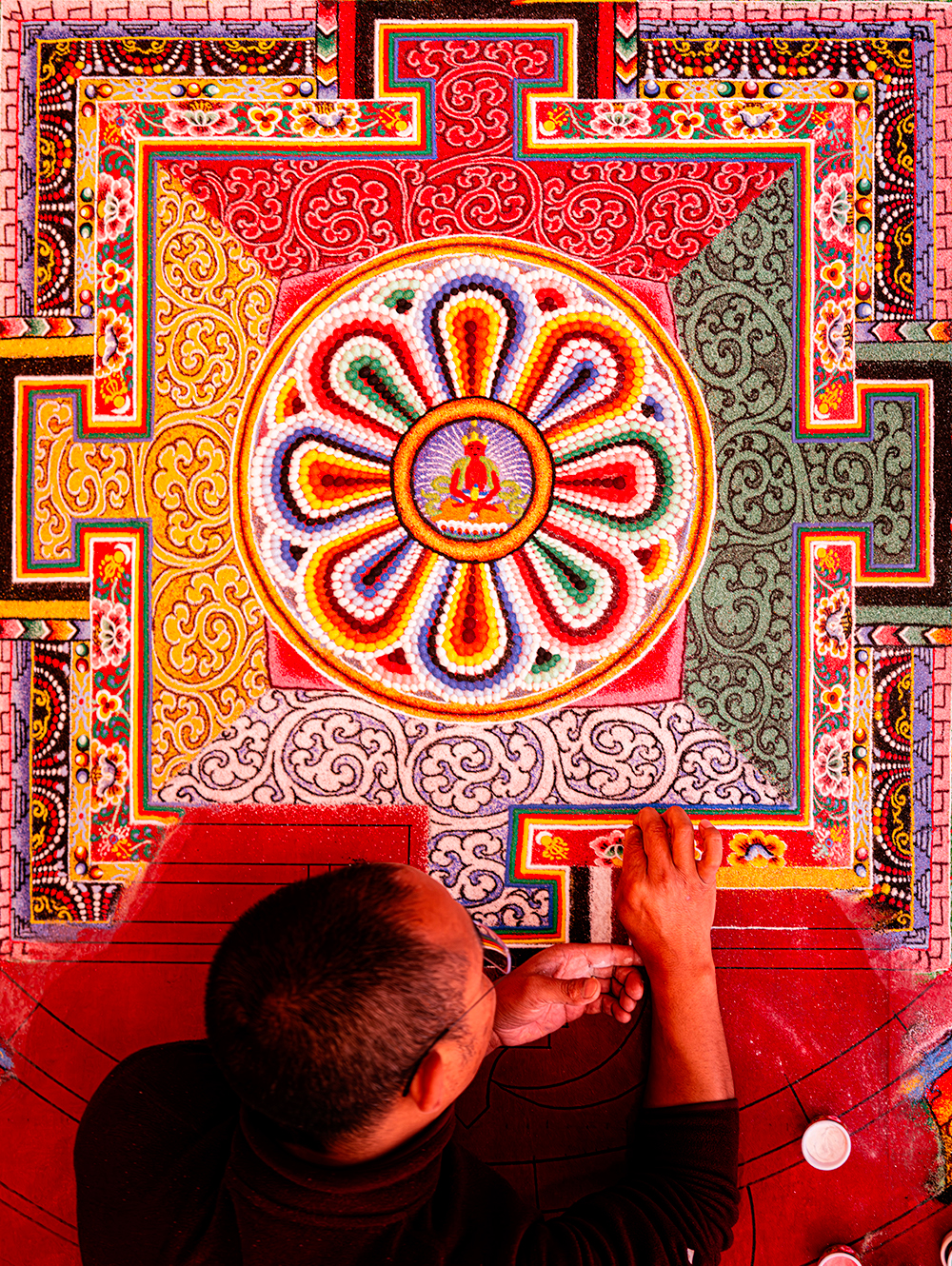
The mandala photograph is the technical high point of the set: the overhead angle, the monk’s hands entering from the lower frame, and the concentric symmetry of the pattern combine craft and subject into a genuinely arresting composition.
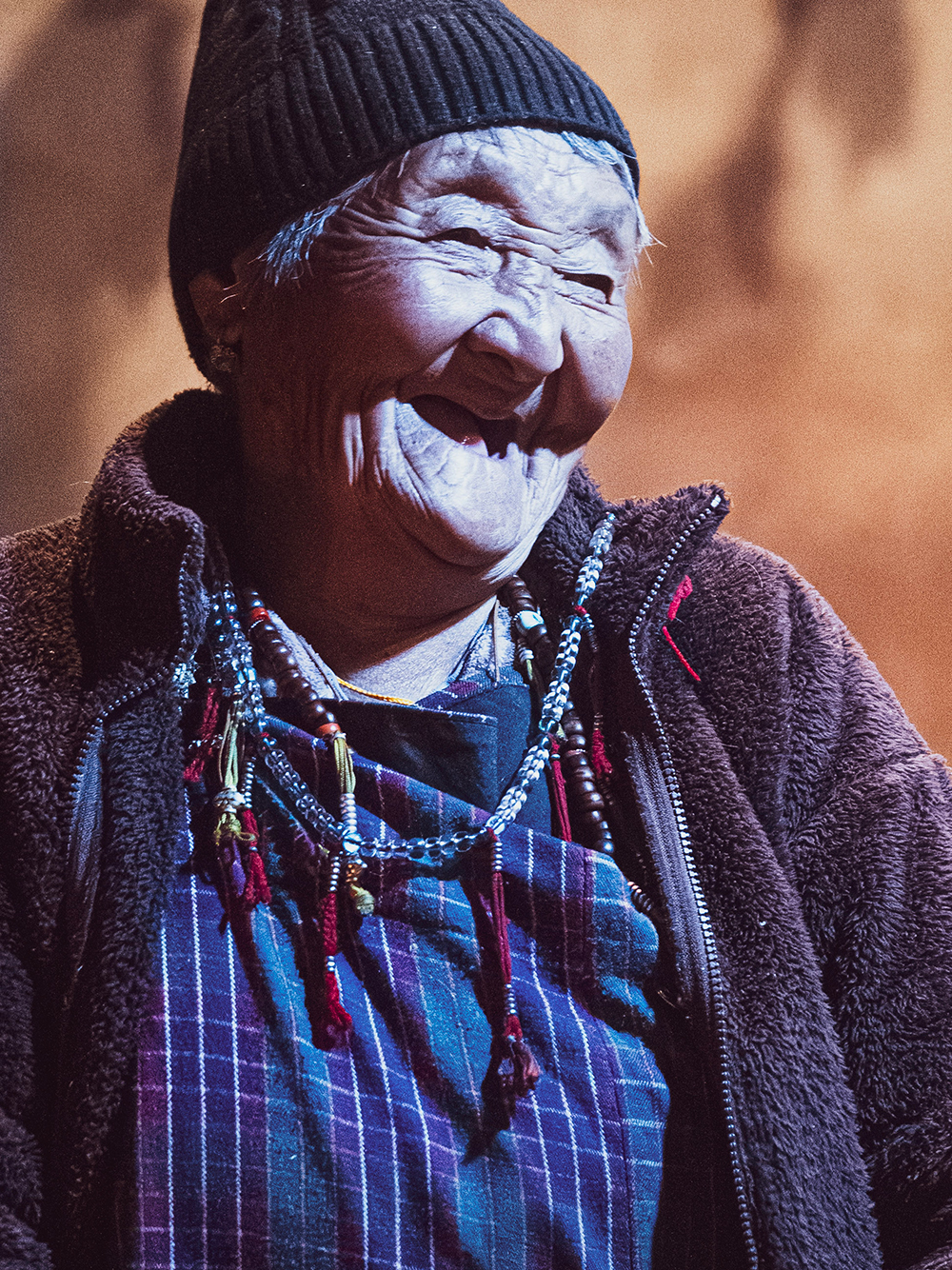
The elderly woman lit from the side, her laughter carving the whole frame into wrinkles and warm shadow, has the kind of unguarded intimacy that no amount of “documenting happiness” tourism imagery ever manages — this is a face the camera was clearly trusted with, not merely pointed at.
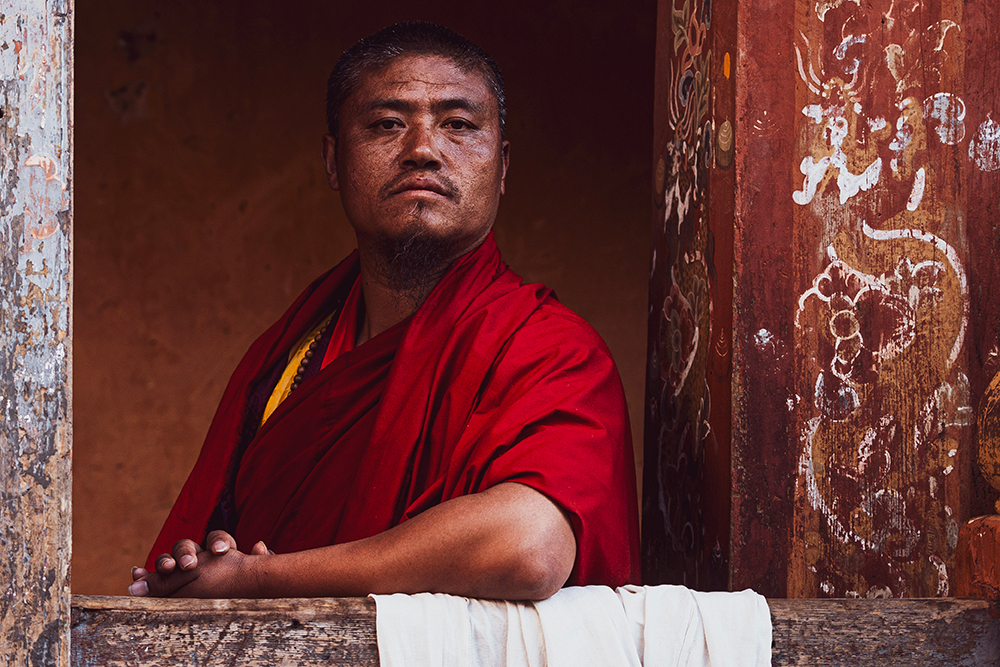
The portrait of the monk in the carved doorway is competent and handsome — good light, good framing against the dragon motif accomplished.
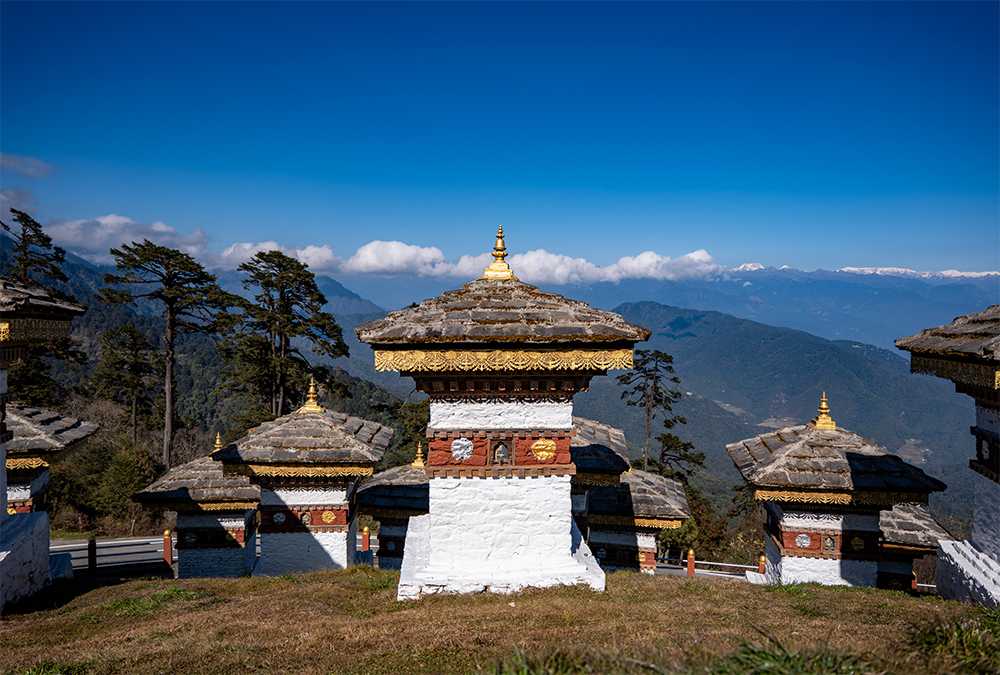
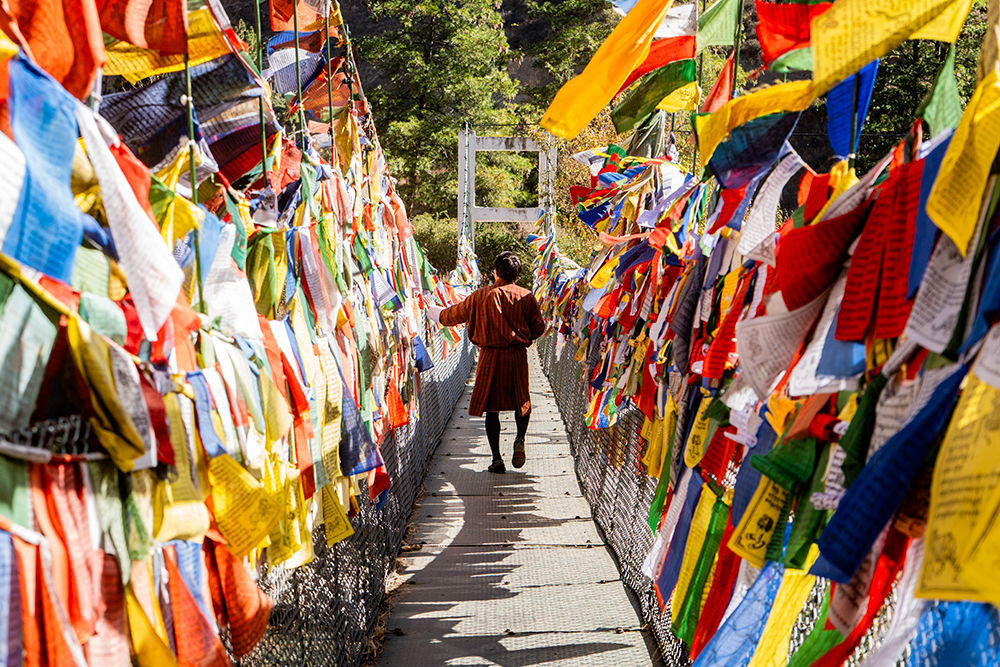
The landscape of the chortens at the mountain pass and the bridge of prayer flags are both well-built, classically composed frames.
The Bhutan series has also continued to resonate beyond its initial presentation. Following its exhibition at Leica Galerie Singapore, the project has developed into a broader photographic journey, including the forthcoming “Travel with Leica: Kingdom of Bhutan” experience with Nuno Alves, organised in collaboration with Leica and Druk Asia. This continuation reinforces the sense that Bhutan is not simply a subject within Alves’ practice, but an ongoing field of return — a place where observation, spirituality, and visual storytelling remain in active dialogue.
The project statement promises an emotional atmosphere over factual documentation, and the strongest photographs deliver on that promise; a tighter, more selective edit, leaning further into the intimate and the architectural, would sharpen this already evocative body of work into something close to essential.
0 comments on “Nuno Alves”