
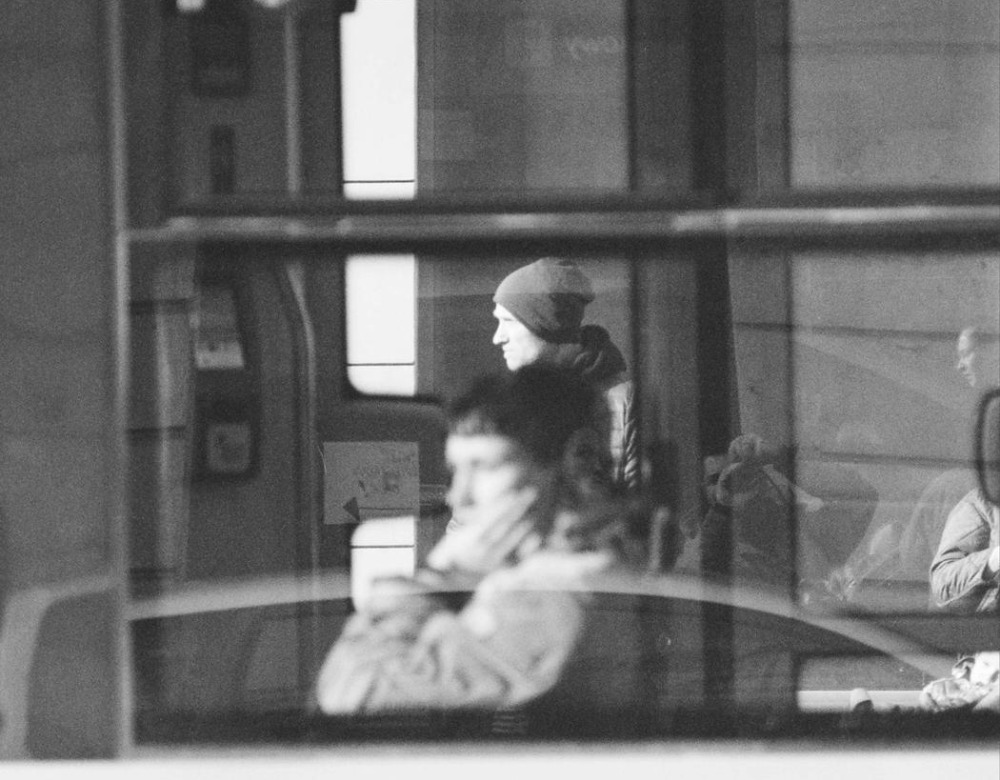
What first inspired you to create the “Still Here” series, and how did the concept develop over time?
Well, in fact, this series was created rather spontaneously. Overall, I’m simply excited to have photo walks and to take pictures on the streets of both my hometown and other cities when I travel. So, at some moment, I decided to analyze my own works in order to reveal whether I have some specific style and whether my works can be divided into clusters according to some idea. And I noticed that there are works which combine urban atmosphere (sometimes rather cold) and a person or an animal as a symbol of life that still persist.
As for development, I think that after I conducted my analysis, I started to pay more attention to one actor in the scene. Previously, I was taking street shots, which mostly showed the busy urban atmosphere. But looking for one single actor became the next level for me, I think.
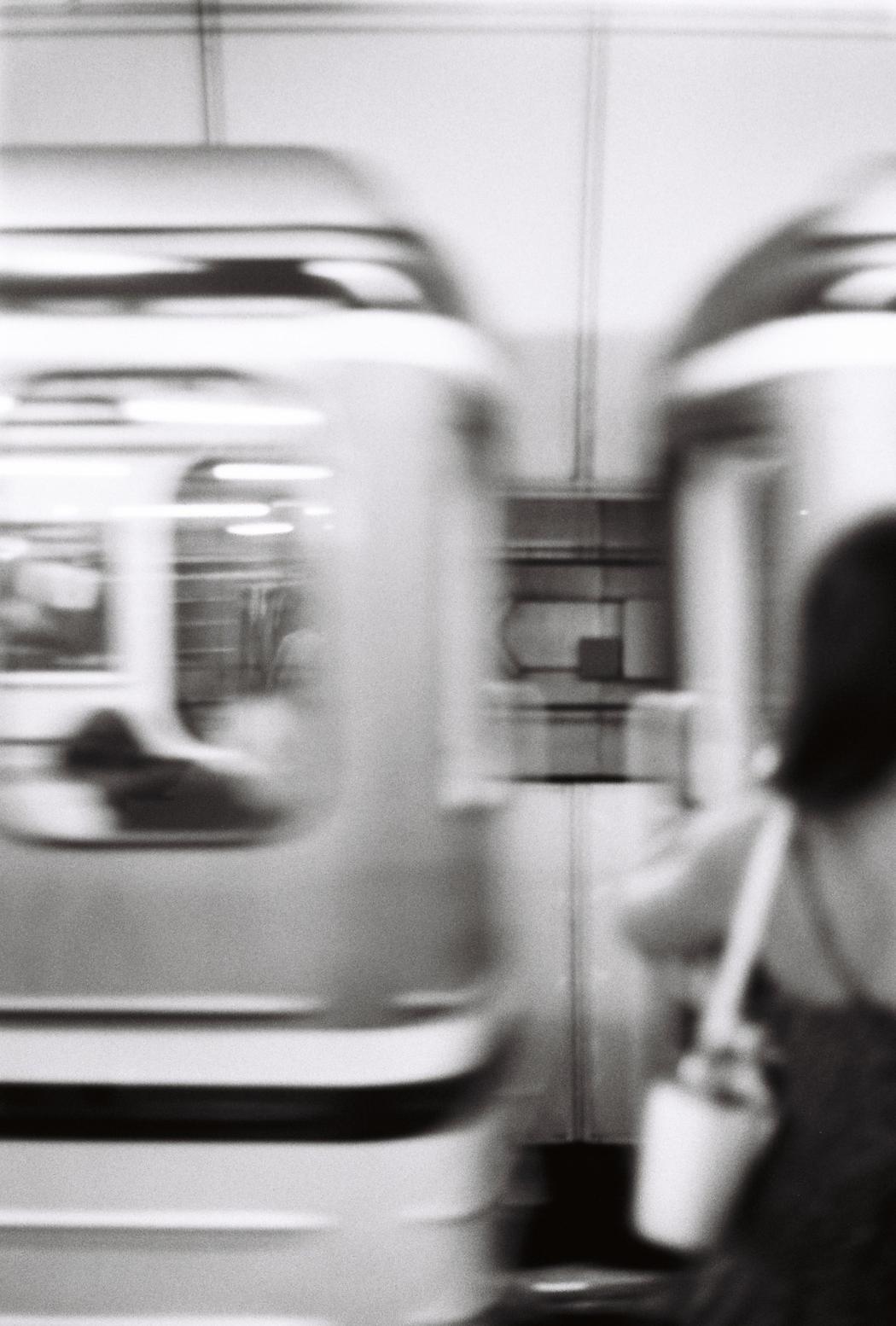
Your images emphasize small human figures within vast architecture. What draws you to this contrast between scale and presence?
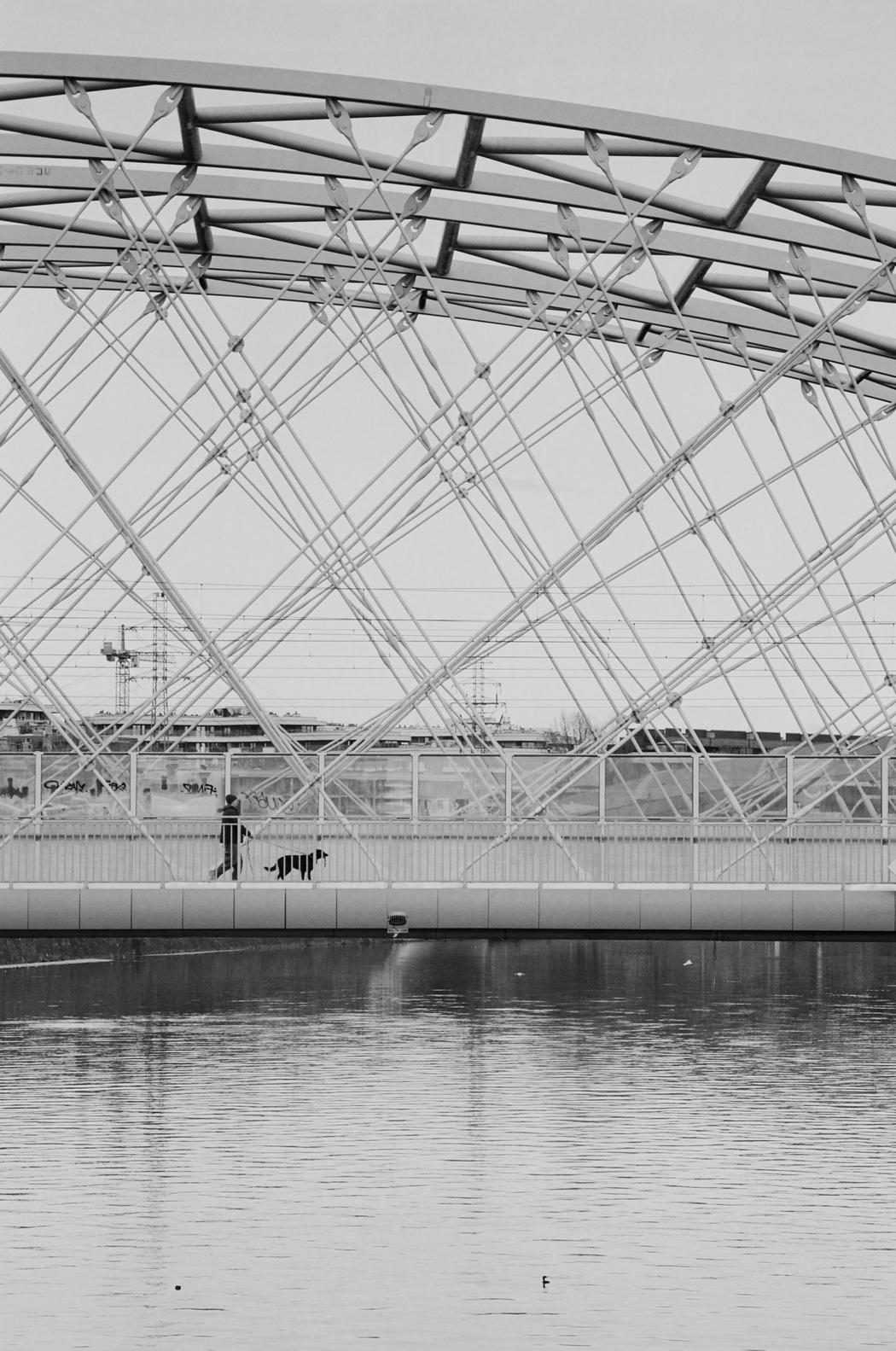
Very nice question. I think that the major drive of this contrast is my huge love for geometry. I love geometry from my lower school years. Lines, symmetries, angles, asymmetries… All of them excite me so much. I have lots of shots of just architecture, without any actors. Pure minimalism. But I thought, what if I add a main actor to this geometry? It will bring presence and dynamics. So, I would say that this contrast is driven by my eternal love for geometry and capturing moments on the streets.
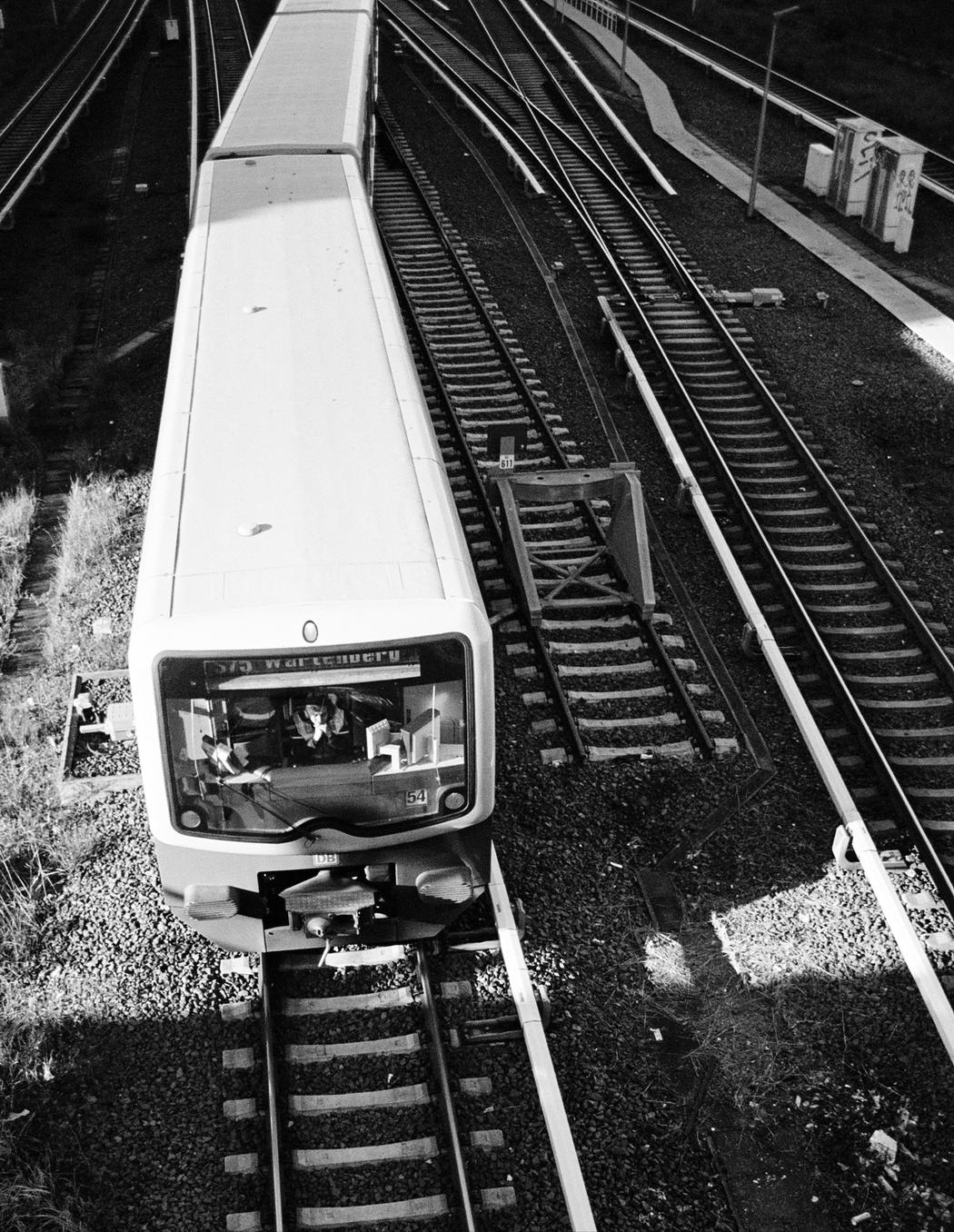
Why did you choose to shoot this project on black-and-white film rather than digital or color photography?
First of all, maybe it will sound unexpected for some readers, but I don’t take digital photos at all (except for iPhone, of course). I don’t have a digital camera.
As for black and white, I simply noticed that I “see” the scene much better in black and white, rather than in color. Especially, if I would like to capture the strong urban vibe as in this series. Also, black and white film does not depend on the sun as much as color. In my case, it ensures more versatility and expands the vision. But I also shot on color film, especially on sunny days.
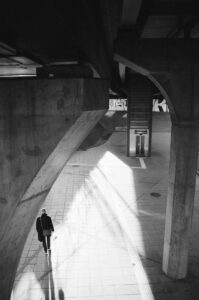
Many figures appear solitary, thoughtful, or partially hidden. Are these moments staged, observed, or discovered intuitively?
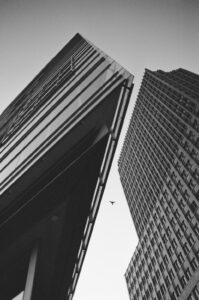
Probably, all of these options. For example, while making the shot with the bird between two buildings, I was about to take a picture of just the buildings. But for some microsecond I opened my second eye and noticed the bird flying from the bottom. So, I waited for the moment when this bird appeared directly between the buildings and then made the shot. Thus, I would say that this particular shot was both observed and discovered intuitively.
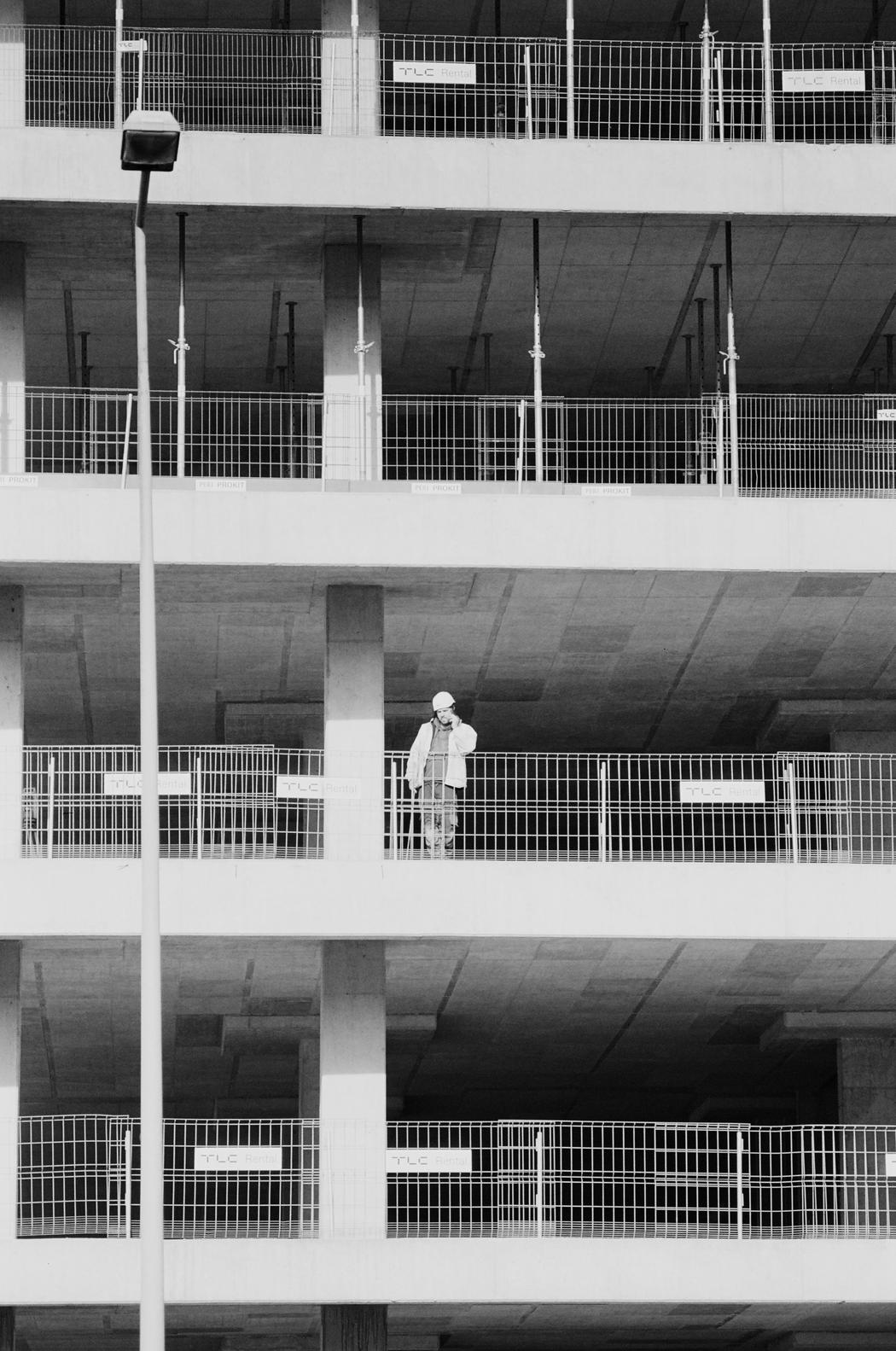
Mostly, all the moments are observed. I just walk through the streets and look at other people or figures, trying to predict their future movements. It also applies to the shot with the man under the giant bridge. I was standing above and looking in the opposite direction from what is seen in the picture. Then I noticed this man and sunbeams falling on the ground. I turned, waited for the man, and clicked the camera.
How do you approach composition when working with strong urban geometry and repetition?
When working with strong urban geometry, I begin intuitively. I respond to lines, structure, and rhythm in the space, then adjust my position carefully to make the composition feel precise and intentional.
I pay attention to symmetry, but I don’t aim for perfection. Often, I wait for a human presence to enter the frame, as with the man under the bridge. In other words, someone who subtly disrupts the order. That tension between structure and life is what makes the image complete.
Do you see the city in this series as a hostile environment, a neutral backdrop, or something more complex?
Of course, I don’t see the city both as hostile and as neutral. For me, it’s definitely something more complex. The city can feel overwhelming in scale, but it also creates structure and rhythm.
In this series, the urban environment is not an enemy. It’s a system that shapes human presence. Sometimes it absorbs people, sometimes it frames them, but it doesn’t erase them. There is tension, but also coexistence.
What do you hope viewers will feel or reflect upon when encountering these images?
I hope viewers feel a sense of quiet recognition when encountering these images. The city can often feel overwhelming, but I would like these photographs to slow that experience down.
For me, the series is about presence, that is, about being small in scale but still existing with weight and meaning. I hope viewers reflect on their own place within the structures that surround them. If the images offer even a brief moment of stillness or self-awareness, that feels meaningful to me.
0 comments on “Silent Film Wanderer”