
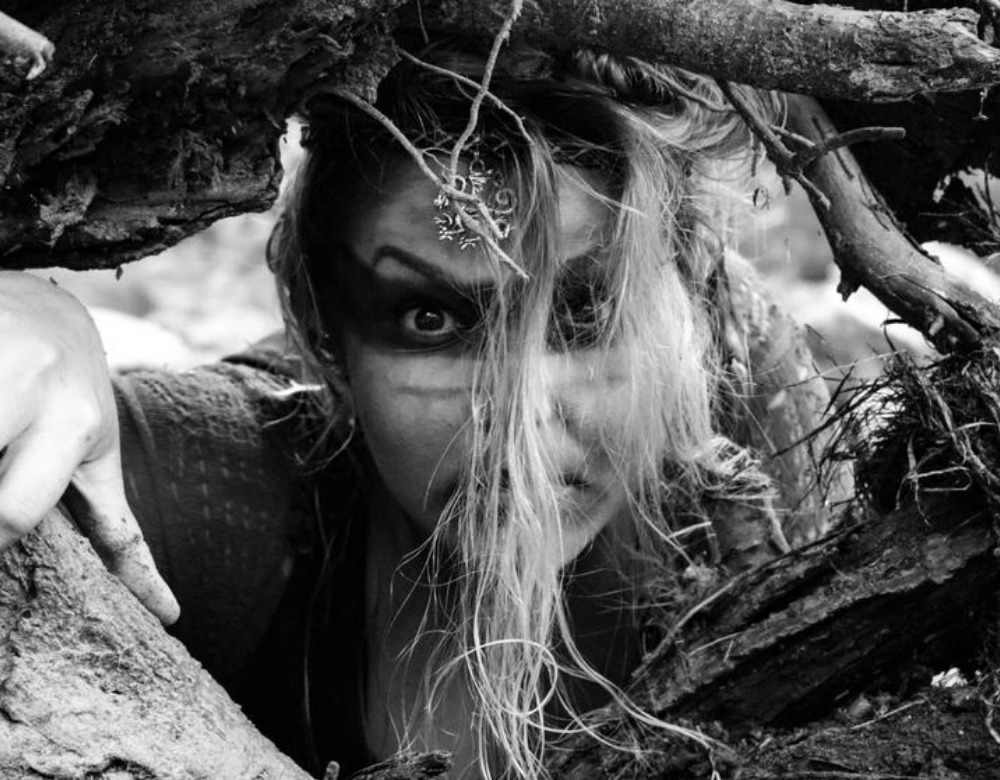
You describe yourself as a “practitioner of entanglement”. What does entanglement mean to you today, and how does it shape the way you move between photography, writing, film, and community-based work?
I’ve come to think about conscious and subconscious entanglement which impacts how I move between the different mediums. There are things within my photography where I might approach a project thinking purely of images or how the camera may invite me to think about the images being produced. Yet, at that very moment, I may not be aware of how those specific images I have created will then impact or lead to the creation of something written months, or even years later. In this example I share, there is some kind of subconscious entanglement happening between the camera and pen that I am not readily aware of. When I am aware of the conscious entanglement, let’s say between film, photography, and writing, it is an act of all of those mediums being in conversation with each other, informing each other, and also, informing me.
When I think back to when I started referring to myself as a practitioner of entanglement, I was really gravitating towards the quantum definition of entanglement as if I or my work was always aware of how it was being impacted by other parts of my practice. The more I sit with this concept, the more I realize that there is also the act of making space for the ways the subconscious enters into this equation.
When I think of the way my practice of entanglement engages with others, I experience it when they share with me what my work – either my photography, any of my writing, film, etc. – stirs within them. This adds more layers to how I consider my work and others coming in contact with each other and perhaps, impacting each other. Naively, I once thought that I would have an idea of what this kind of impact would be but realized that (1) I would not always be able to witness when others came in contact with my work and (2) I can’t have any control over the kind of engagement or interpretation any one community might have in relation to my work.
These realizations have helped me to see how entanglement moves between known and unknown, seen and unseen, and that my path as I move between these things is not always going to be well lit.
Your background spans poetry, nonfiction, visual art, and public intellectual work. How does language inform the way you see – and frame – an image?
There are many times that language is not a factor. Oddly, as someone who works so closely with words, I don’t think that words are the best vehicle and I have often felt that over the years, as a species, we have become over-languaged (I still marvel at our ability to engage with language with each other at all!). So when I start thinking about the image or images I seek to capture, the image itself becomes the language. I’ll take the example of my obsession with abandoned places. For years, I had no language for why I was drawn to them. I was not aware that it had become a “thing” that people were doing, I just felt a certain kinship. Those abandoned landscapes and places – the ones I have visited and the ones I wish to visit – become an unspoken language that will inform how or if I can capture them through film or photography. I have that same relationship with engaging with the natural world as well. Language, in these cases, sometimes comes after. Almost as if it is a conversation that starts with symbols demanding silence, a lot of space, and time before I get to connect that image with any kind of language.
Then there are ongoing projects like my Dark Goddess series. The language came in the form of an inquiry that included a conversation with a friend who was working as a barista at a coffee shop just over 12 years ago. I was either reading something, or heard something, and as a result, I was going down a short rabbit hole of learning about the Afro-Brazilian spirit, Pomba Gira. Between the conversation with my friend, and this exploration, I asked a series of questions: Who or what is the Goddess when she is allowed to misbehave and journey unapologetically to darker realms? Who is the Goddess when she is allowed to expand beyond bearer of life, nurturer, and all of the other boxes that confine women? Those questions, and others added along the way, stayed within me for years. Some of those questions were shared with the models who were also collaborators in the way we selected locations, designed costumes, etc., for the Dark Goddess series. And while that inquiry laid some of the foundation for the series, there were still many surprises for how the images were framed and shaped.
Funny enough, recently it occurred to me that the only dialogue that my short films mostly have is my husband’s original sound compositions. Thus, even when language is a factor in helping to shape concepts, like with the Dark Goddess series, I wish for the images to carry their own language without any interference of words.
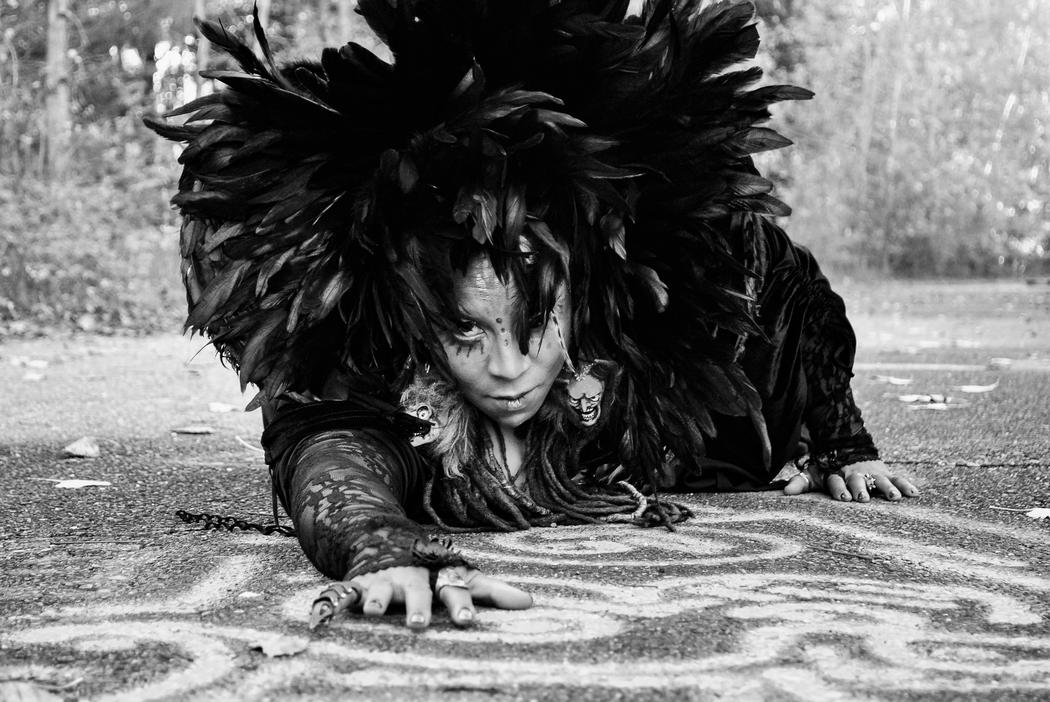 Shanta Lee Honeycutt | Crow Goddess | 2021
You often work with myth, ethnography, and cultural anthropology. How do you approach these traditions ethically, especially when working across lived experience and collective archetypes?
To put it simply, I approach with a lot of care and the understanding that I am far from anyone’s expert. This care includes: gathering insights from those who are connected to these topics (an example of this was my attempt to try to interview all of the individuals who posed for the Dark Goddess series), and research. This approach was shaped by my experiences as a photographer, journalist, and my travels.
This question has me thinking about how some of my mediums like photography and film, have a history in a distorted power dynamic, and the projects that inspired me to think very differently about my approach. An early project that impacted my thinking about my role behind the camera was Perfect Imperfection. This was a collaboration that started around 2013 with photographer Liz LaVorgna. The project emerged from a conversation she and I had about the pressures society was placing upon people to achieve perfection. While exploring this topic of asking our subjects to choose their physical, emotional, or other imperfections, Liz and I talked at length about how to work with how we approached this topic with our various models. In some cases, this also involved engaging with each person about which photos were chosen before they were shared with the public. Within my ongoing work, Dark Goddess, I find myself needing to go back and add more understanding to both the deities who are represented and the ones that I am interested in exploring to continue to expand my understanding of the concept.
As a journalist, you learn very quickly how important it is to approach with a non-negotiable sense of morals and ethics. I’ve often said that when I am in the role of journalist, I feel like I am a secular clergy person with the twist that you must take what someone shares with you to include in the pursuit of truth. And depending on the specific kind of journalism, you are tasked with the responsibility of knowing that you are entrusted with someone’s work – which involves their craft, time, sacrifice, and so many other things – along with how they wish to be presented in the world. This is a very humbling experience and something I sat with everyday when I was involved with co-editing Sign & Breath: Voice and the Literary Tradition with Philip Brady. We interviewed over 40 esteemed artists and writers along with one of their chosen works to be included within the anthology. Again, it is experiences like this one that encourage the practice and approach of care.
Additionally, through my travels to a few other countries, like living in India for five months, I knew that I had to approach these experiences with a lot of care and treat myself as if I were a blank slate. During my time in Cuba, it was very key for me to learn very quickly the full scope of my lack of understanding, especially as it relates to the complicated history between the United States and Cuba.
Along the way, it has not hurt to learn about the mistakes of history in all of the ways that engagement with other cultures or practices have been mishandled. These unfortunate instances continue to be very instructive if for no other reason than to be a decent human.
I am still very much learning all of the ways of how to continue to approach the various traditions I engage with through my practice.
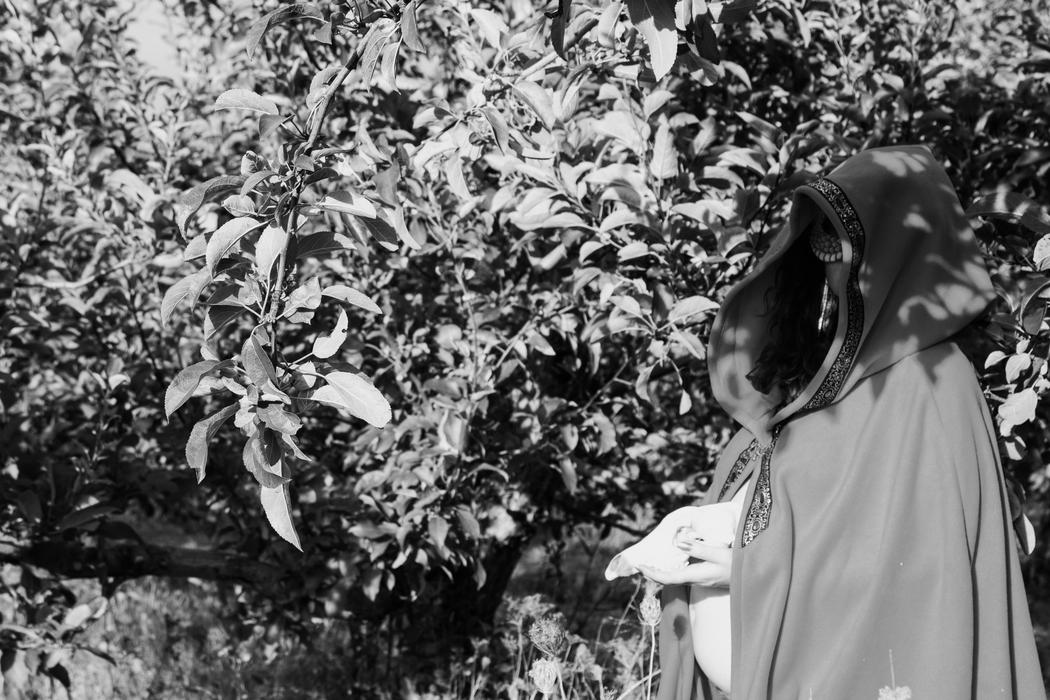 Shanta Lee Honeycutt | In That One Story Eve | 2021
Risk seems central to your practice – you’ve written about the need to be “swallowed” by the work. What kinds of risks are you still willing to take as an artist, and which ones have become non-negotiable?
As far as risk goes, everything is on the table and the things that I would never offer up for negotiation are a given (like my loved ones, for example). I think the riskiest things within creating involve being open to having one’s very understanding of the world or concept of sanity shaken to a point that it forces one to have to re-consider, re-thinking, and start from scratch. I am still very open to being wrong and having my very understanding of things shaken. It is also a high risk, for example, to take a book or concept I have been working on for years and admit that I may need to destroy it and create something different. Or the challenge of stepping away from any one specific medium, like stepping away from my writing, or photography for instance, in order to re-enter it again from a different vantage point (and I still do those things).
I continue to sit with that statement about willing to be “swallowed” by the work, and the more I think about it, the more it comes back to being willing to risk disappearing even my very concept of myself, or disappearing further into myself, to see what comes out of that in ways that would expand what I have originally envisioned. Risk these days is less about the things outside of myself, but what are the layers and unexplored rooms that dwell within me. I also most always return to the risks that are most deceptively simple on the surface. The risk of always remaining a student and learning something new.
And when it comes to non-negotiations, I will repeat what one very good friend once said to me. Everything is negotiable. Within my creative practice, all risks are negotiable.
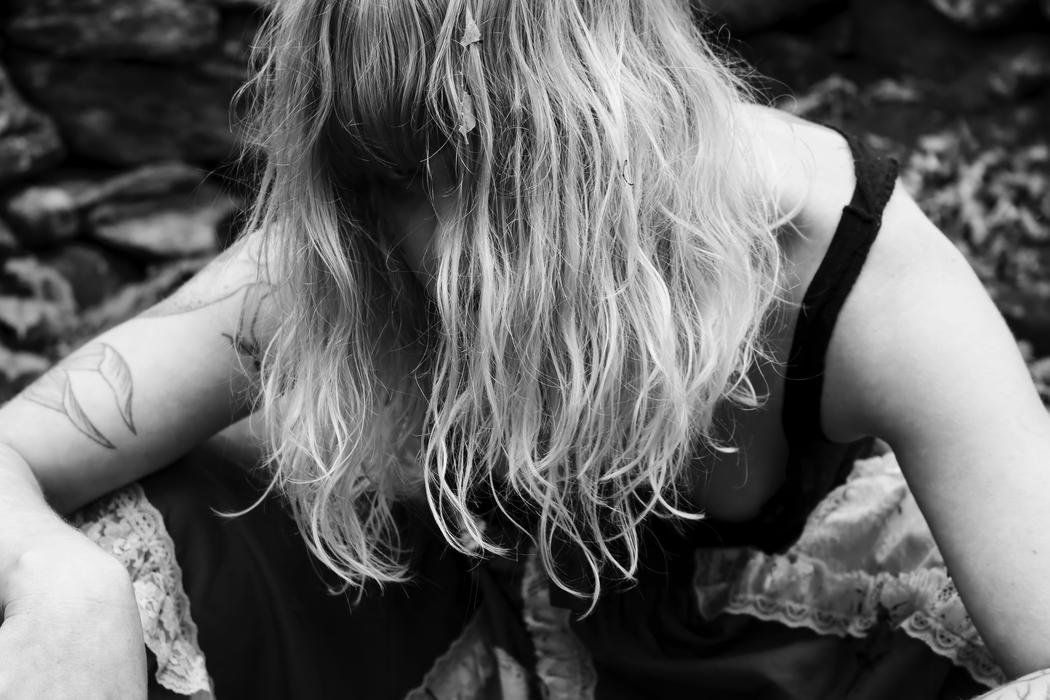 Shanta Lee Honeycutt | She Killer of Bad Men | 2020
Your work frequently resists easy interpretation. What kinds of questions do you hope viewers leave with after encountering your photographs?
I hope that viewers leave asking themselves:
What would giving myself permission look like, feel like, taste like, or sound?
Have I gone as far as I can go under all of my own layers for what I think I see within this image and the world around me?
What about this makes me uncomfortable? And if it is making me uncomfortable, have I journeyed enough towards the risk of getting cut by my own edges?
In the case of my subjects that don’t involve people: What are my relationships with places or things? How do my relationships with these places or things shape how I experience the world?
How has your understanding of the sacred feminine changed over the years, especially in dialogue with contemporary conversations around gender, power, and embodiment?
I have come to the place of thinking about sacroprofanity. This probably best sums up some of my thoughts in trying to answer this question taken from a piece I wrote as a part of my 2022 exhibition in thinking about the sacred and profane in relationship to the sacred feminine:
“It is no surprise that profane was my kind of worship on the road to the sacred. If we speak the sacred, we must live the profane. Pro fans as in out in front of the temple, key words: out in front. In the words of Millie Jackson speaking about speaking the profane as holy on open stage,
“If it comes up, it’s comin’ out.”
When I think of sacroprofanity, it lives within the everyday, not just a concept that we deify. This pairs with a lot of the conversations happening now with continuing to explore gender, power and embodiment which feels very much about challenging the who, what, where, and how of the narrative of how one is a woman in the world. I am very much looking forward to the day that these things are no longer debated, protested, or contentious conversations, but instead, embodied and empowered realities that is just a way of being for all without apology.
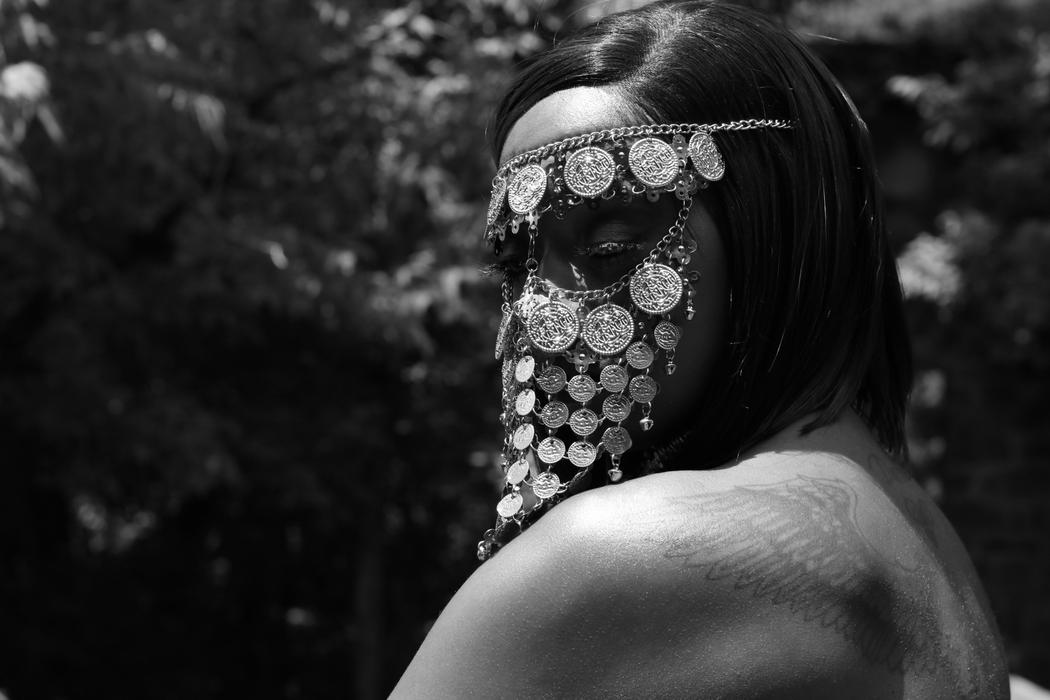 Shanta Lee Honeycutt | Dark Aphrodite | 2021
Looking ahead, what territories – conceptual, emotional, or formal – are calling you next?
For years, I have been interested in organizing a fashion show that brings together the sartorial and other mediums, especially the element of performance art. I have been attempting to find beauty or awe within things that don’t involve travel or what I consider adventure. Is there another way of seeing with the constraint of not getting onto an airplane or into a car to go “find” the adventure or magic?
Also, because I have been so good at aiming the camera at other places, things, and people, I am turning over an idea in my head to turn the camera onto myself (which many have done, I am forever inspired by Carrie Mae Weems’s Kitchen Table series). Other territories that are calling to me involve asking myself these two questions to bring me to those places that are beyond where I am now:
Am I risking enough?
How can I make space for expanding and inviting in what I can’t know, see, understand or feel right now?
0 comments on “Shanta Lee Honeycutt”